Clinical success in digital orthodontics depends on matching specific resin properties – flexibility, dimensional stability, and certified biocompatibility – to the appliance's intended function. While traditional thermoforming remains a staple in many practices, the industry is shifting toward direct-printed appliances that offer superior fit and novel shape-memory capabilities.
Selecting the right material ensures your clinic maintains high standards for patient safety and appliance longevity. Whether you are producing diagnostic models or direct-printed aligners, understanding the chemical and mechanical behavior of these resins is essential for a modern digital workflow.
Materials for Direct-Printed Aligners and Retainers
The most significant advancement in orthodontic additive manufacturing is the development of resins specifically formulated for permanent intraoral use. Unlike standard model resins, these materials must meet strict Class IIa biocompatibility standards to remain in the oral cavity for extended periods.
Shape-Memory Resins
Materials such as Graphy Tera Harz TC-85 have transformed the evolution of clear aligners. These resins exhibit a "shape memory" effect, allowing the appliance to reach its programmed form when exposed to body temperature. This provides a more constant, gentle force compared to traditional PETG plastics, which often lose their activation quickly.
High-Impact Clear Resins
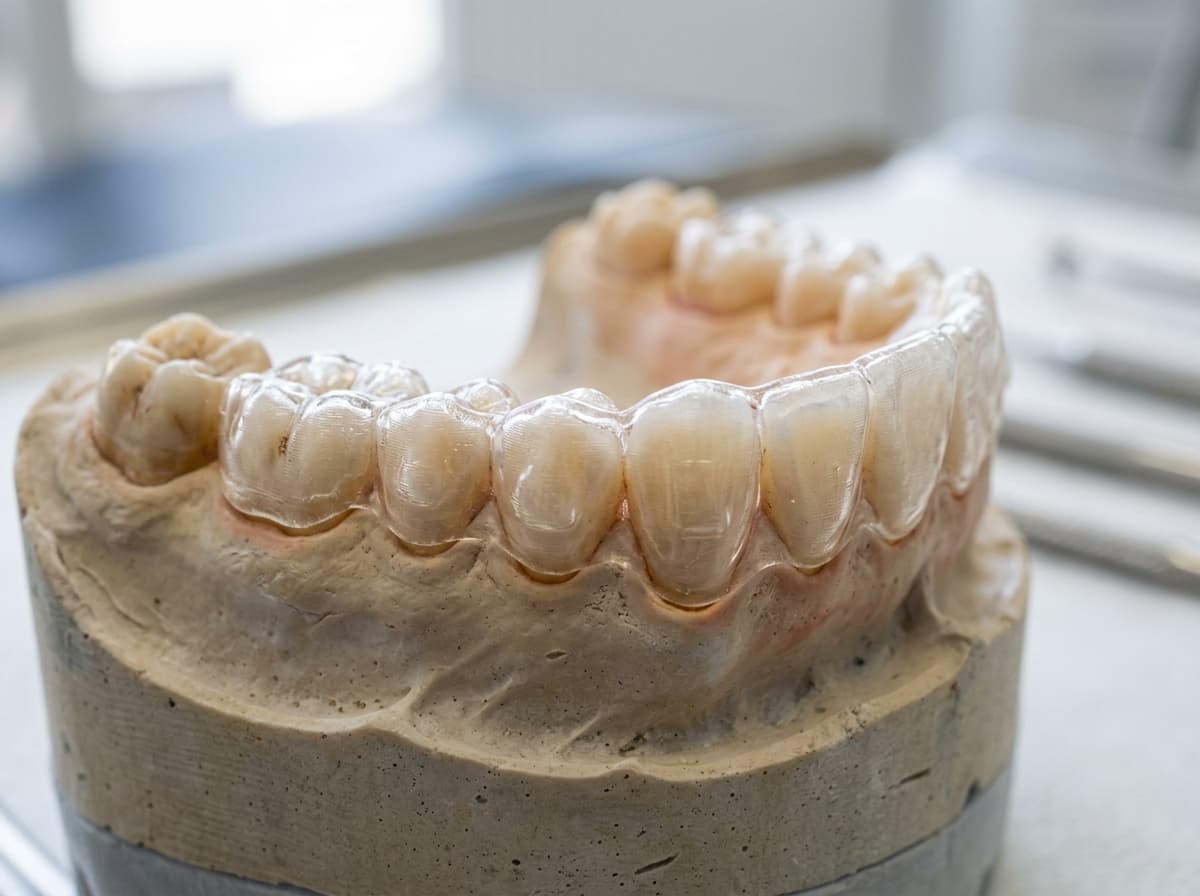
Resins like NextDent Ortho Flex and Formlabs Dental LT Clear are engineered specifically for retainers and splints. They offer high resistance to fracture and wear while maintaining the transparency patients demand. These materials are formulated to withstand the rigors of bruxism and daily wear without losing dimensional integrity.
Biocompatibility and Safety
A common objection to printed resins is the potential risk of residual monomers leaching into the patient’s system. It is true that some resins can show cytotoxicity if under-processed; however, high-grade materials like TC-85 DAC show a consistent lack of estrogenic effects and contain no bis-phenol A (BPA) precursors. To ensure patient safety, strict adherence to validated post-curing protocols is non-negotiable.
Specialized Resins for Indirect Bonding Trays
Indirect bonding requires a material that balances conflicting mechanical needs: it must be sufficiently flexible to be removed from the dentition without displacing the brackets, yet rigid enough to hold them in the precise planned position during the bonding process.
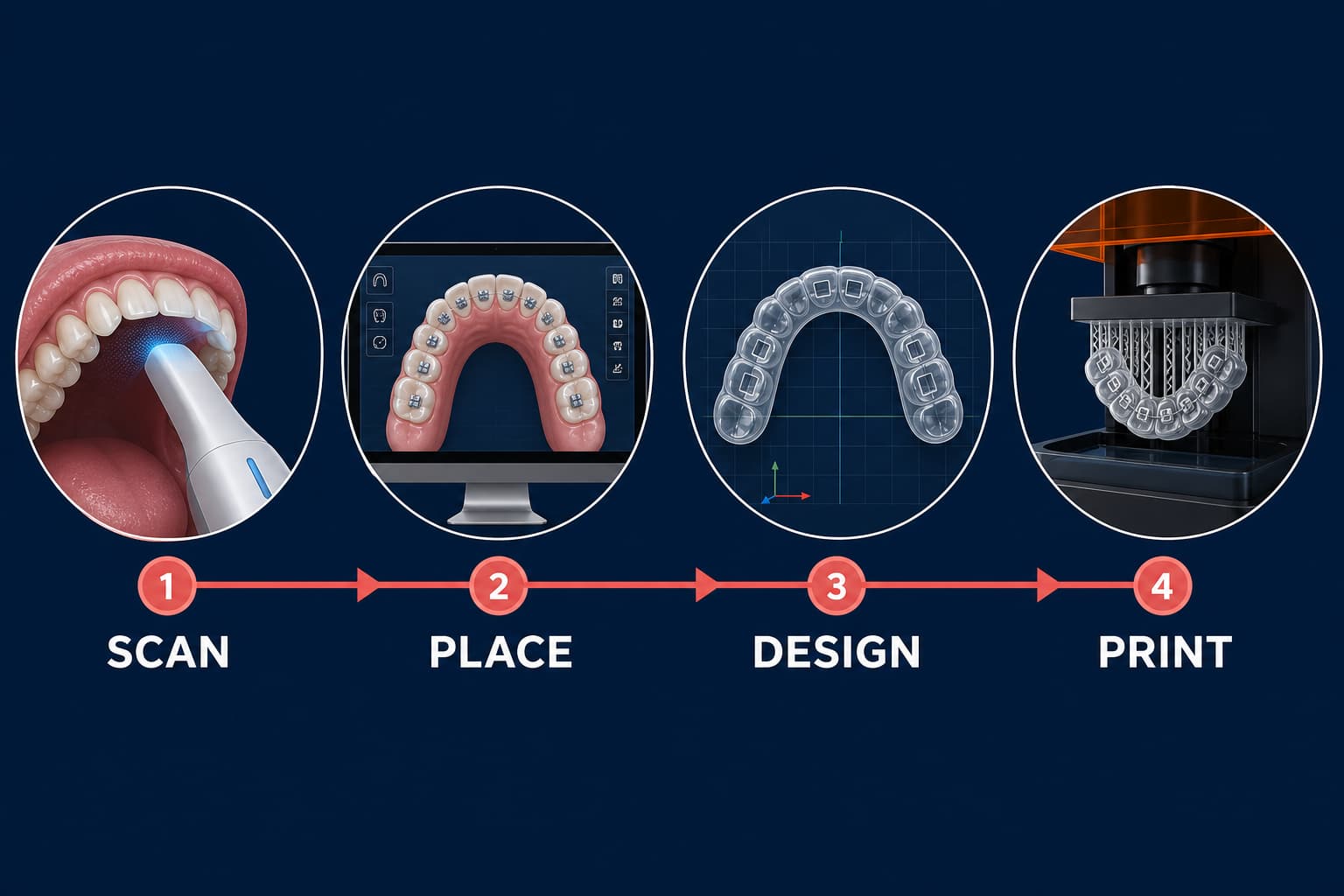
Resins used for indirect bonding trays (IBT) are typically translucent, which allows you to light-cure the bracket adhesive through the tray itself. These materials are characterized by high elongation at break, ensuring the tray can stretch over undercuts without tearing. Utilizing a lab-optimized 3D printing process for IBTs significantly reduces chairside time and improves the accuracy of bracket placement compared to traditional manual methods.

Materials for Orthodontic Models and Diagnostics
Models remain the highest-volume application for 3D printing in the orthodontic clinic. The requirements here focus on manufacturing speed, cost-effectiveness, and heat resistance.
- Working Models: If you use thermoforming for aligner production, your model resin must withstand the high temperatures and pressures of vacuum forming machines without deforming.
- Diagnostic and Study Models: These require high surface detail and matte finishes to make anatomical landmarks clearly visible for treatment planning. Nordicdens provides both physical and digital services, including digital bracket removal, to prepare these models for precise diagnostic use.
- Dimensional Stability: The choice of chemical post-processing affects model strength. While isopropyl alcohol is the standard for washing, alternative solutions are often used to maintain the compressive strength of MSLA-printed models, ensuring they do not warp during storage.
The Critical Role of Post-Processing
The technical properties of an orthodontic resin are only fully realized after precise post-processing. A material’s flexural strength, hardness, and biocompatibility are directly tied to the washing and curing cycle.

- Washing Protocols: Removing uncured resin is vital for both transparency and safety. Over-washing can lead to surface degradation and micro-cracks, while under-washing leaves behind potentially toxic monomers.
- Centrifugation: Recent evidence suggests that using centrifugation during post-processing can reduce surface roughness and improve light transmission. This makes direct 3D-printed appliances virtually indistinguishable from clear thermoformed versions in terms of aesthetics.
- Final UV Curing: UV curing stabilizes the polymer matrix. Insufficient curing is the primary cause of material failure and leaching in the oral environment. Each resin requires a specific wavelength and temperature to reach its full mechanical potential.
Optimizing Your Clinic’s Material Selection
Navigating the landscape of biocompatible resins requires a balance between clinical performance and manufacturing efficiency. As materials continue to evolve, the ability to print fixed lingual retainers or high-strength mouthguards directly from a digital file is becoming a standard expectation for patients across the Baltics and Scandinavia.
Nordicdens combines orthodontic laboratory expertise with advanced additive manufacturing to ensure your clinic uses the most appropriate materials for every case. By outsourcing your production to a specialized lab, you eliminate the technical burden of post-processing and resin management while gaining access to the highest grade of biocompatible materials available on the market.
Contact Nordicdens today to integrate precision 3D-printed appliances into your clinical workflow and leverage the latest advancements in orthodontic material science.