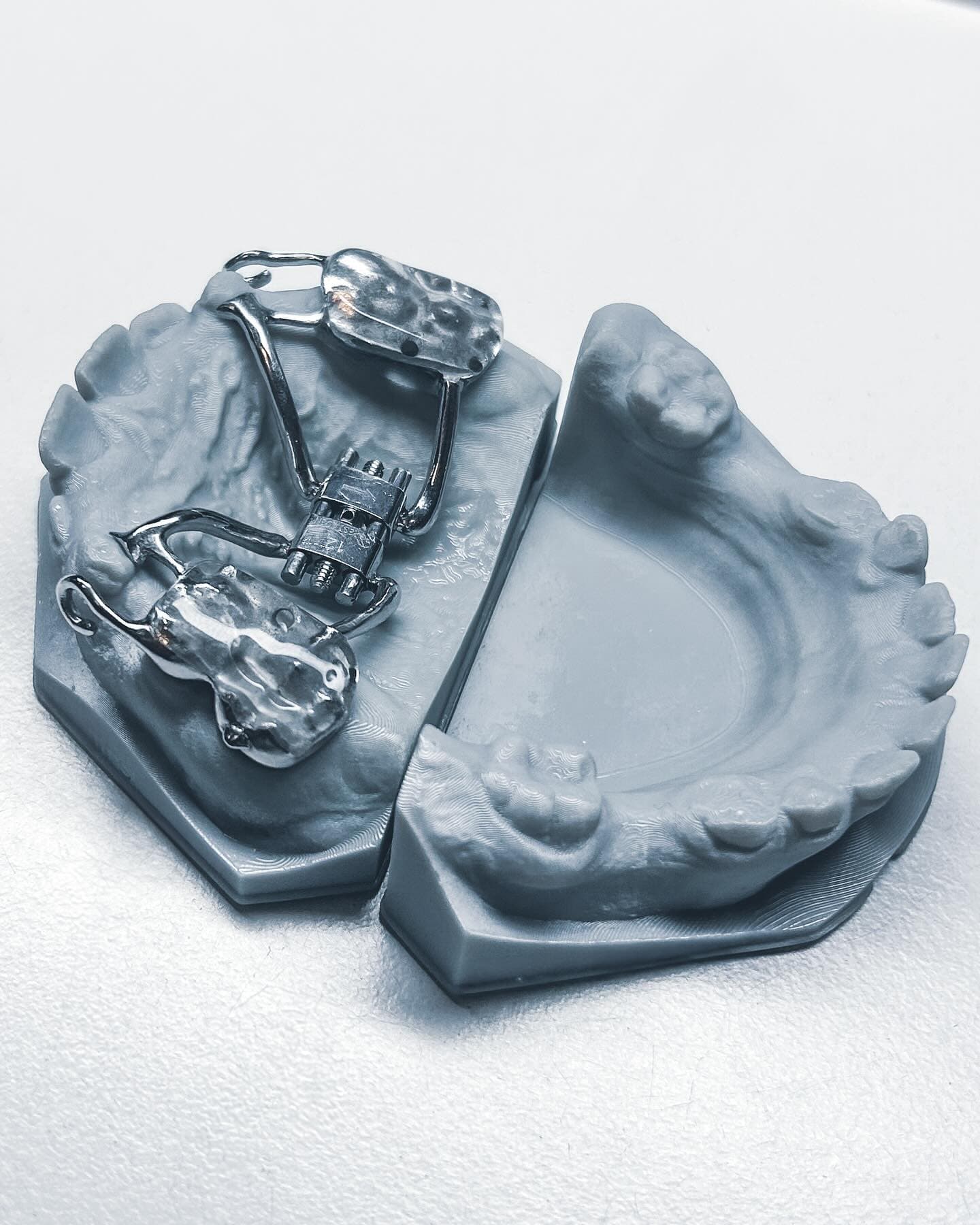
The Shift from Manual to Digital Fabrication
Orthodontic laboratories have undergone a fundamental transformation over the past decade. What once relied almost entirely on plaster models, manual wax-ups, and hand-finishing has been replaced — or augmented — by digital manufacturing workflows built around 3D printing.
Modern orthodontic labs use additive manufacturing for a wide range of applications: printing high-resolution models for thermoforming, producing indirect bonding trays, and increasingly, fabricating appliances directly from biocompatible resins. The result is faster turnaround, higher precision, and greater consistency across cases.
How 3D Printing Works in the Lab
The most common 3D printing technologies in orthodontic labs today are SLA (Stereolithography) and DLP (Digital Light Processing). Both work by curing liquid photopolymer resin layer by layer using UV light, producing parts with resolution as fine as 25–50 microns.
Here's a simplified look at the workflow:
- Digital model creation — An intraoral scan (or scanned impression) is processed in CAD software to create a precise 3D model.
- Design & staging — The technician designs the appliance or model base, stages tooth movements (in the case of aligners), and prepares the file for printing.
- Printing — The file is sent to the printer. Depending on the application, print times range from 20 minutes to several hours.
- Post-processing — Printed parts are washed in isopropyl alcohol (IPA), cured under UV light, and hand-finished as needed.
What Can Be 3D Printed Today?
The range of 3D-printable orthodontic products has expanded significantly:
- Diagnostic and working models — High-accuracy resin models that replace plaster. Faster to produce, easier to store digitally, and fully reproducible.
- Thermoforming bases — Models specifically designed as bases for vacuum-formed retainers, aligners, and splints.
- Indirect bonding trays — Custom transfer trays for precise bracket placement, digitally designed and 3D printed for exact fit.
- Surgical guides — Guides for TAD placement or orthognathic surgery planning.
- Direct-print aligners — Using specialized biocompatible resins (such as Graphy's tera harz TC-85), aligners can now be printed directly, eliminating the thermoforming step entirely.
- Retainers and splints — Some next-generation materials allow direct printing of retainers with the flexibility and strength needed for intraoral use.
Why It Matters for Clinics
For orthodontic clinics, the shift to 3D printing in the lab means several things:
Faster turnaround — Digital files can be processed and printed within hours, compressing what used to take days of manual labor into a single production cycle.
Greater consistency — Every printed model or appliance is an exact reproduction of the digital file. There's no variability from hand pouring or manual trimming.
Better communication — When both the clinic and the lab work with digital files, it's easier to review cases, request adjustments, and track progress.
Scalability — Labs can run multiple printers simultaneously, handling higher case volumes without proportional increases in labor.
Where NordicDens Stands
At NordicDens, 3D printing is integrated into virtually every workflow. Our printer fleet runs daily — producing models, aligner bases, IDB trays, and an expanding range of direct-print products.
We've invested in industrial-grade equipment that delivers the resolution and repeatability our partner clinics depend on. Combined with our digital design capabilities and multi-stage quality control, 3D printing allows us to deliver results that are precise, consistent, and fast.
As new materials and printer technologies become available, we continue to evaluate, test, and adopt what meets our standards — so the clinics we work with always have access to the latest that digital orthodontics can offer.
Looking Ahead
3D printing in orthodontics is not a future technology — it's the current standard for any lab serious about quality and efficiency. The next wave of development will push further into direct-print functional appliances, multi-material printing, and AI-assisted design optimization.
For clinics considering a lab partner, the question is no longer whether a lab uses 3D printing — it's how deeply integrated it is into their production process. At NordicDens, it's the foundation.
Latest from the Blog
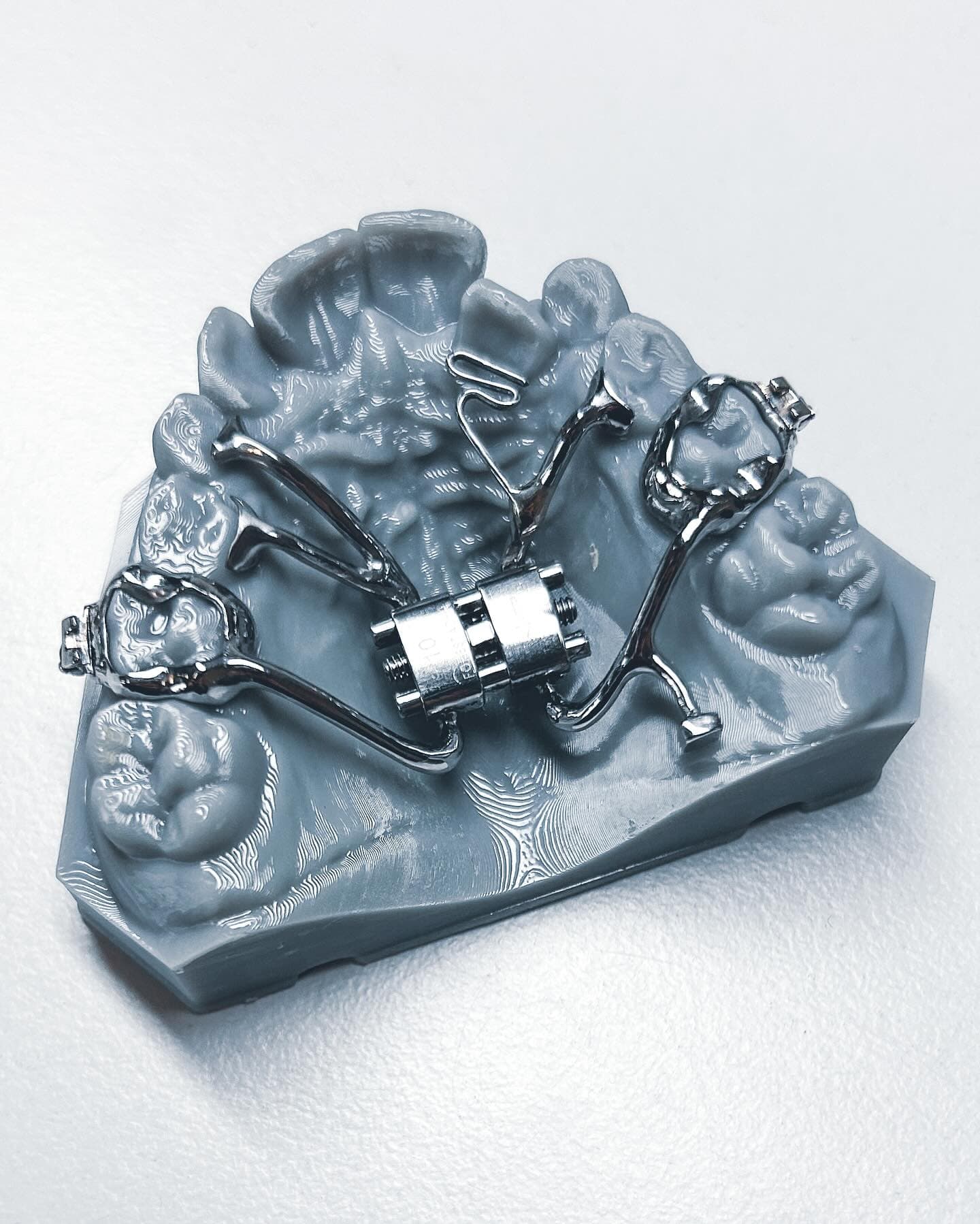
AI and Machine Learning in Orthodontic Treatment Planning
Artificial intelligence is no longer a buzzword in orthodontics — it's becoming a practical tool. From automated segmentation to predictive treatment outcomes, AI is reshaping how cases are planned.
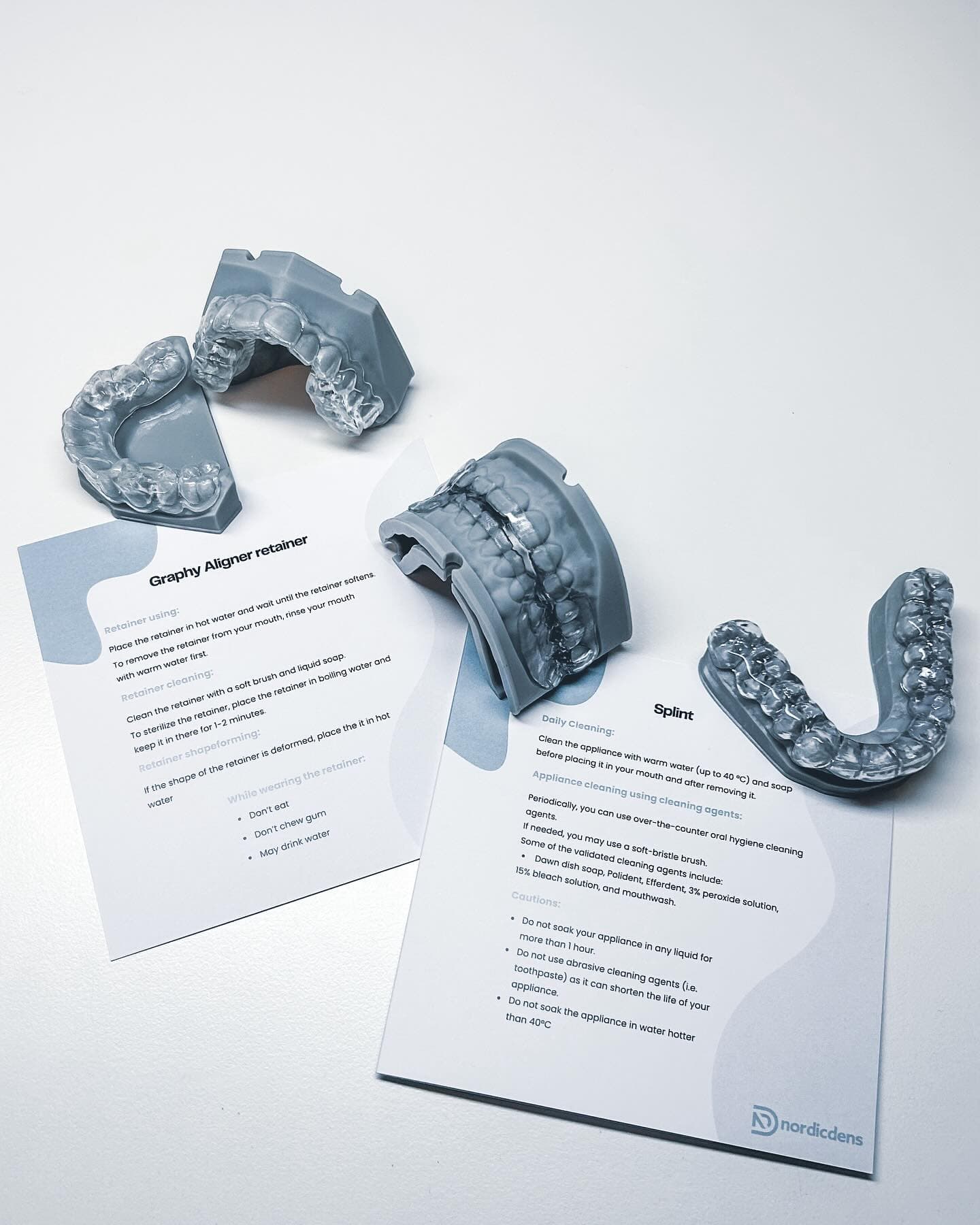
Direct 3D Printed Appliances: Moving Beyond Models
3D printing in orthodontics used to mean printing models. Now, labs are printing the appliances themselves — aligners, retainers, and splints — from biocompatible resins designed for intraoral use.
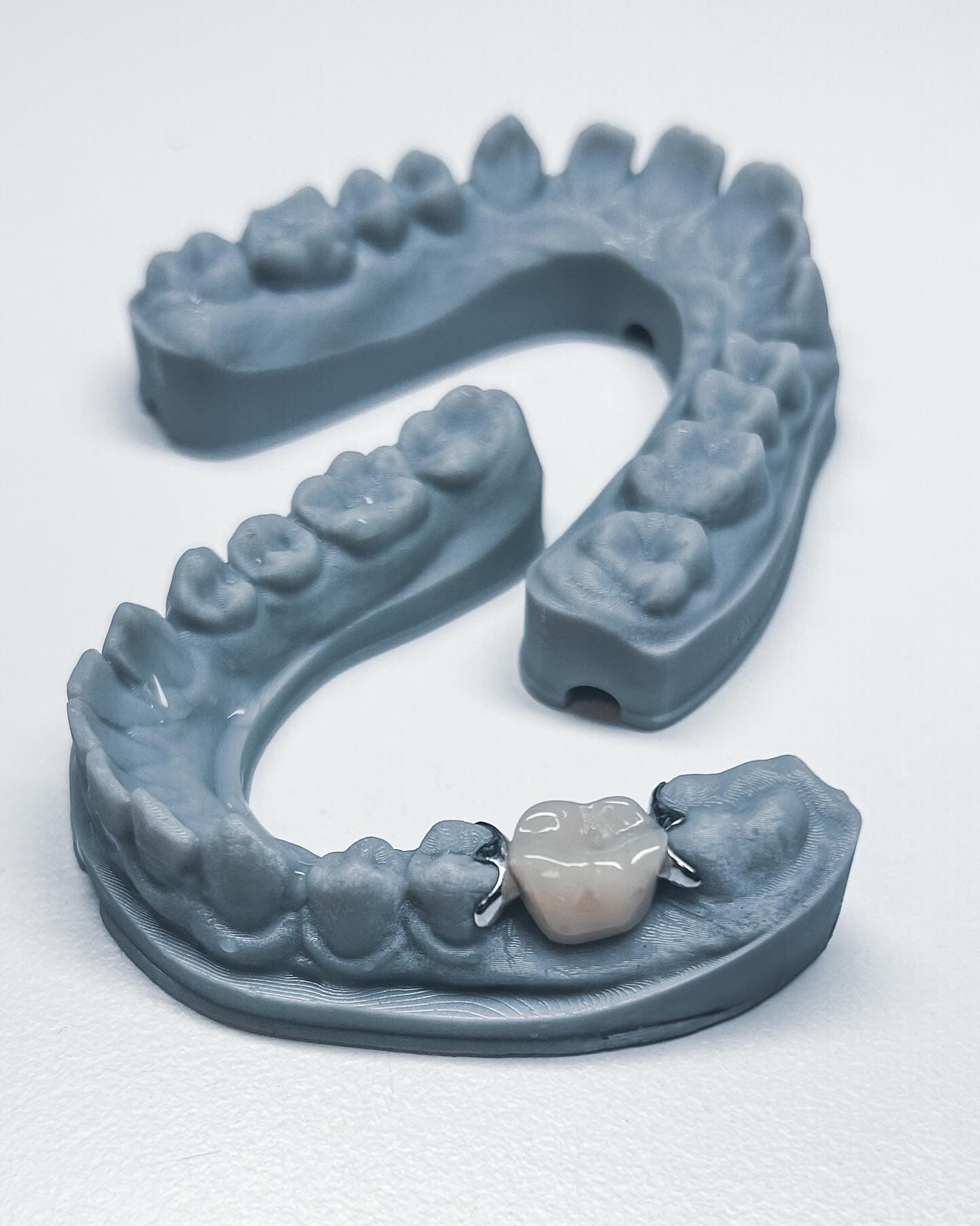
Intraoral Scanning: Why Traditional Impressions Are Becoming Obsolete
Intraoral scanners have fundamentally changed how orthodontic cases begin. Faster, more comfortable, and more accurate than traditional impressions — digital scanning is now the standard for modern practices.