The Next Step in Digital Manufacturing
For years, 3D printing in orthodontic labs served a supporting role: printing models that served as bases for thermoforming or manual construction. The appliance itself was always made from a different material, shaped over or around the printed model.
That's changing. With the development of biocompatible, Class IIa medical-grade resins designed specifically for intraoral use, labs can now print orthodontic appliances directly. This shift from indirect to direct fabrication represents one of the most significant advances in orthodontic manufacturing technology.
How Direct Printing Differs
In the traditional thermoforming workflow, producing a single aligner involves multiple steps:
- Print a 3D model of the tooth stage
- Heat a thermoplastic sheet
- Vacuum-form the sheet over the model
- Trim the formed tray to the correct gingival margin
- Finish and inspect
Each step introduces potential variability — material stretching during forming, inconsistent trimming, edge roughness. Multiply this across a 20+ stage aligner series, and cumulative variability can affect treatment predictability.
In the direct-print workflow:
- Design the aligner geometry digitally in CAD
- Print the aligner directly from biocompatible resin
- Post-process (wash, cure) and finish
The result is an appliance with uniform wall thickness, precise edge definition, and exact reproduction of the designed geometry. Every aligner in a series is manufactured to the same specification, eliminating the variability inherent in thermoforming.
Graphy and the Rise of Printable Resins
Graphy, a South Korean materials company, has been at the forefront of direct-print aligner technology with their tera harz TC-85 resin. This material is specifically engineered for orthodontic trays:
- Biocompatible — Meets ISO 10993 standards for cytotoxicity, sensitization, and irritation
- Flexible yet resilient — Delivers controlled orthodontic forces without the relaxation that thermoformed materials experience
- Transparent — Maintains optical clarity for aesthetic acceptance
- Stain-resistant — Better color stability over the wear period compared to many thermoformed alternatives
Other manufacturers are entering the space as well, with companies like Desktop Health, SprintRay, and Keystone developing their own orthodontic-grade printable resins. The competitive landscape is driving rapid innovation in material properties.
Applications Beyond Aligners
While aligners are the most visible application of direct printing, the technology extends to other appliance types:
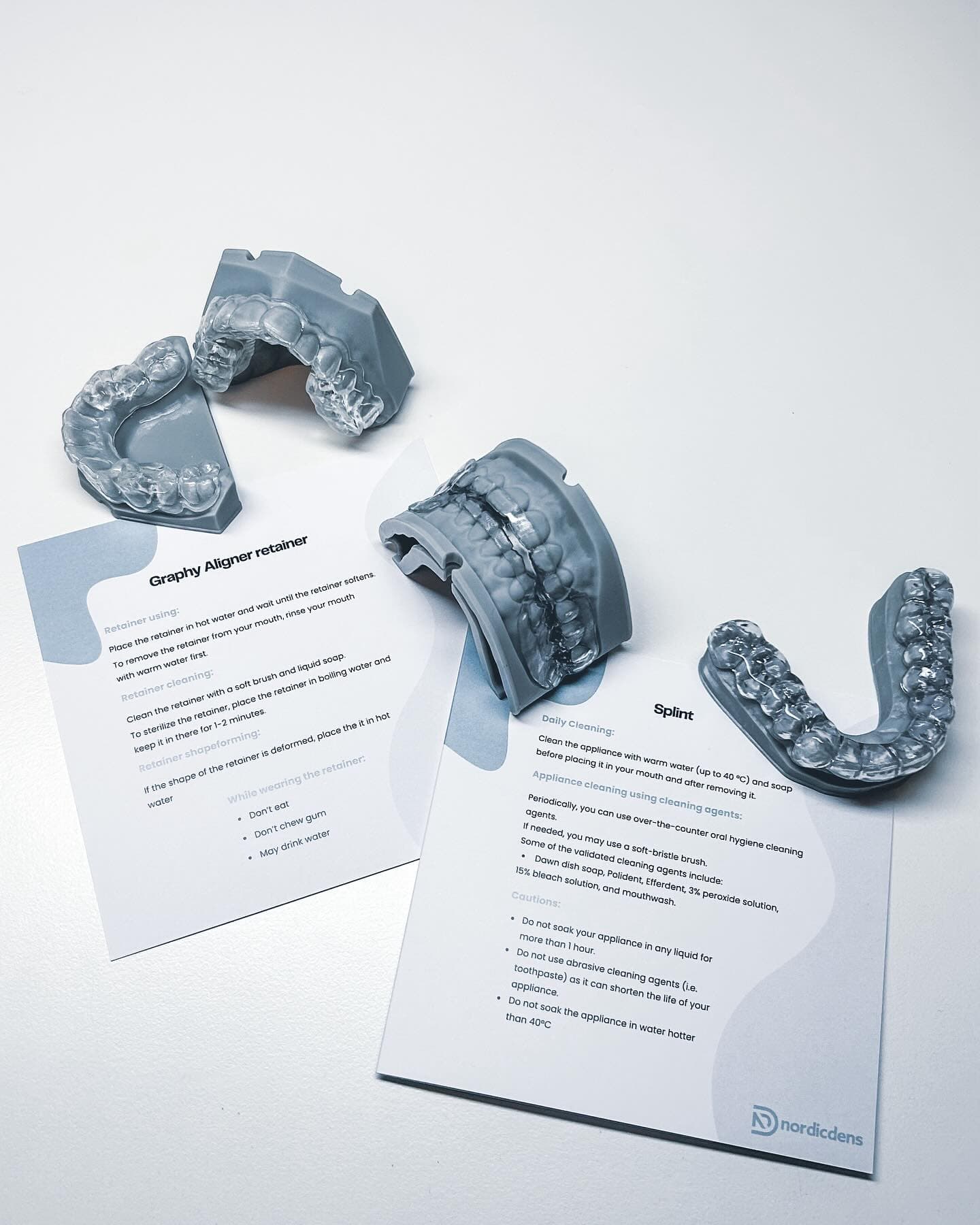
- Retainers — Direct-printed retainers offer precise fit and reproducibility. If a patient loses or breaks a retainer, an identical replacement can be printed from the original digital file.
- Splints and night guards — Bruxism splints and occlusal guards can be printed with controlled thickness and occlusal contacts designed in software.
- Surgical guides — Guides for temporary anchorage device (TAD) placement or surgical planning printed in rigid biocompatible resin.
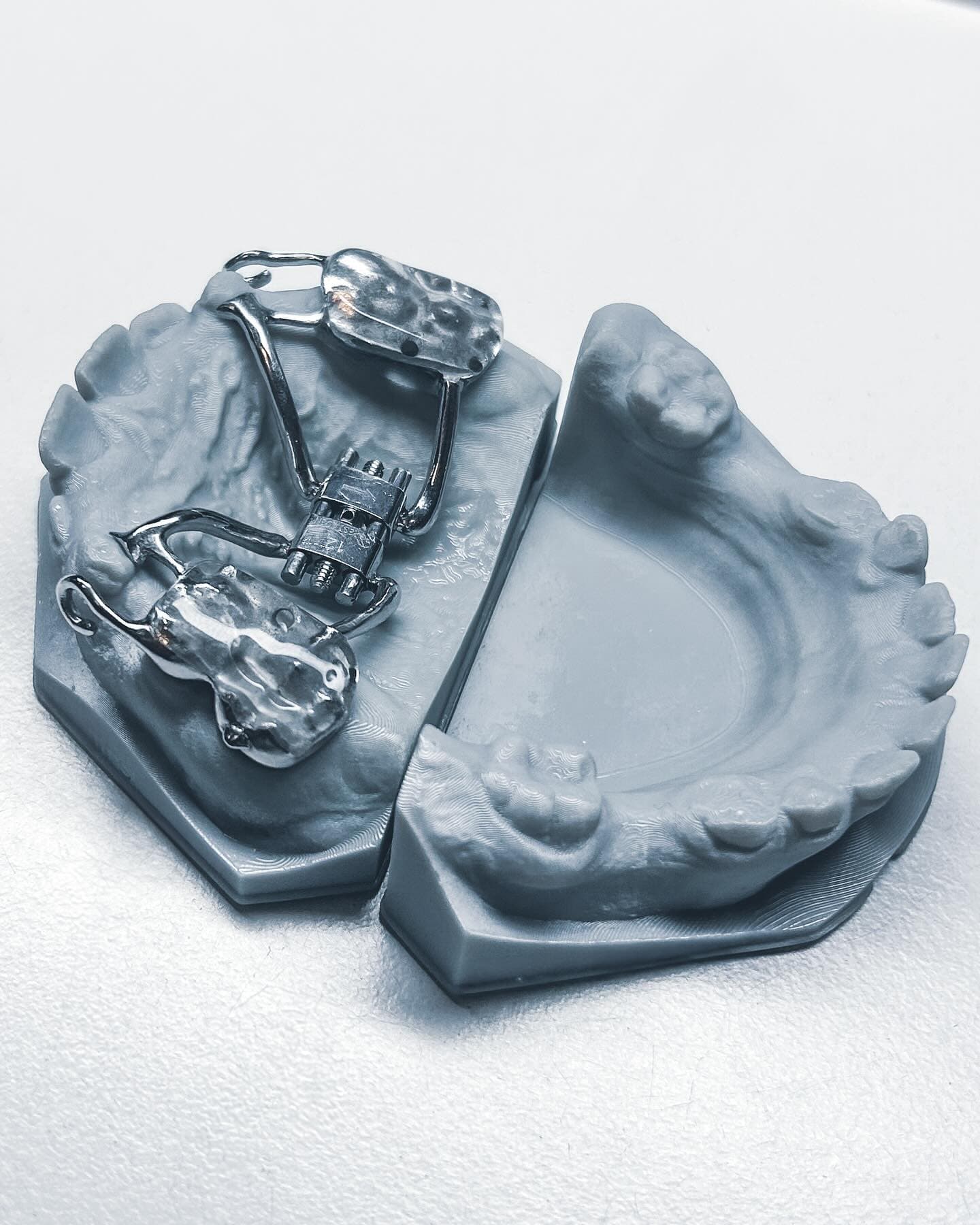
- Space maintainers — Custom space maintenance appliances for pediatric patients, designed and printed for exact fit.
Advantages for Labs
Direct printing offers orthodontic laboratories several operational advantages:
Reduced material waste — No thermoforming sheet cutoffs, no discarded models. Only the material used in the printed appliance is consumed.
Simplified workflow — Fewer production steps means fewer opportunities for error and faster throughput.
Better scalability — A single printer can produce dozens of appliances in a batch, making it easier to handle volume without proportional increases in labor.
Design freedom — Direct printing enables geometries that thermoforming can't achieve — variable thickness, integrated features, anatomical details that would be lost in the forming process.
Advantages for Clinics
More predictable fit — Uniform wall thickness and precise edge definition translate to better patient comfort and more consistent force delivery.
Easier replacements — The digital file is the master. Replacement appliances are exact duplicates, not "close enough" reproductions.
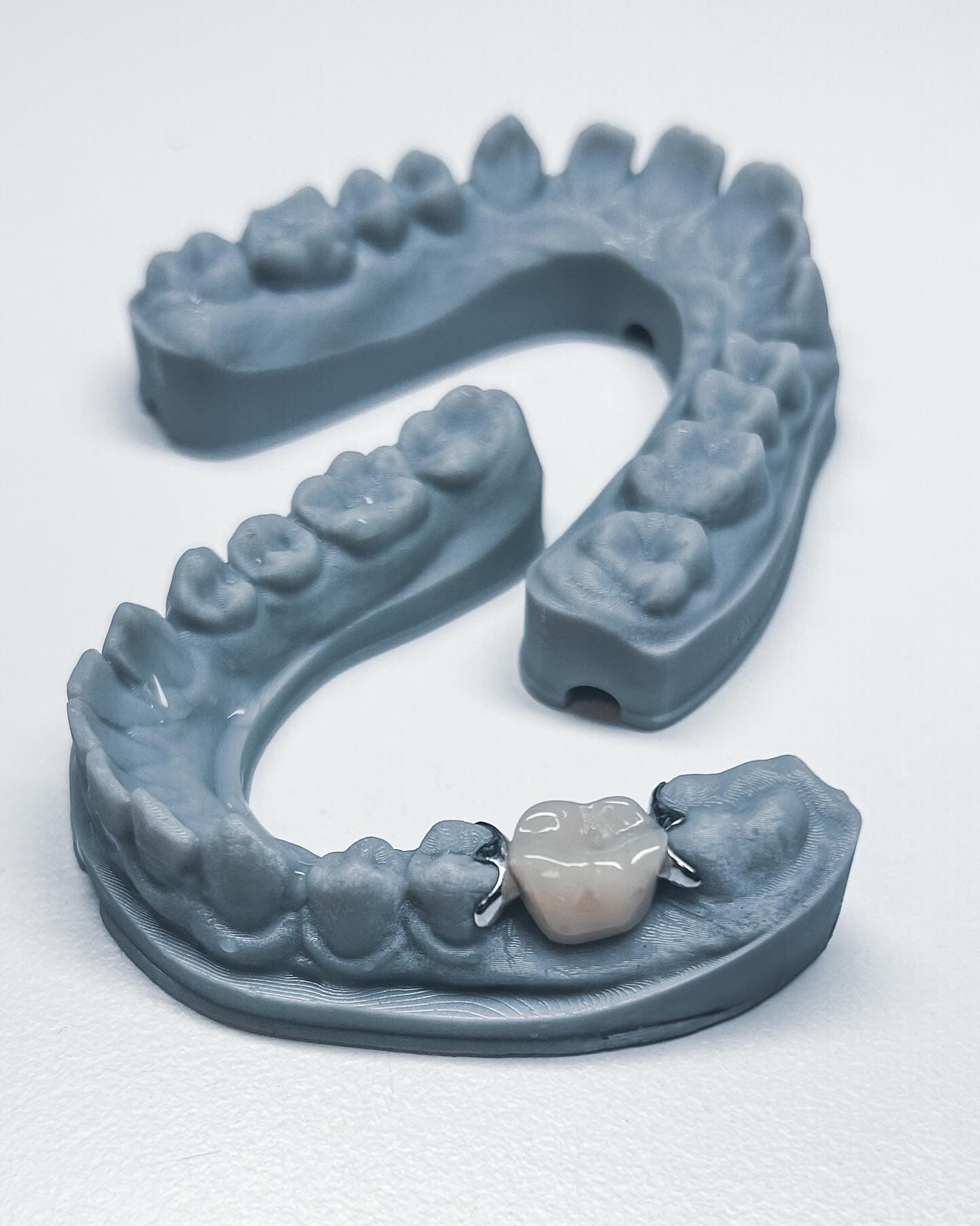
Broader treatment capability — The design freedom of direct printing allows for appliance features (like pontics, hooks, or precision cuts) that enhance treatment mechanics.
Where NordicDens Stands
NordicDens has integrated Graphy tray technology into our production capabilities. We offer direct-print aligners and trays alongside our thermoformed options, giving clinics the flexibility to choose the production method that best suits each case.
Our investment in direct-print technology reflects our commitment to staying at the leading edge of orthodontic manufacturing. As new resins and printing platforms become validated for clinical use, we'll continue to expand the range of appliances we can produce with this technology.
The Trajectory
Direct 3D printing of orthodontic appliances is not a distant possibility — it's happening now. Within the next few years, we expect direct printing to become the primary production method for aligners, retainers, and many other appliance types, with thermoforming gradually transitioning to a secondary role.
Labs that have already built the infrastructure and expertise for direct printing — like NordicDens — are positioned to lead this transition and deliver the best possible results to their partner clinics.
Latest from the Blog
The 3D Printing Revolution in Orthodontics: What Every Clinic Should Know
From thermoforming bases to direct-print appliances, 3D printing has become the backbone of modern orthodontic lab production. Here's what clinics should understand about this shift.
AI and Machine Learning in Orthodontic Treatment Planning
Artificial intelligence is no longer a buzzword in orthodontics — it's becoming a practical tool. From automated segmentation to predictive treatment outcomes, AI is reshaping how cases are planned.
Intraoral Scanning: Why Traditional Impressions Are Becoming Obsolete
Intraoral scanners have fundamentally changed how orthodontic cases begin. Faster, more comfortable, and more accurate than traditional impressions — digital scanning is now the standard for modern practices.