Neither the Nance appliance nor the transpalatal arch (TPA) provides absolute maximum anchorage during fixed orthodontic extraction therapy. Clinical trials demonstrate equivalent resistance to mesial molar drift between both designs. Consequently, selecting between them depends on whether your treatment plan requires active three-dimensional molar control or passive pediatric space preservation, weighed carefully against palatal tissue tolerance and hygiene demands.
Structural and Biomechanical Differences
The structural distinction between these maxillary appliances lies in palatal tissue contact and force distribution.
The Nance Appliance
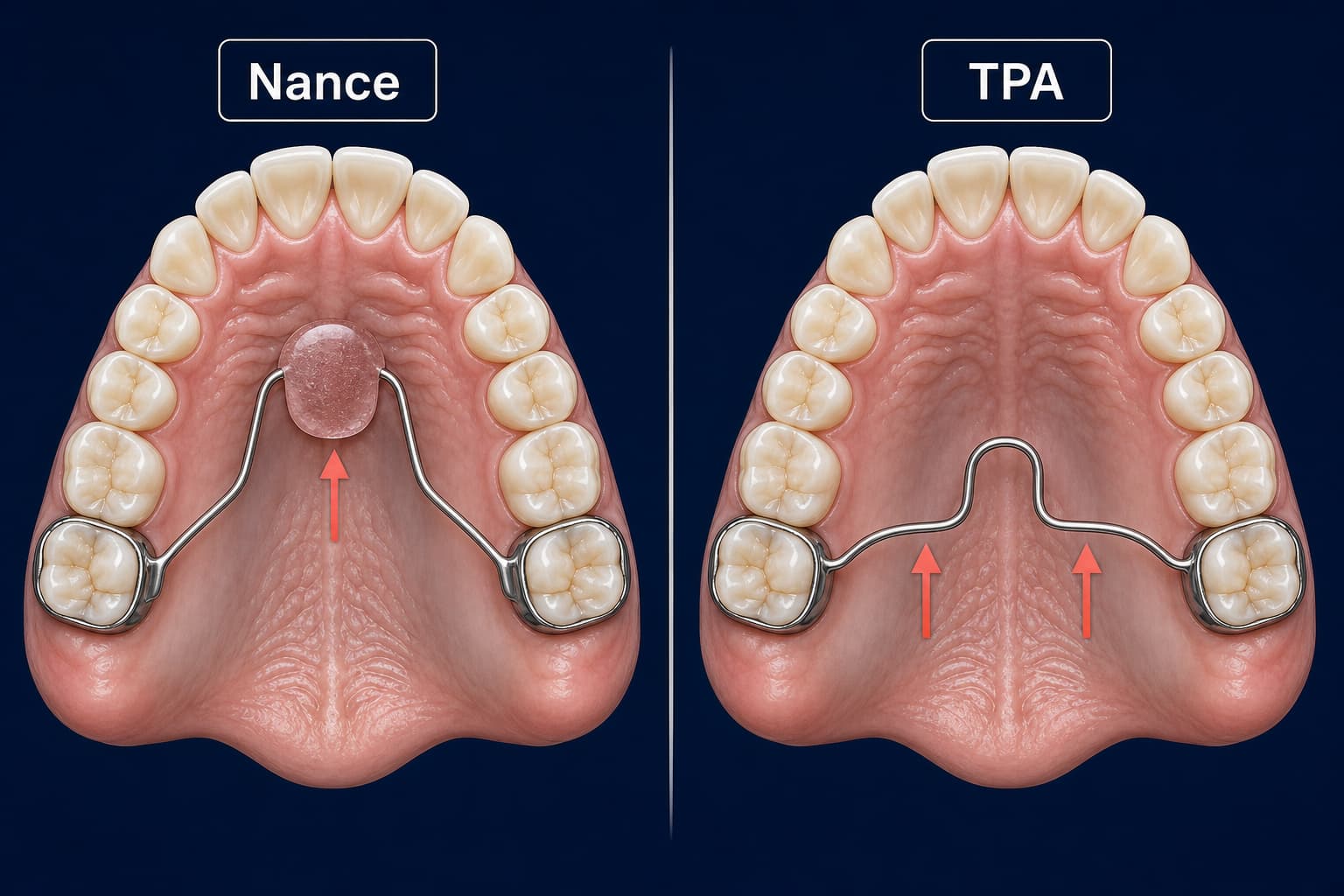
The Nance arch incorporates bilateral molar bands connected by a rigid, heavy stainless steel wire to an acrylic button seated directly on the anterior palatal rugae. By leveraging the stable contour of the anterior palatal vault, the acrylic button offers mechanical resistance against anterior molar displacement. However, direct mucosal contact restricts tissue self-cleansing, necessitating vigilant oral hygiene monitoring.
The Transpalatal Arch (TPA)
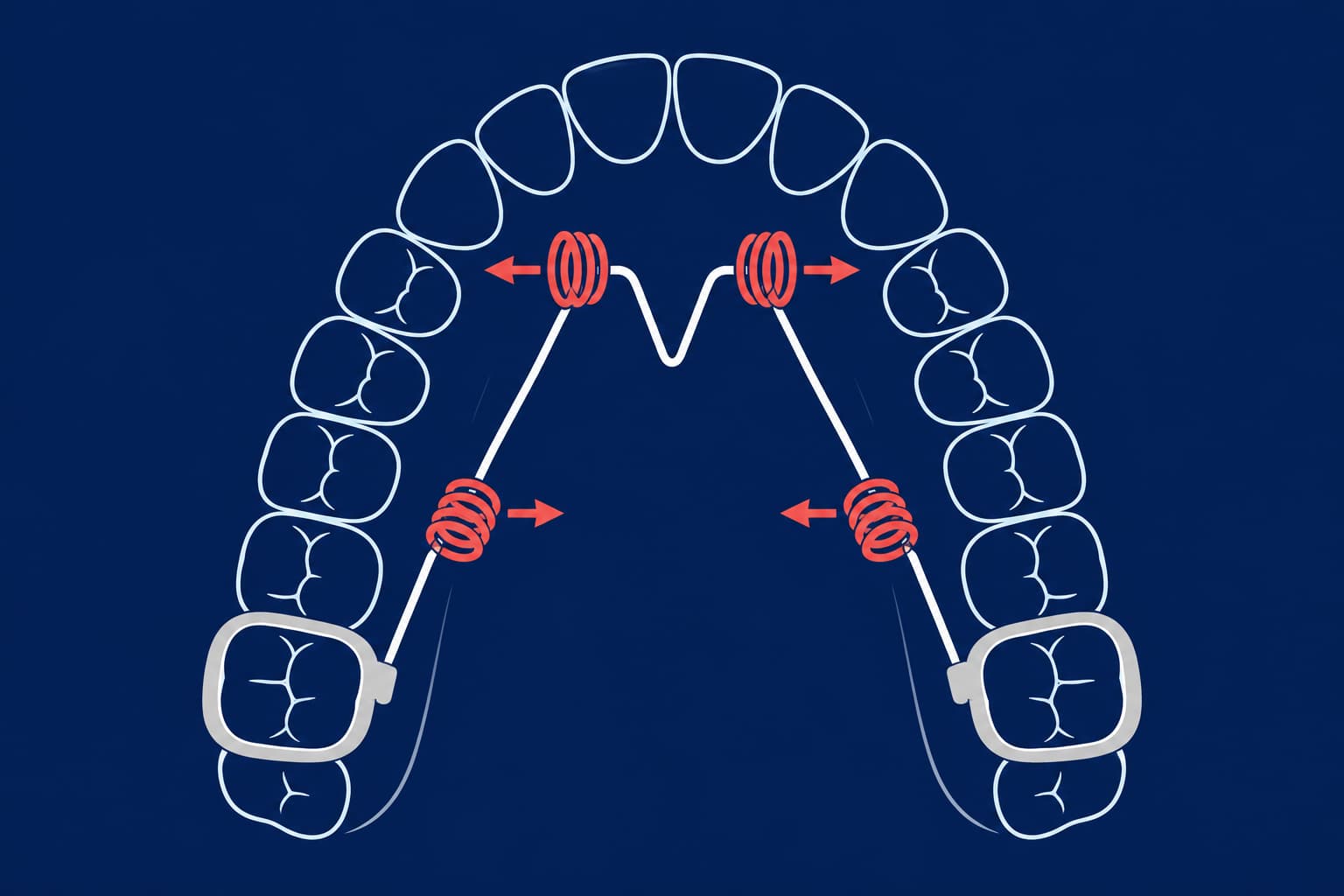
The transpalatal arch, commonly based on the Goshgarian design, features a single stainless steel wire spanning the palatal vault between the maxillary first molars. The wire incorporates a central U-loop or omega loop and is suspended 1 to 2 mm clear of the palatal mucosa. By avoiding tissue contact entirely, the TPA unitizes the molars across the arch while keeping the soft tissue accessible for routine oral hygiene.
Anchorage Efficacy in Extraction Cases
Orthodontists frequently assume that resting an acrylic button against the anterior palatal vault yields superior anteroposterior anchorage compared to a tissue-clearing transpalatal wire. While the palatal vault seemingly presents a solid anatomical wall, clinical evidence challenges this assumption.
Randomized clinical trials comparing Nance appliances and Goshgarian transpalatal arches in premolar extraction cases demonstrate no statistically significant difference in preventing mesial drift or distal tipping of the upper permanent first molars. Both appliances allow minor mesial translation during anterior segment retraction. Furthermore, both designs can induce slight disto-palatal molar rotation during treatment even without deliberate chairside activation. Because anteroposterior anchorage preservation is comparable between the two appliances, your choice should depend on mucosal tissue health, hygiene compliance, and the requirement for active molar movement.
Clinical Indications and Practical Applications
Determining the ideal appliance relies on whether your objective is passive space maintenance or active multi-axis tooth movement.
Pediatric Space Maintenance
Preserving arch perimeter following the premature loss of primary molars is vital in interceptive pediatric care. In cases of premature primary molar loss, particularly unilateral loss, the Nance appliance often demonstrates lower rates of leeway-space loss than a passive TPA. The anterior acrylic button provides an effective physical stop against the palatal vault, resisting asymmetric occlusal forces that drive molars forward. To explore additional strategies for managing arch length in growing patients, review our comprehensive guide on fixed space maintainers.
Active Molar Control
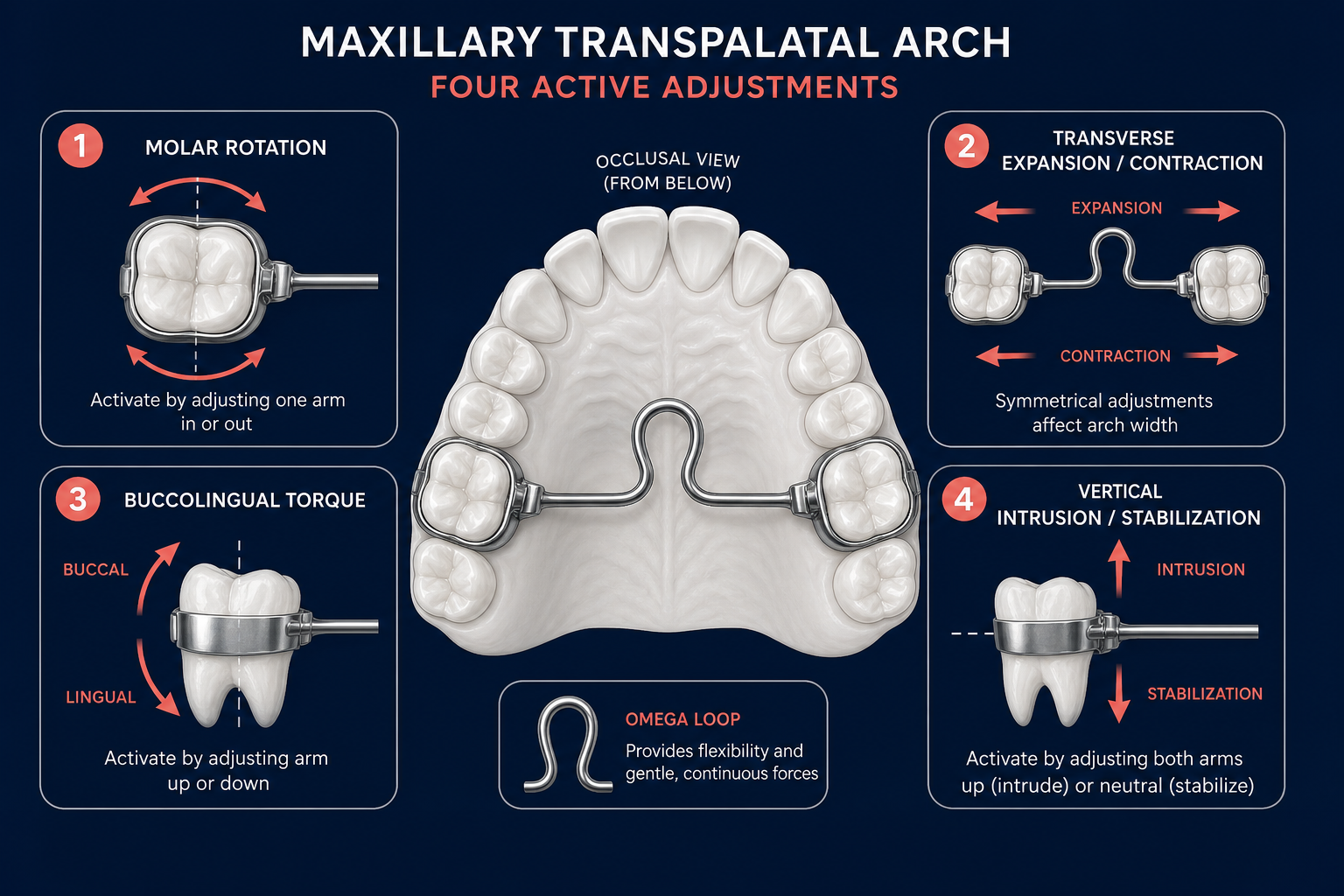
While the Nance functions strictly as a static holding arch, the TPA offers substantial chairside versatility through its central omega loop. Adjusting this loop enables targeted molar repositioning across all three spatial planes:
- Rotational Correction: Unrotates mesiopalatal molar rotations, recovering up to 1 to 2 mm of arch perimeter per side.
- Transverse Adjustment: Delivers expansion, contraction, or buccal/lingual torque to correct crossbites and upright tipped molars.
- Vertical Management: Provides selective intrusion or vertical stabilization when combined with anterior retraction or growth modification mechanics.
When treatment demands true skeletal expansion across the midpalatal suture rather than localized dental movement, dedicated palatal expanders remain the required clinical solution.
Soft-Tissue Health and Discomfort
Managing palatal tissue response is the principal challenge associated with the Nance appliance. Because the acrylic button presses against the anterior palatal mucosa, plaque and microbial biofilms readily accumulate underneath.
| Clinical Parameter | Nance Appliance | Transpalatal Arch (TPA) |
|---|---|---|
| Mucosal Contact | Direct acrylic contact on anterior palatal rugae | Suspended 1–2 mm clear of soft tissue |
| Hygiene Access | Difficult; prone to debris and plaque entrapment | Superior; easily cleaned with routine brushing |
| Active Adjustability | None; static space maintenance only | High; central omega loop permits 3D activation |
| Patient Comfort | Lower; increased risk of tissue soreness and speech alteration | High; minimal tongue interference or tissue pressure |
Prolonged mucosal compression beneath a Nance button can induce localized hyperplastic tissue growth, palatal embedding, and mucosal necrosis. Evaluating palatal health at every clinical visit is imperative. Conversely, the TPA maintains soft-tissue health and offers greater patient comfort, making it the preferred option for patients with sensitive mucosa or compromised oral hygiene.
Digital Fabrication Workflows
Traditional impression materials and hand-soldered wire components frequently introduce dimensional distortions, leading to band misalignment or improper palatal button pressure. Modern CAD/CAM workflows eliminate these manufacturing variances.
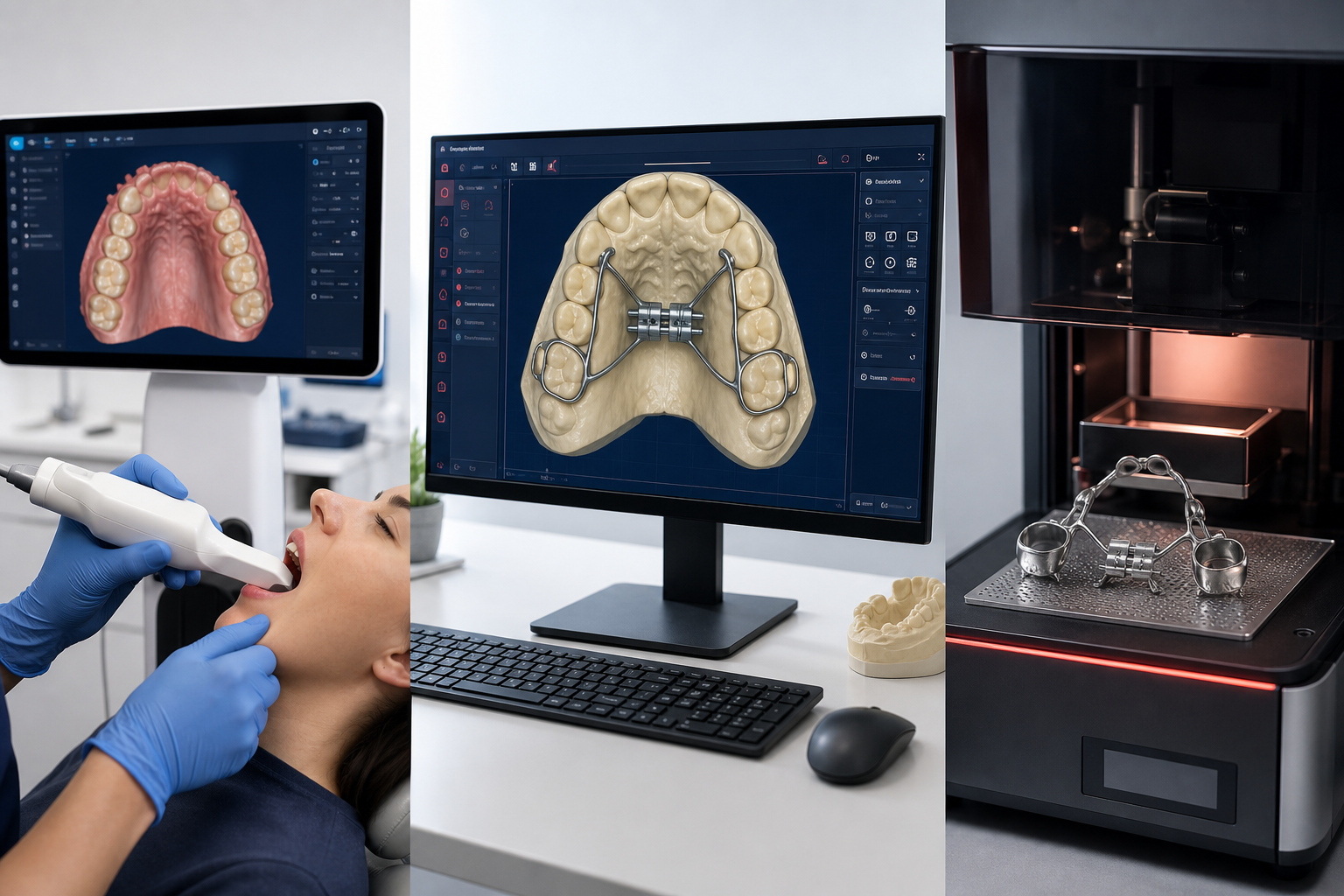
Capturing intraoral geometry with a digital scanner allows direct submission of digital prescriptions to Nordicdens, where advanced digital workflows optimize appliance fabrication:
- Precision CAD Modeling: Digital surface mapping ensures ideal wire clearance for TPAs and precise button topography for Nance arches, incorporating digital relief zones beneath the acrylic button to protect palatal tissues.
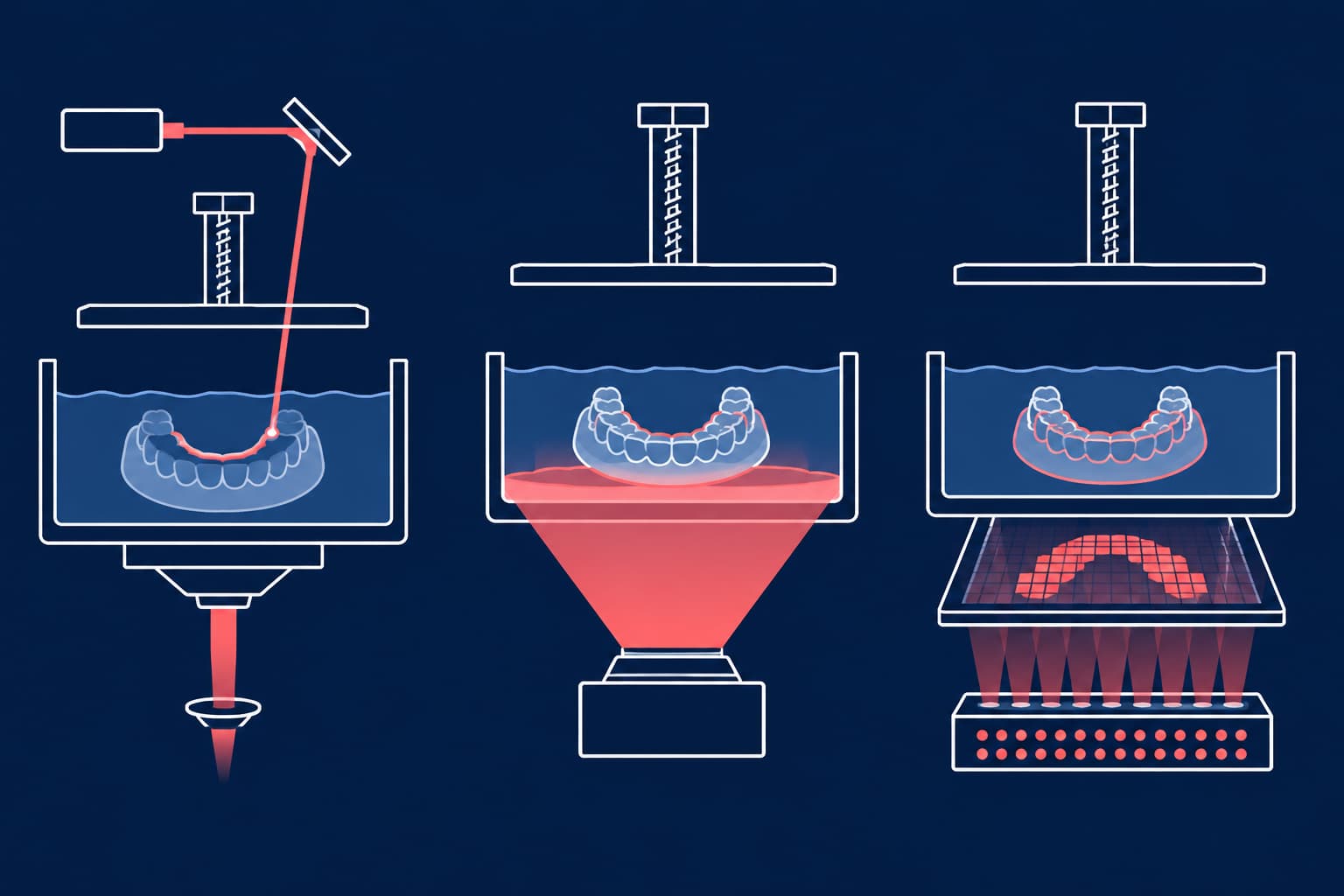
- Direct Additive Manufacturing: High-precision 3D printing, CNC milling, and laser processing replace manual wire bending, delivering predictable loop geometry and exact band fit.
- Multi-Stage Quality Assurance: Every appliance undergoes rigorous digital inspection and expert hand-finishing to ensure accurate chairside placement with minimal adjustment time.
Digital fabrication protocols adapt easily across complex treatment plans, including cases incorporating functional orthodontic appliances for comprehensive jaw relationship correction.
Selecting the Right Appliance
Evaluate your primary treatment objectives when deciding between these two devices:
- Select a Nance Appliance when: You need passive arch perimeter retention in pediatric cases following premature primary molar loss, provided the patient can maintain thorough oral hygiene.
- Select a Transpalatal Arch when: You require active 3D molar control (rotation, expansion, or torque), superior oral hygiene access, or cross-arch stabilization without risking soft-tissue inflammation during fixed appliance therapy.
Submitting intraoral scans and digital prescriptions through the Nordicdens portal ensures precision-fabricated appliances tailored to your exact clinical specifications.