A lab that says "we 3D print" has told you almost nothing. The answers that separate a dependable partner from a risky one are narrower: which resin is certified for the appliance you ordered, whether the post-processing protocol was validated for that resin, how accuracy is checked, and what paperwork arrives with each case. Ask these ten questions before you send your first scan, and you can judge a lab on evidence rather than a brochure.
Most of the questions have a measurable answer. Where a lab responds with adjectives ("precise", "high-quality", "state of the art"), ask for the number behind it.
The ten questions at a glance
| # | Question | A strong answer | A red flag |
|---|---|---|---|
| 1 | Which printers and technology do you use? | Names the system and ties it to appliance types | "Whatever is available" |
| 2 | Which resin, and is it certified for this appliance? | Exact resin name, Class IIa/CE for long-term mucosal contact | Generic "biocompatible" claim |
| 3 | Is your post-processing validated for that resin? | Follows the manufacturer's wash and cure protocol, documented | Same wash and cure for every resin |
| 4 | How do you verify accuracy? | Scheduled printer checks and per-case inspection | "Our technicians have a good eye" |
| 5 | Which files do you accept, and what do you check on arrival? | Open STL/PLY, mesh check, written rejection reasons | Prints whatever arrives |
| 6 | What does your turnaround include? | Defined start, shipping and business-day rules | One number with no conditions |
| 7 | What documentation comes with each case? | MDR custom-made statement, traceability, ISO-aligned QMS | Documentation "on request, for a fee" |
| 8 | Can you do direct print and thermoforming? | Both, with criteria for choosing | Pushes one method for every case |
| 9 | What happens when an appliance does not fit? | Root-cause review, archived design file, clear remake terms | Remake policy undefined |
| 10 | How do you handle patient data? | Written data processing agreement, secure transfer | Files exchanged by consumer email |
1. Which 3D printing technology and printers do you use, and for which appliances?
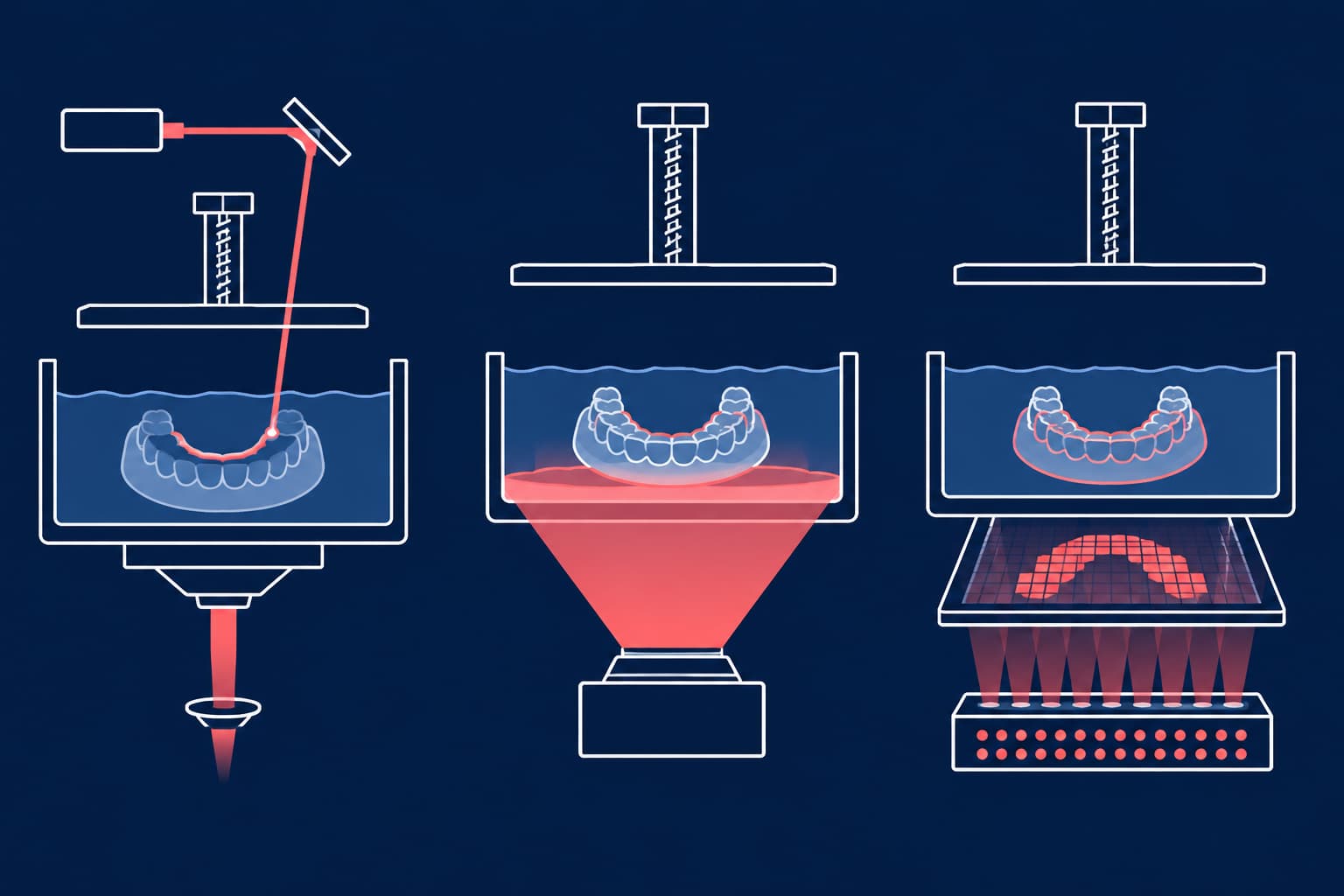
Most orthodontic labs print with SLA (stereolithography) or DLP (digital light processing). Both cure liquid photopolymer layer by layer with light. Nordicdens' own overview of 3D printing in orthodontic labs calls them the most common technologies in the field, and our SLA vs DLP comparison covers the trade-offs.
The technology label matters less than the specific machine. A study in Clinical Oral Investigations compared orthodontic models from an SLA printer with two entry-level LCD printers. Trueness error (RMS) was 0.066–0.075 mm for the SLA printer and 0.179–0.209 mm for the LCD units, and layer thickness (50 vs 100 µm) made no significant difference in that test.
What to ask for: the printer model for each appliance type, and whether models, indirect bonding trays and direct-printed appliances run on the same machines. A lab that prints models on one system and aligners on a validated resin system is giving you a better answer than "we have several printers".
When it doesn't matter much: for study models that only feed a thermoforming step, a few hundredths of a millimetre of printer difference is rarely what decides fit. For direct-printed appliances worn for months, it is.
2. Which resin do you use, and is it certified for this exact appliance?
"Biocompatible" is not a certification. Ask for the resin's exact name, its regulatory status and the indication it covers.
In the EU, resins for long-term intraoral contact are typically CE-marked Class IIa materials. For direct-printed aligners, the best-documented example is Graphy's Tera Harz TC-85DAC, which its technical data sheet describes as a CE Class IIa material for direct aligner printing. The related Tera Harz Clear series also holds an FDA 510(k) clearance (K240597), and its summary lists a flexural strength of 58–76 MPa depending on the grade.
Two details catch buyers out:
- Indication. Clearance is specific to intended use. Formlabs' Dental LT Clear V2, for example, is FDA-cleared for removable appliances such as occlusal splints, night guards and mouth guards. That is not the same as a clear aligner indication.
- Shelf life. Published figures differ. The TC-85DAC data sheet gives 12 months from manufacture when stored at 15–25 °C, while the FDA summary lists two years for the Tera Harz Clear series. Ask how the lab tracks lot numbers and expiry dates, and follow the datasheet that ships with the lot.
One academic review also points out that approval attaches to the printed aligner made in a defined workflow, not to the liquid resin on its own. That leads directly to the next question.
Nordicdens has integrated Graphy tray technology and offers direct-print aligners and trays alongside thermoformed options; the direct-printed appliances guide explains the workflow, and the resin guide goes deeper on materials.
3. Is your post-processing protocol validated for that resin?
A printed appliance is not finished when it leaves the build plate. Uncured monomer on the surface is cytotoxic, so washing and curing directly affect patient safety. They affect fit too: a 2025 study of washing time notes that resin left behind after insufficient washing polymerises and can reduce the accuracy, and therefore the fit, of the print.
The evidence does not support one universal recipe, which is exactly why you should ask:
- Washing: Formlabs' application guides warn that exceeding the specified wash duration can affect dimensional accuracy and long-term performance. One 2025 study found two 5-minute washes optimal for one resin, with longer washing adding nothing for another.
- Curing: A 2025 systematic review of printed-aligner cytotoxicity found that post-curing duration and curing-system type influenced results, but that limited, inconsistent studies prevent firm conclusions. Its recommendation is strict adherence to the manufacturer's protocol.
- Atmosphere: In one study of TC-85 aligners, nitrogen-rich curing produced highly biocompatible parts, while curing in oxygen left moderate cytotoxicity.
So the right question is not "how long do you cure?" but "where does that number come from, and is it the manufacturer's validated profile for this resin and this curing unit?" Resin instructions for use state that cure time depends on the light wavelength and intensity, so a protocol copied from a different unit is not validated.
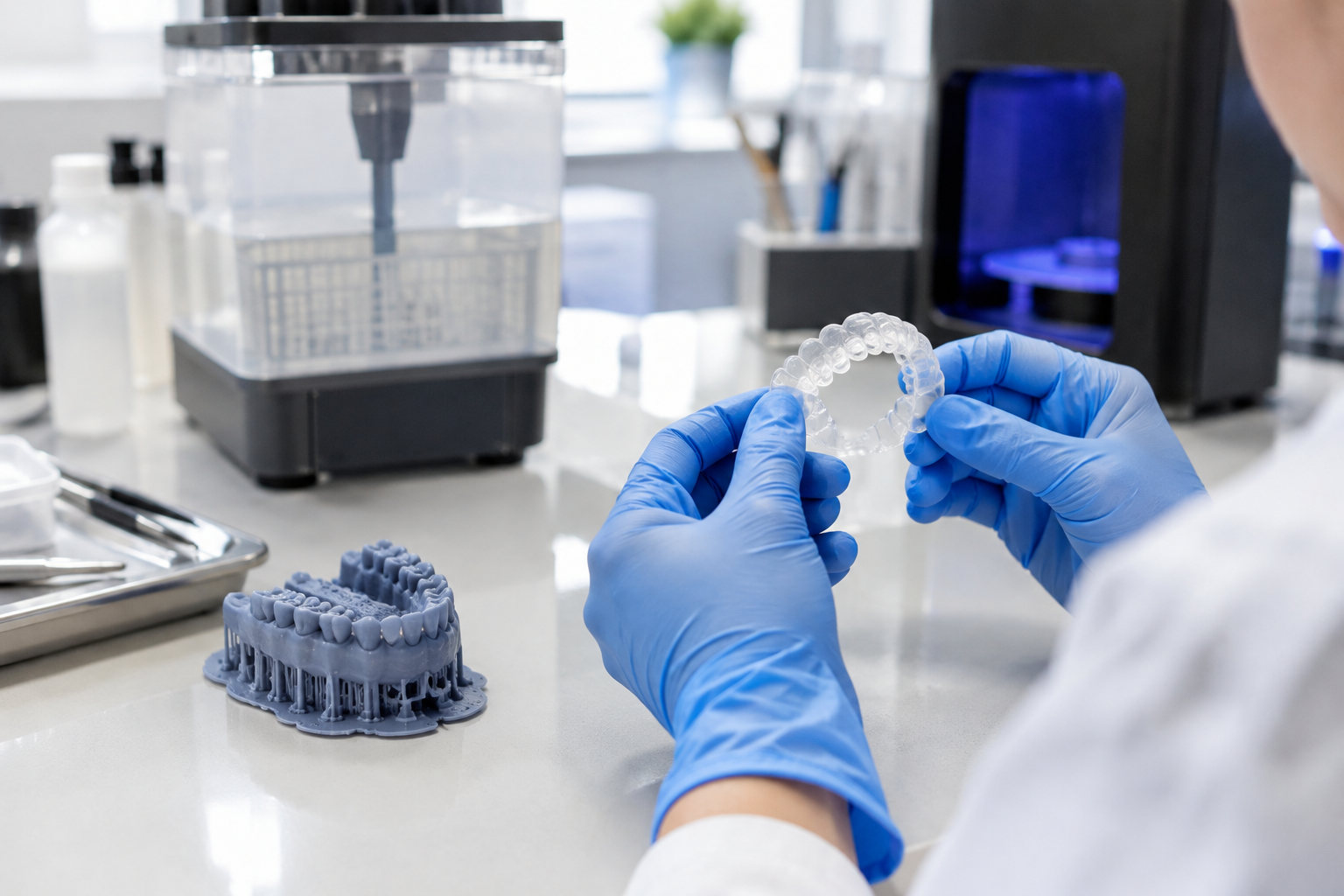
For the lab-side detail, see our guide to post-processing biocompatible orthodontic prints.
4. How do you verify and maintain printing accuracy?
Accuracy has two parts: trueness (how close a print is to the digital design) and precision (how closely repeated prints agree). A systematic review of full-arch printed models found accuracy ranging from under 100 µm to over 500 µm across studies, with most models judged clinically acceptable. A wide range like that is why you need the lab's own numbers.
Ask three things:
- How are printers checked? A sound answer includes scheduled checks of light intensity and XY resolution, so that a 0.5 mm movement in the planning software becomes 0.5 mm in the device. Nordicdens describes this in its lab quality control article, and our printer maintenance guide covers the routine.
- What tolerance do you work to? Nordicdens' cost and accuracy analysis cites ±0.25 mm for individual teeth as the dimensional tolerance needed for a predictable fit. A lab should be able to state its own figure.
- How do you set build orientation and layer thickness? The literature disagrees. One study found 0° printing gave the best trueness and reproducibility; another found maxillary models printed at 30° and 60° more accurate than those at 0° and 90°, though all stayed within clinically acceptable limits. On layer thickness, studies range from "no significant effect" to "50 µm beats 100 µm". There is no single correct setting, so the useful answer is a documented rule per appliance type. Our orientation and support rules and accuracy guide show what such rules look like.
5. Which file formats do you accept, and what happens when a scan is flawed?
STL is the common denominator, and PLY carries colour data when it is needed. Acceptance varies by lab: some state open STL from any intraoral scanner, others list several formats and invite you to ask about others. Confirm your scanner's export works before you commit; our guide to STL files in orthodontics helps.
The more telling question is what the lab does on arrival. A careful lab checks files for holes, noise and "double walls" before printing, because those defects pass straight through to the appliance. Then ask what happens next: does the lab repair the mesh, return the case with a written reason, or print and hope?
This matters for your costs too. Nordicdens' guidance on clinic-to-lab data exchange cites industry data that over 80% of dental laboratory remakes originate on the clinic side, from impressions, bite registrations or ambiguous prescriptions. A lab that tells you precisely why it rejects a case saves you a remake. See why lab cases get rejected and our digital case checklist.
6. What does your turnaround time include, and what stops the clock?
Published lab turnaround times vary widely and are not comparable until you know what each number covers. One orthodontic lab lists 1–2 business days for Essix retainers and 5–7 for functional appliances; another lists 5 days for retainers and 8–10 for removable and fixed appliances, and states that production does not begin until all required data is received.
Print time itself is the short part. Nordicdens' overview puts it at 20 minutes to several hours, depending on the application. The rest is design, post-processing, inspection and transit. Ask:
- Are days business days or calendar days?
- Does the count start at upload, at case approval or at complete data?
- Is shipping to your country included, and with which carrier?
- What is the capacity plan for peak weeks?
For Baltic and Scandinavian clinics, the shipping leg deserves a direct question, since it can outweigh the printing time. Our article on digital scan turnaround times breaks down the stages.
7. What regulatory documentation comes with each case?
Orthodontic appliances made to your written prescription are, in most cases, custom-made devices under the EU Medical Device Regulation (2017/745). That prescription is what makes them custom-made: the MDR defines a custom-made device as one made to a qualified person's written prescription, specifying design characteristics, for one patient's sole use.
For such devices, the manufacturer must draw up the Annex XIII statement before placing the device on the market. The statement must accompany the device and be made available to the patient, identified by name, acronym or numerical code. The manufacturer must keep it for at least 10 years and keep documentation on design, manufacture and performance available to the competent authorities.
Ask the lab:
- Is the Annex XIII statement supplied with every case?
- Can you trace this appliance to a resin lot and a print job?
- Is there a named person responsible for regulatory compliance, and a quality management system aligned with ISO 13485?
- Is documentation included in the price? Some labs add a separate documentation fee, which is worth knowing before you compare quotes. Our pricing models article shows how this appears on invoices.
National implementation details can differ between Sweden, Denmark, Norway, Finland and the Baltic states, so check any country-specific requirement with your competent authority. Our guides to MDR compliance for orthodontic labs and lab certification cover the framework.
8. Can you do both direct printing and thermoforming, and how do you choose?
A lab that offers only one method will recommend it for every case. A lab that offers both can tell you when each one wins.
Thermoforming prints a model and forms a sheet over it; direct printing produces the aligner itself in resin and removes the model and forming steps. A 2026 review reports root mean square deviations as low as 0.140 mm for direct-printed aligners, against 0.188–0.209 mm for thermoformed counterparts. Those are laboratory measurements, not treatment outcomes, so treat them as a reason to ask, not a verdict.
Use these criteria in the conversation:
- Choose direct print when you want to remove the model and forming steps and the lab can show a validated resin and post-processing workflow (questions 2 and 3).
- Choose thermoforming when a specific sheet material is the point, such as multilayer, PETG or polypropylene, and you prefer an established material route.
- Ask the lab to explain the choice per appliance, including retainers, where direct-print options are expanding.
Our guides to thermoforming in orthodontics, 3D printed retainers and multilayer aligner materials help you compare.
9. What happens when an appliance does not fit?
Every lab remakes cases; what differs is how it handles them. Look for a defined process, not goodwill.
- Root cause. Was it the scan, the prescription, the design, the print or the finishing? Incomplete or distorted scans, unclear bite records and incomplete case information are the usual culprits cited for fit problems and remakes.
- Inspection. Ask how many checkpoints a case passes. Nordicdens runs three: design review, post-production inspection and a final check before packaging, each against the original prescription.
- Archive. If the design file is archived, a replacement can be produced without a new impression. Nordicdens archives digital case records for exactly this reason.
- Terms. Who pays for a remake caused by a clinic-side data error, and who pays when the lab is at fault? Get it in writing.
10. How do you handle patient data?
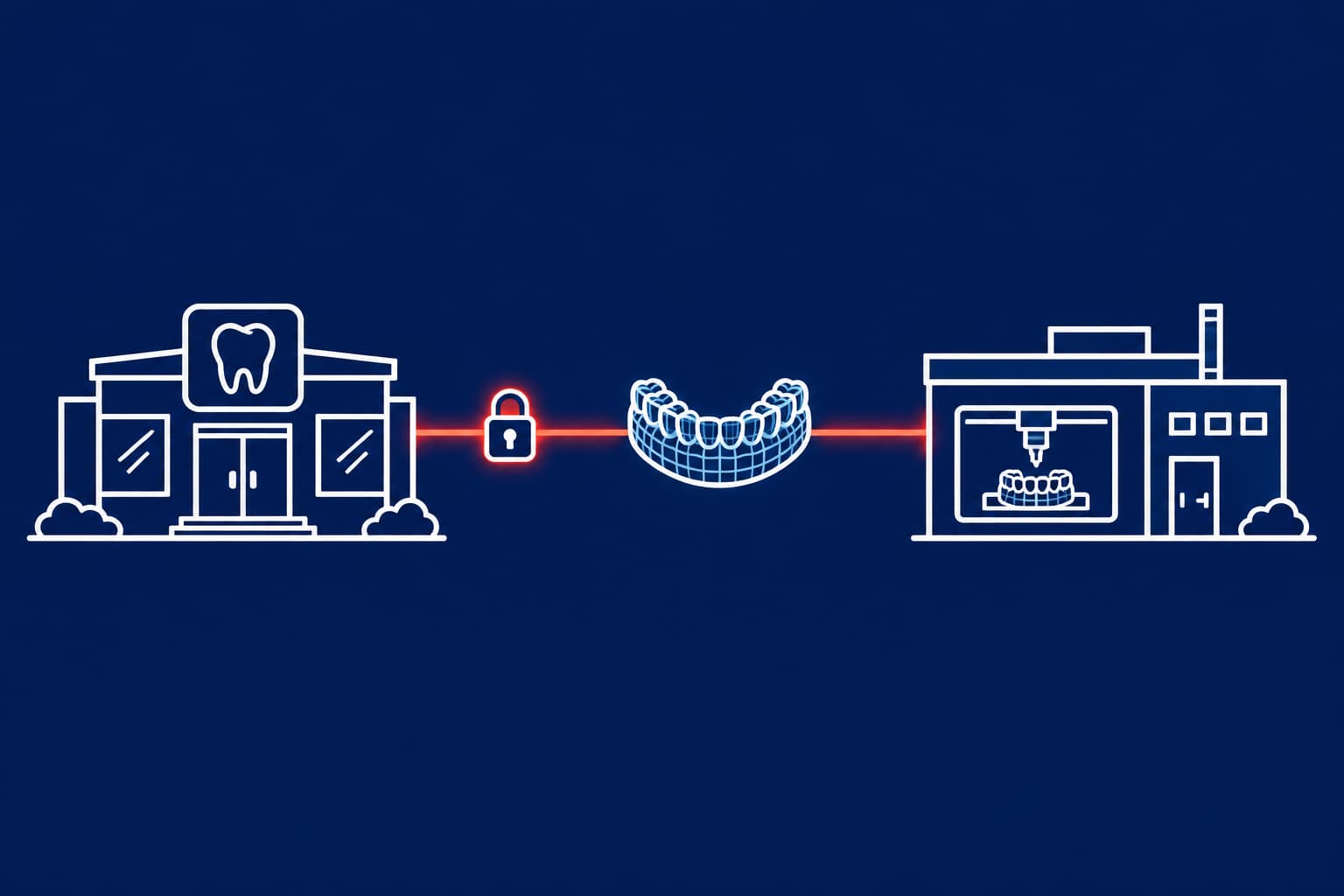
Intraoral scans identify patients and describe their oral health. Treat them as health data under GDPR Article 9, unless your data protection officer advises otherwise. If the lab processes them on your behalf, Article 28 requires a written contract (electronic is fine) that governs that processing, and it also covers the lab's use of sub-processors, who need your prior written authorisation.
Ask for the data processing agreement, the transfer method (secure portal, not consumer email), where files are stored, how long they are kept and who may access them. Whether a given lab acts as your processor depends on the arrangement, so confirm it with your data protection officer rather than assuming.
Turn the answers into a scorecard
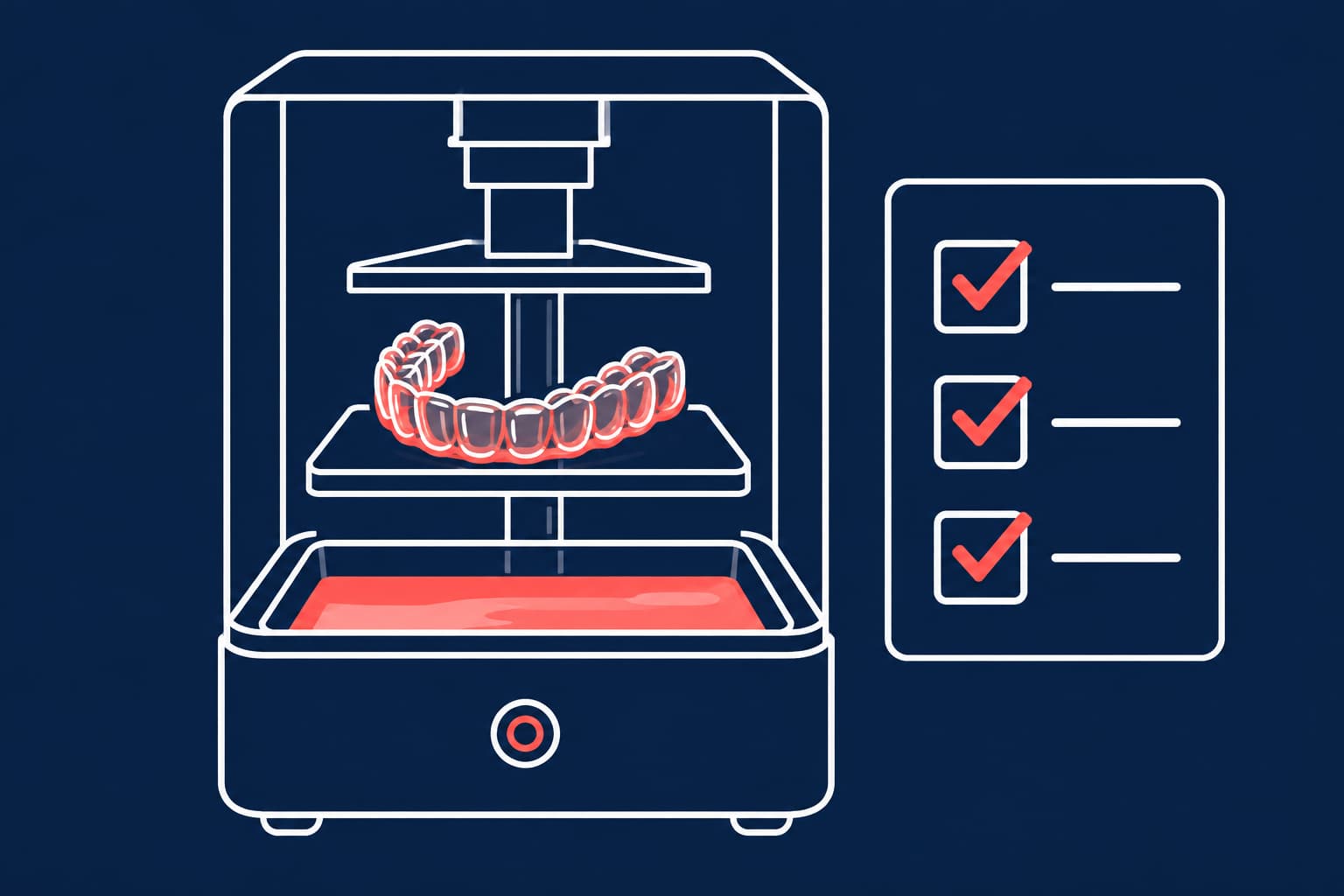
Score each lab from 0 to 2 on the ten questions: 0 for no answer, 1 for an answer without evidence, 2 for an answer you can verify with a document, a number or a named protocol. A lab that scores 2 on questions 2, 3 and 7 (resin, post-processing, documentation) has covered the areas where a failure carries patient safety and legal consequences. Treat those three as pass/fail, and use the rest to compare.
If your answers show that you would need to buy printers, run solvent baths and validate cure cycles yourself to match what a lab already does, that is a strong argument for outsourcing. If you already have those protocols in-house, the same ten questions work as an audit of your own workflow. Our lab selection checklist adds the non-printing criteria.
Want to see how Nordicdens answers these questions? Send us your list at info@nordicdens.eu, along with a recent case, and we will respond to each point with documents and specifics.