Custom-made oral appliances are a clinically validated alternative to CPAP therapy, offering superior patient adherence and significant improvements in quality-of-life outcomes for mild-to-moderate obstructive sleep apnea (OSA). While CPAP remains the gold standard for reducing the Apnea-Hypopnea Index (AHI) in strictly controlled settings, the real-world efficacy of oral appliance therapy (OAT) relies on its high compliance rates and the precision of modern, titratable designs. By prioritizing patient comfort without compromising on clinical standards, you can provide a therapeutic option that patients actually use throughout the entire night.
Mechanism of Action: Mandibular Advancement
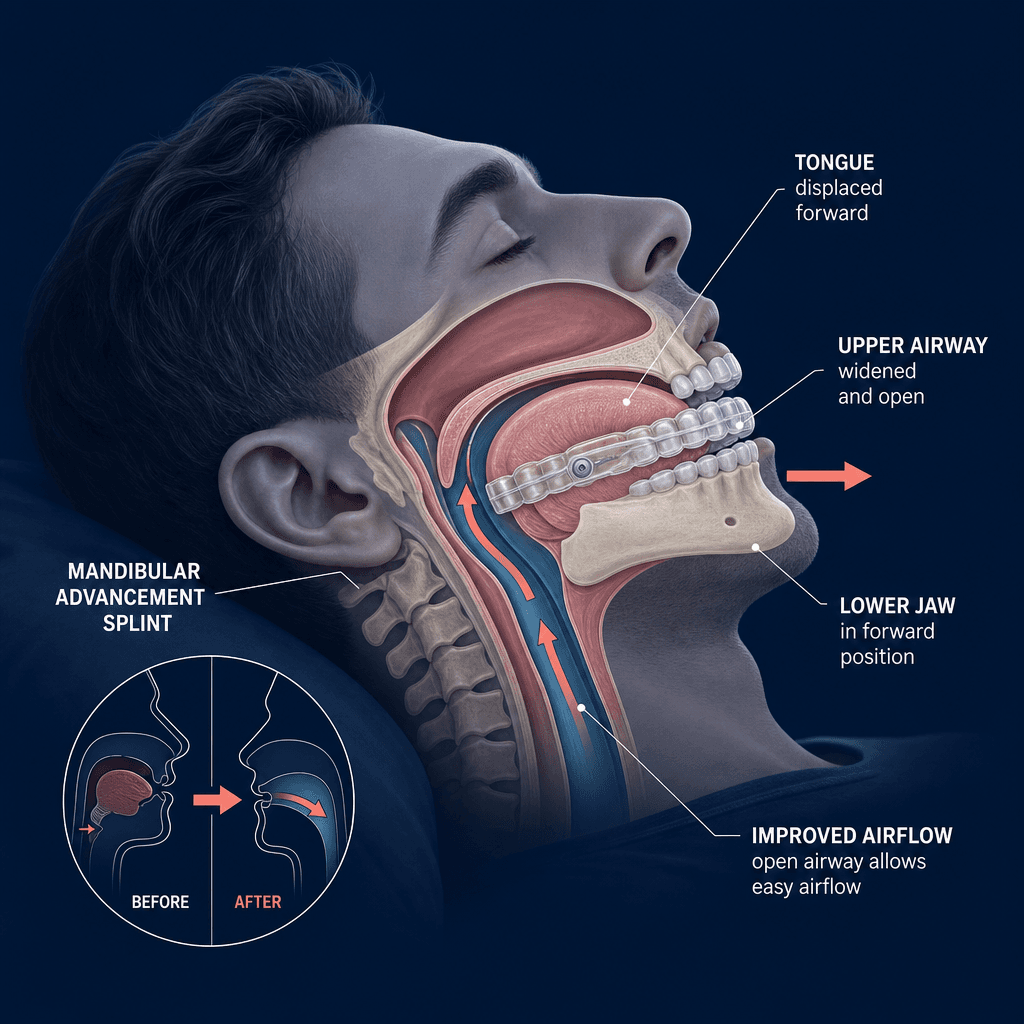
The primary function of a sleep apnea oral appliance – specifically a Mandibular Advancement Splint (MAS) – is to protrude and stabilize the mandible during sleep. This mechanical shift increases the pharyngeal space and reduces upper-airway collapsibility, which is the physiological hallmark of OSA. By maintaining a forward position of the jaw, these devices prevent the tongue and soft tissues from collapsing against the posterior pharyngeal wall, a novel approach compared to the forced air pressure of CPAP.
Modern appliances are almost exclusively titratable, allowing you to fine-tune the degree of protrusion. This incremental adjustment is vital for achieving the optimal balance between airway patency and patient comfort. When you stabilize the mandible, you also stabilize the hyoid bone and associated musculature, effectively widening the lateral walls of the pharynx and reducing the turbulence that causes primary snoring.
Comparing Oral Appliances and CPAP
To steelman the clinical reality, CPAP therapy is generally more effective at lowering the AHI and normalizing polysomnographic indices in a laboratory environment. However, a treatment is only as effective as the patient’s willingness to use it. Many patients find the "mask and hose" interface of CPAP intolerable, leading to high abandonment rates worldwide.
Systematic reviews indicate that OAT often results in similar improvements in daytime sleepiness and cardiovascular health markers because patients maintain much higher compliance. For patients who are CPAP-intolerant or those with primary snoring, clinical guidelines recommend custom-fit oral appliances as a first-line alternative. Because the 3D printing revolution in orthodontics has improved the accuracy of these devices, the gap between the two therapies continues to narrow in clinical practice.

The Precision Requirement: Custom vs. Over-the-Counter
Clinical success depends heavily on the distinction between "boil-and-bite" devices and custom-fabricated appliances. Non-custom devices often fail due to poor retention, excessive bulk, and an inability to provide precise titration. Furthermore, poorly fitted devices can cause unwanted tooth movement or temporomandibular joint strain.
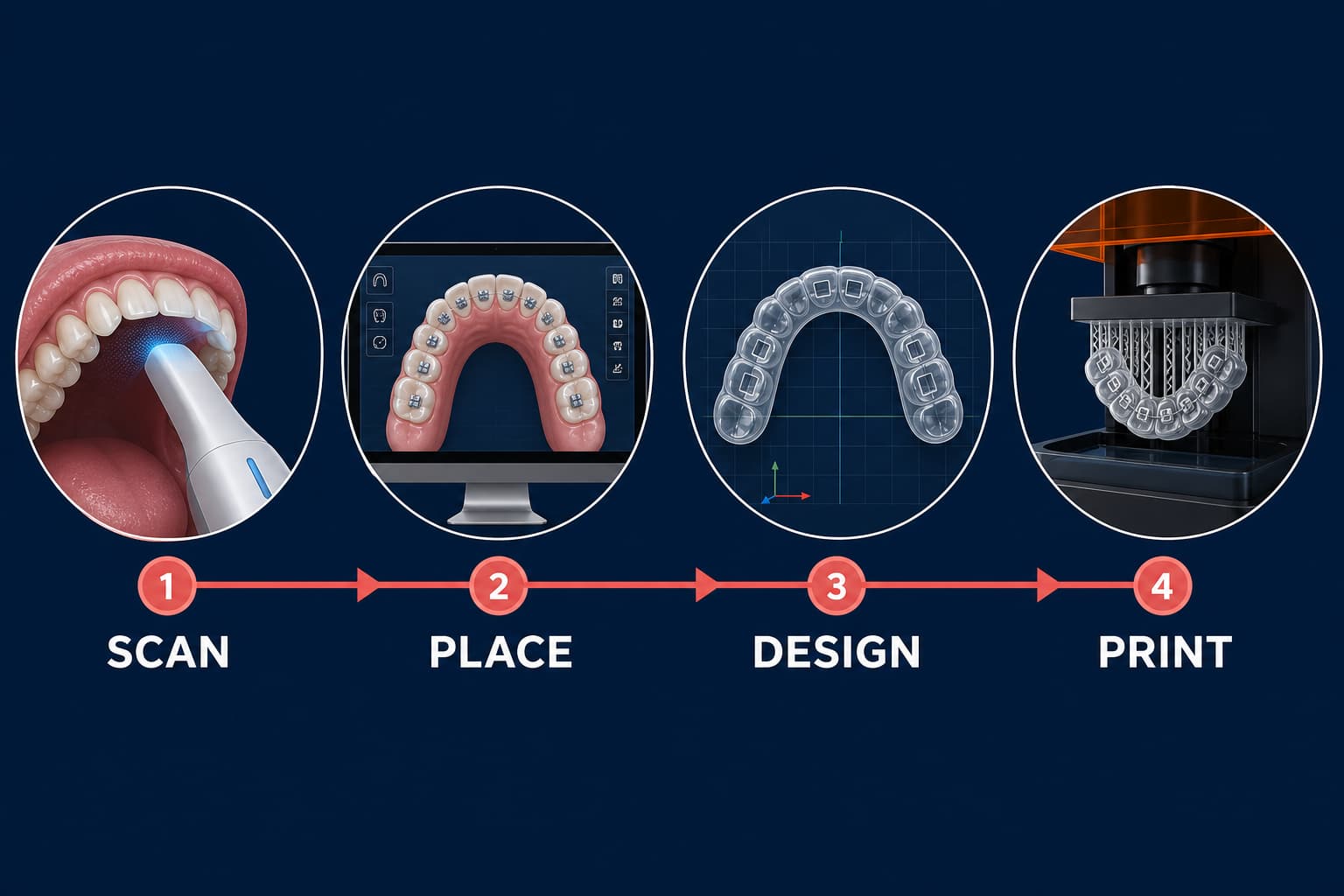
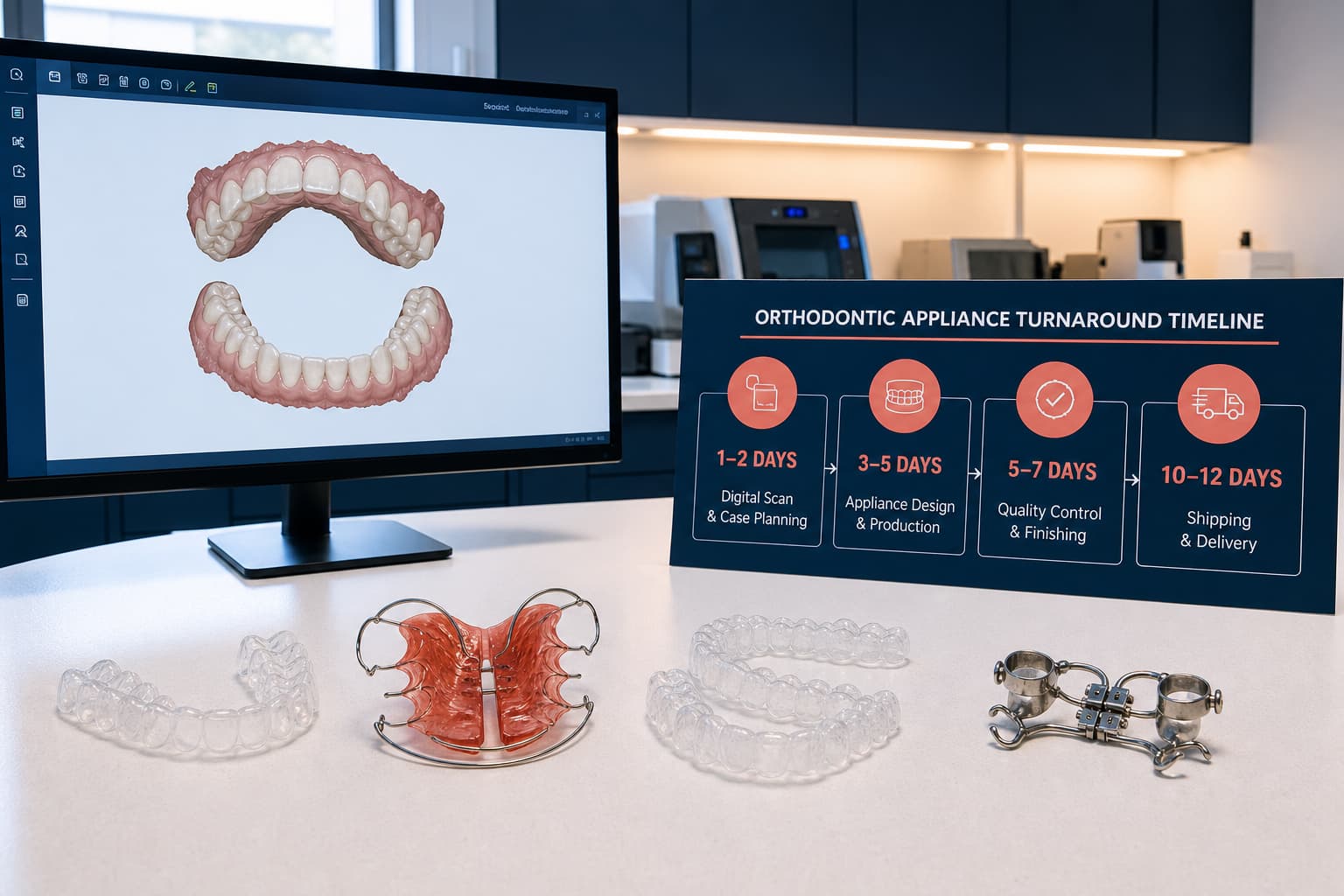
For your clinic, adopting a digital workflow from intraoral scan to appliance ensures that the device fits the patient’s unique anatomy with micron-level accuracy. Custom appliances minimize common side effects like tooth sensitivity or occlusal changes by distributing forces evenly across the dental arch, ensuring the patient remains compliant for years rather than weeks.
Integrating Digital Manufacturing into OAT
The production of sleep appliances has moved beyond traditional plaster models and manual wax-ups. Modern orthodontic labs now leverage additive manufacturing to create more durable and comfortable devices.
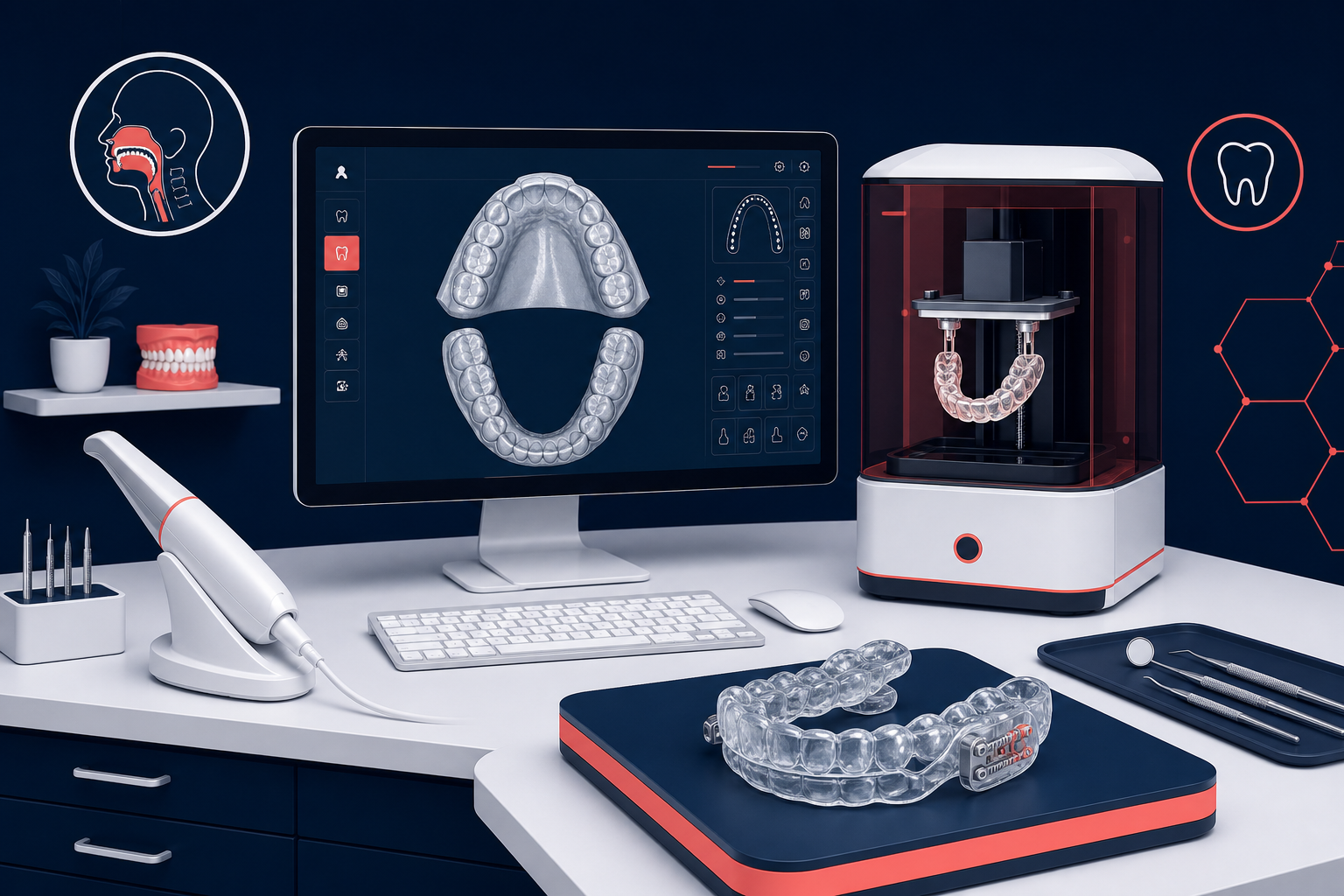
- Digital Impressions: Using an intraoral scanner captures the relationship between the arches and the desired therapeutic protrusion without the discomfort of traditional impression materials.
- Biocompatible Materials: Advanced orthodontic 3D printing materials, including medical-grade resins, offer high dimensional stability and are free from BPA precursors, ensuring long-term safety in the oral environment.
- Direct Fabrication: The shift toward direct 3D-printed orthodontic appliances eliminates the inaccuracies of thermoforming and allows for more complex, breathable designs that significantly improve patient comfort.
Clinical Governance and Patient Selection
Effective OAT requires a multidisciplinary approach. While dentists are responsible for the fabrication and titration of the appliance, the initial diagnosis of OSA must be made by a sleep physician. This ensures that the patient receives the correct therapeutic pathway based on the severity of their condition.
Your role in the clinic involves:
- Initial Screening: Assessing the patient’s dental health and periodontal stability to ensure they can support an appliance.
- Device Titration: Gradually advancing the mandible to the point where snoring and daytime symptoms subside without causing jaw pain.
- Monitoring: Regular follow-ups to check for dental migration or changes in the temporomandibular joint (TMJ).
Precision-manufactured oral appliances represent a significant opportunity to expand your clinic’s services while solving a critical health problem for your patients. By leveraging digital workflows and advanced materials, you can provide a treatment that matches the efficacy of traditional methods with significantly higher patient satisfaction.
To explore how your clinic can transition to a fully digital workflow for custom sleep appliances, view our technical guides on digital case submission and 3D printing integration.