Multilayer thermoforming materials offer superior force sustainability and patient comfort compared to single-layer alternatives by utilizing a specialized "sandwich" architecture. While single-layer materials like PETG provide high initial force and excellent clarity, they often suffer from rapid stress relaxation and lower tear resistance. Transitioning to multilayer sheets represents a shift toward more predictable tooth movement and higher appliance durability, allowing clinicians to maintain active force throughout the wear cycle.
Engineering the Sandwich: Material Architecture
The fundamental difference between these materials lies in their structural construction. Single-layer sheets are monolithic, typically composed of either PETG (polyethylene terephthalate glycol) or polyurethane (PU). PETG is the industry workhorse, valued for its exceptional optical clarity and ease of processing. Conversely, PU is noted for its ability to maintain active force over longer durations, though it may lack the initial stiffness of PETG.
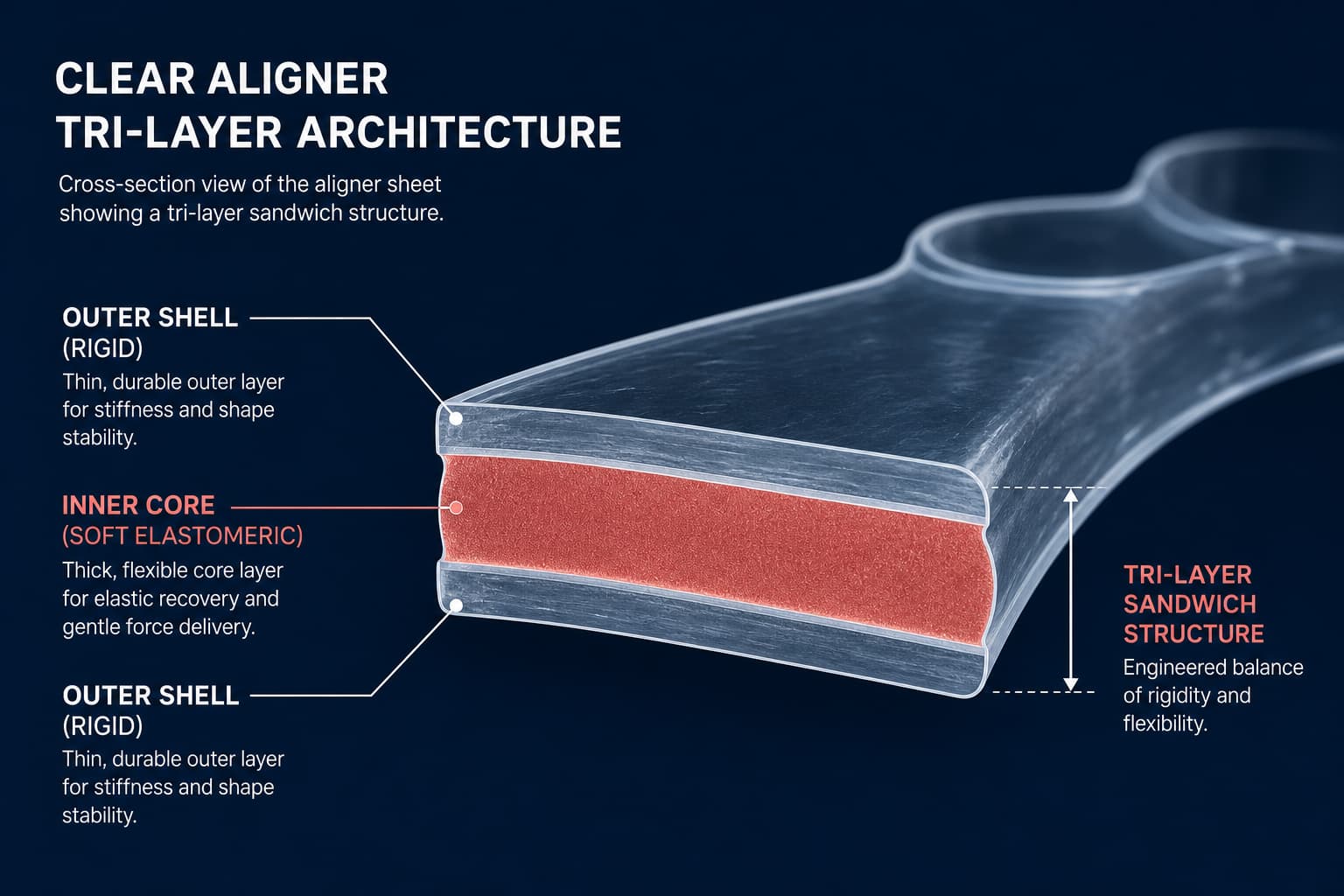
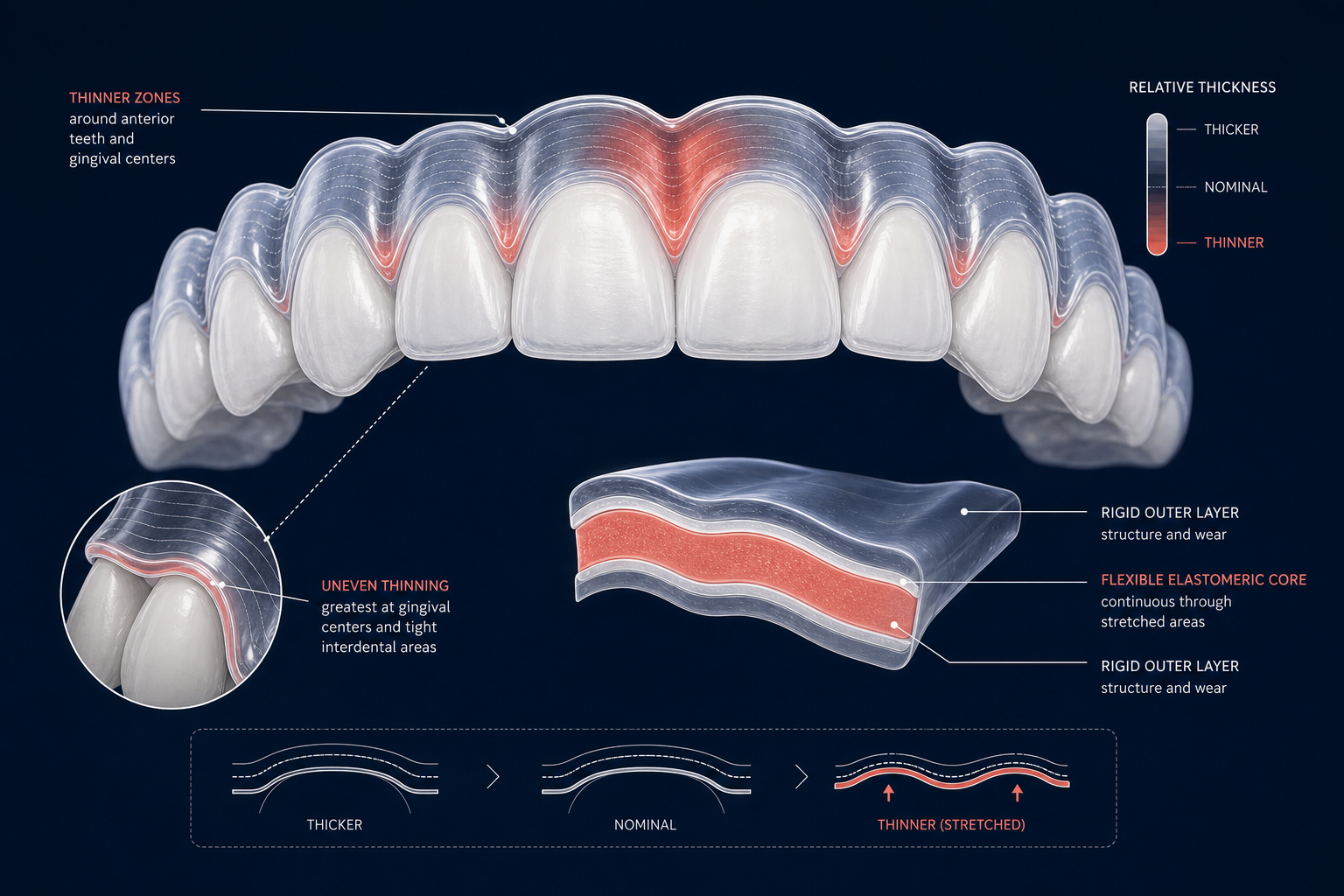
Multilayer materials, often utilizing tri-layer designs, combine these disparate properties into a single sheet. They typically feature a hard outer shell on both sides and a soft, elastomeric inner core. This architecture allows the appliance to balance conflicting requirements:
- Outer Layers: These provide the necessary stiffness to grip the teeth and resist the mechanical wear of the oral environment.
- Inner Core: This layer acts as a shock absorber, providing the elasticity required for a constant, biological force rather than a sharp, decaying spike.
The clear aligner fabrication process relies on these materials to translate digital setups into physical movement. The choice between PETG, PU, or a hybrid multilayer stack ultimately determines the clinical tracking success of the case.
Force Delivery and Stress Relaxation
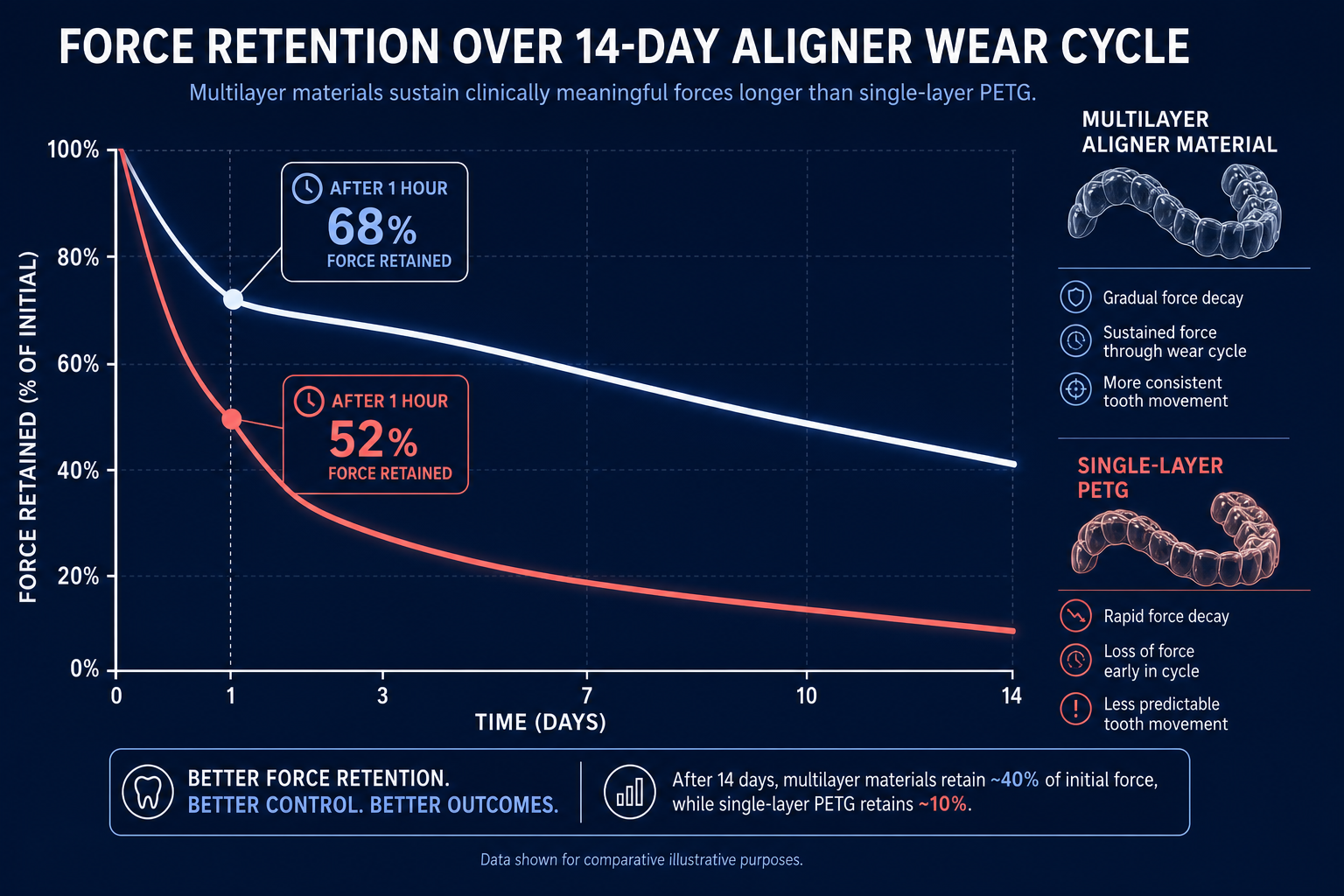
Mechanical characterization reveals a significant performance gap in how these materials handle stress. Single-layer materials exhibit high absolute stress values upon initial insertion but suffer from the fastest stress decay. Research indicates that after just one hour of wear, single-layer materials may retain only about 52% of their initial force.
Multilayer materials demonstrate a more stable biomechanical profile. They possess a lower elastic modulus, making them more flexible upon insertion, which reduces the initial "tightness" and discomfort patients often report. Despite a lower initial force magnitude, multilayer sheets maintain a higher percentage of that force over time – often retaining nearly 68% of their stress after the first hour. Unlike PETG, which can show dramatic changes in its modulus of elasticity after aging in the mouth, multilayer polyurethane and copolyester materials remain mechanically stable throughout the 14-day wear cycle.
Managing the Impact of the Thermoforming Process
You must account for the physical changes that occur during manufacturing, as every thermoplastic sheet undergoes a 40% thickness gap during processing. Thermoforming significantly reduces the nominal thickness of the material, often resulting in a final appliance that is 15% to 40% thinner than the original sheet.
This thinning is rarely uniform. Material tends to be thinner at the anterior teeth and gingival centers. Because the force delivered by an aligner is proportional to the cube of its thickness, these variations can lead to localized "weak spots" in force delivery. Multilayer materials help mitigate this because their elastomeric core maintains a level of ductility even when the material is stretched thin. In contrast, single-layer PETG can become brittle and prone to fracture in these highly stressed areas.
To achieve the best results with these advanced materials, selecting the right dental thermoforming machine is critical. Professional-grade positive-pressure machines, providing 4.0 to 6.0 bar pressure, ensure the material adapts precisely to the 3D-printed model, maximizing the performance of the multilayer architecture.
Durability, Comfort, and Optical Properties
Beyond force delivery, the daily experience of the patient is heavily influenced by the material's chemical and physical properties.
Tear Resistance and Ductility
Thermoplastic polyurethane (TPU), frequently used in the core of multilayer materials, exhibits the highest yield stress and tear strength among common aligner plastics. This makes multilayer aligners significantly more resistant to cracking or tearing when patients remove the appliance, which is a common failure point for rigid, single-layer PETG aligners.
Moisture and Stain Resistance
Water absorption can lead to swelling, dimensional changes, and mechanical degradation. A well-designed multilayer stack often uses the outer PETG layers to "shield" the inner TPU core from water uptake. This results in lower overall water absorption than double-layer structures and better dimensional stability. However, users should note that PU-based materials generally show a greater tendency for pigment adsorption and staining compared to pure PETG, which remains the gold standard for long-term transparency.
Clinical Predictability
While single-layer materials are effective for simple movements and clear retainers, complex movements – such as rotations or root torque – benefit from the sustained, low-magnitude forces of multilayer sheets. This gentler force profile not only increases patient comfort but also aligns more closely with biological tooth movement principles, potentially reducing the need for mid-course refinements.
Optimizing the Laboratory Workflow
Transitioning from single-layer to multilayer materials requires a precise understanding of heating and cooling windows. Because multilayer sheets contain different polymers with varying glass transition temperatures, your thermoforming workflow must be calibrated to the manufacturer’s specific requirements. Failure to do so can result in delamination or inadequate adaptation to the model.
If you are looking to enhance the predictability of your clear aligner treatments or improve the durability of your lab-made appliances, evaluating the shift to multilayer thermoforming materials is a logical progression for your practice.
Contact Nordicdens today to discuss how our digital laboratory services and material expertise can streamline your orthodontic production and improve patient outcomes.