Modern clear aligner fabrication has transitioned from manual, impression-based labor to a high-fidelity digital thread. By integrating intraoral scanning, AI-driven CAD planning, and high-precision 3D printing, you can achieve a predictable fit within a ±0.25 mm dimensional tolerance. This technical guide outlines the professional laboratory workflow required to produce medical-grade aligners that meet strict clinical and regulatory standards.
Digital Data Acquisition and Mesh Validation
The workflow begins with the intraoral scanner, which captures the patient's dentition with a level of precision that traditional materials cannot replicate. Capturing a high-resolution 3D dataset – typically in STL or PLY formats – replaces the inherent variability and physical storage requirements of physical impressions. These digital scan files serve as the universal language of production, allowing you to bypass the risk of material distortion associated with alginate or PVS.
At this stage, a comprehensive mesh analysis ensures the scan has accurately captured critical landmarks, such as the terminal molars and the gingival zenith. Technicians must verify that the STL mesh is "watertight," meaning it contains no holes or gaps. If the mesh is compromised, it can lead to catastrophic failures during the 3D printing phase or distortions in the final appliance geometry.
Virtual Treatment Planning and CAD Design
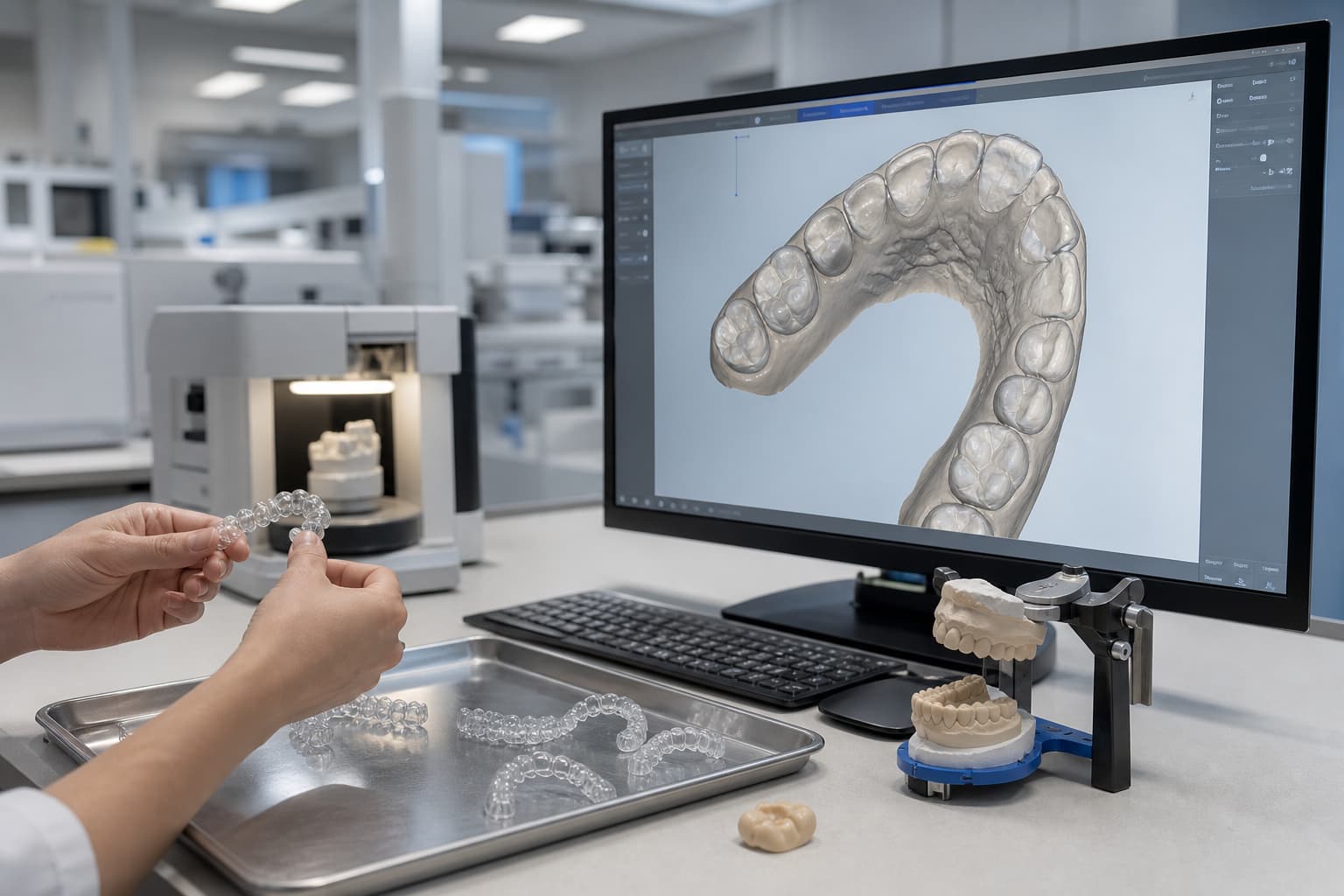
Once the digital models are validated, specialized CAD/CAM orthodontic software is used to stage the treatment. This virtual environment allows you to review, adjust, and approve the design before any physical manufacturing begins, significantly reducing the risk of costly remakes. The design process typically follows a structured path:
- Automated Segmentation: AI-powered algorithms perform tooth segmentation in seconds, identifying individual tooth boundaries with precision that matches or exceeds manual expert work.
- Staging and Biomechanics: Technicians plan the staged movements, considering biomechanical constraints such as force delivery, collision detection, and anchorage management.
- Exporting Stage Models: The software generates a series of digital models, one for each treatment step, which serve as the physical templates for the subsequent thermoforming process.
Additive Manufacturing of Aligner Models
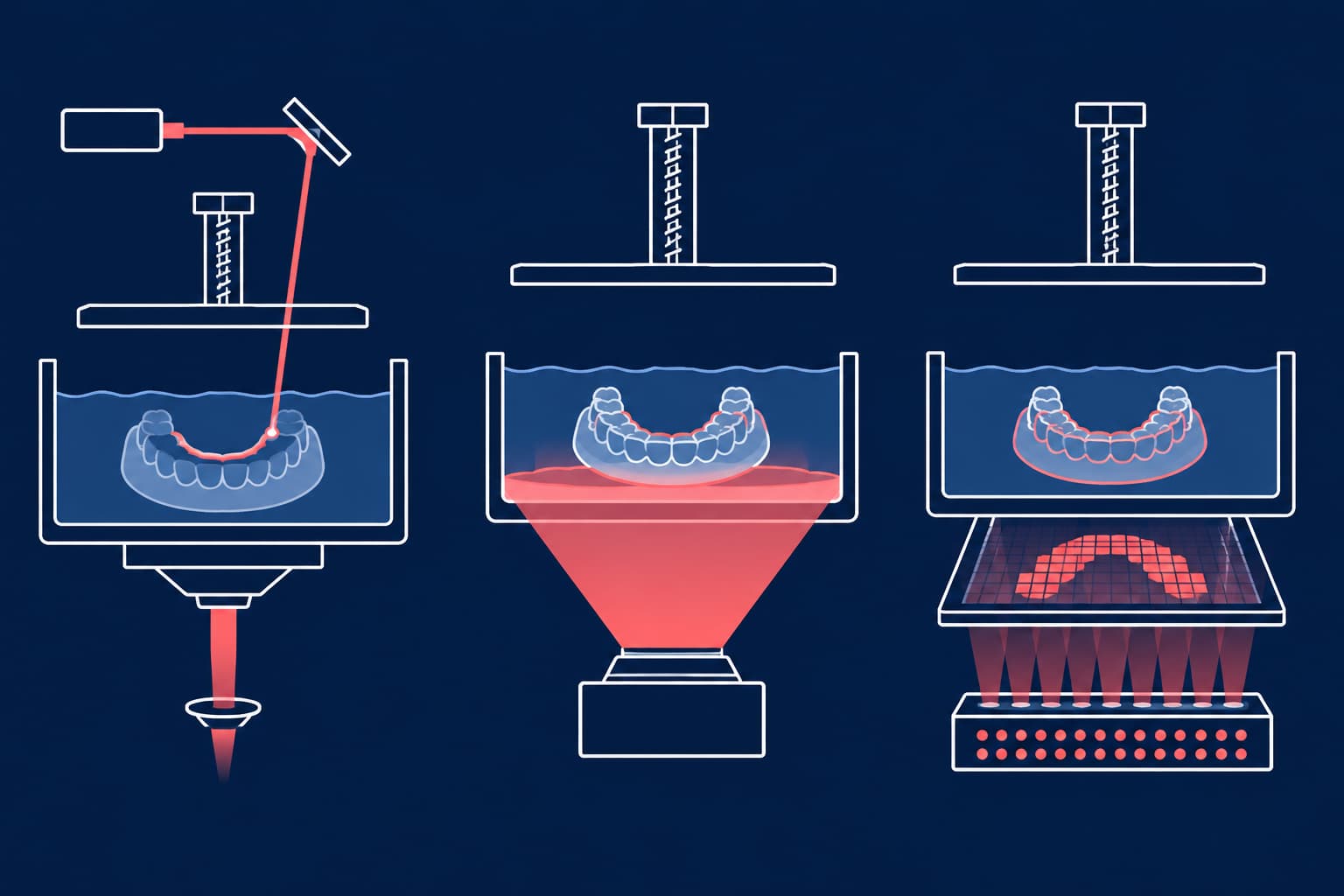
The 3D printing revolution in orthodontics has replaced plaster models with high-resolution resin alternatives. Clinical success is dictated by the accuracy of the 3D printer. Professional DLP (Digital Light Processing) or SLA (Stereolithography) systems are favored for their ability to maintain dimensional stability across the entire build platform. Models are typically printed using specialized resins at a 100-micron layer thickness to balance production speed with the necessary surface detail required for clear aligner tracking.
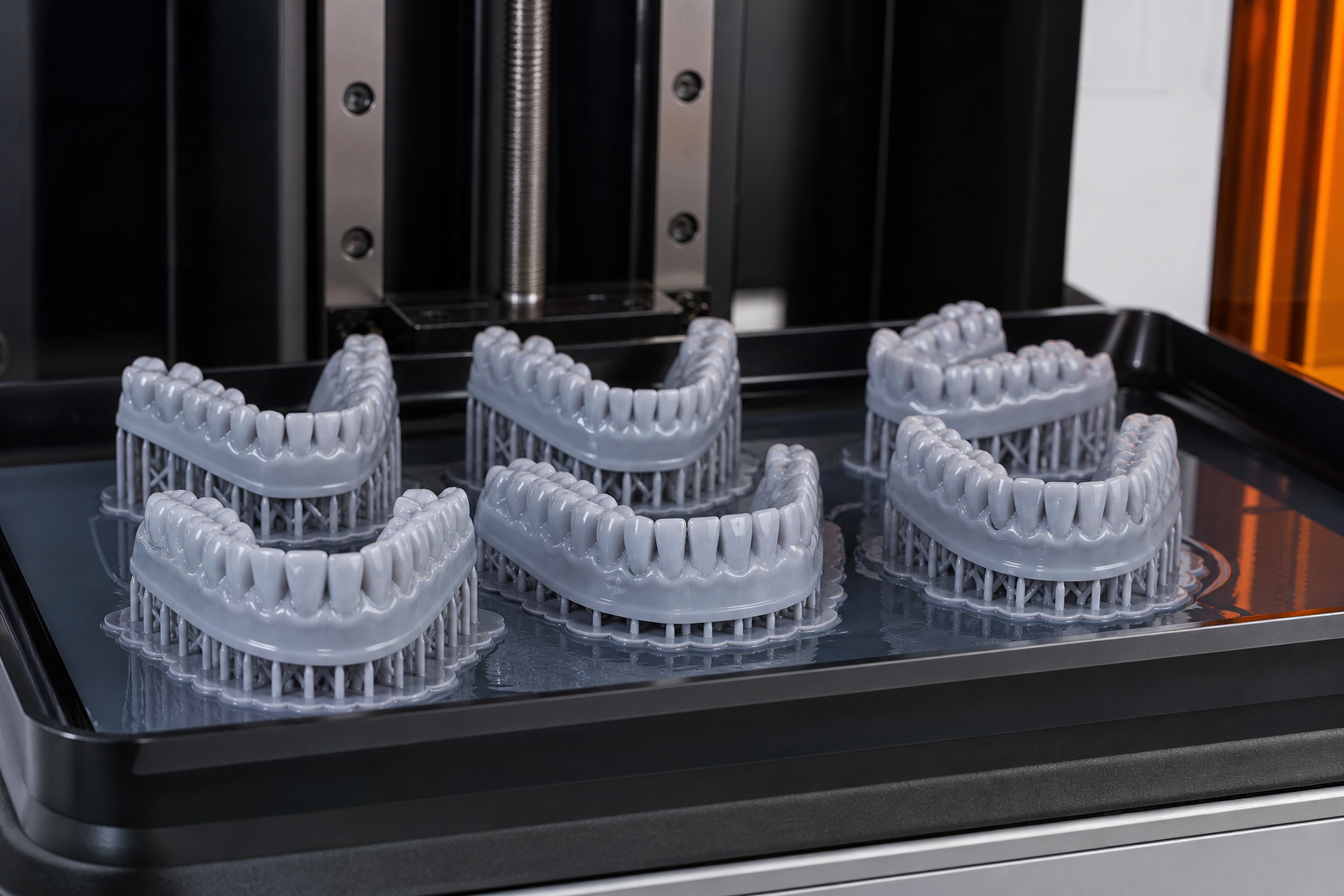
Post-Processing and Calibration
After printing, the models undergo a rigorous post-processing cycle to ensure they are safe and dimensionally stable. This phase is critical; any residual uncured resin can interfere with the thermoforming sheet's adaptation or contaminate the final appliance.
- Washing: Models are cleaned in an isopropyl alcohol (IPA) bath to remove all liquid resin from the surface and interproximal spaces.
- Drying: The models must be completely dry before they are heated. Moisture trapped in the resin can lead to bubbles or voids during the thermoforming stage.
- Post-Curing: Models are placed in a UV curing chamber, often nitrogen-purged, to achieve their final mechanical properties. Proper curing ensures the model can withstand the extreme heat and pressure of the thermoforming machine without warping.
Thermoforming Technology and Material Physics
Thermoforming remains the industrial gold standard for clear aligner production due to its established efficacy and cost-efficiency. While vacuum forming pulls a plastic sheet onto a model using atmospheric pressure, positive air pressure forming is the laboratory standard. This method provides superior adaptation, especially in deep interproximal spaces and complex undercuts, ensuring the aligner can deliver the programmed forces effectively to the teeth.
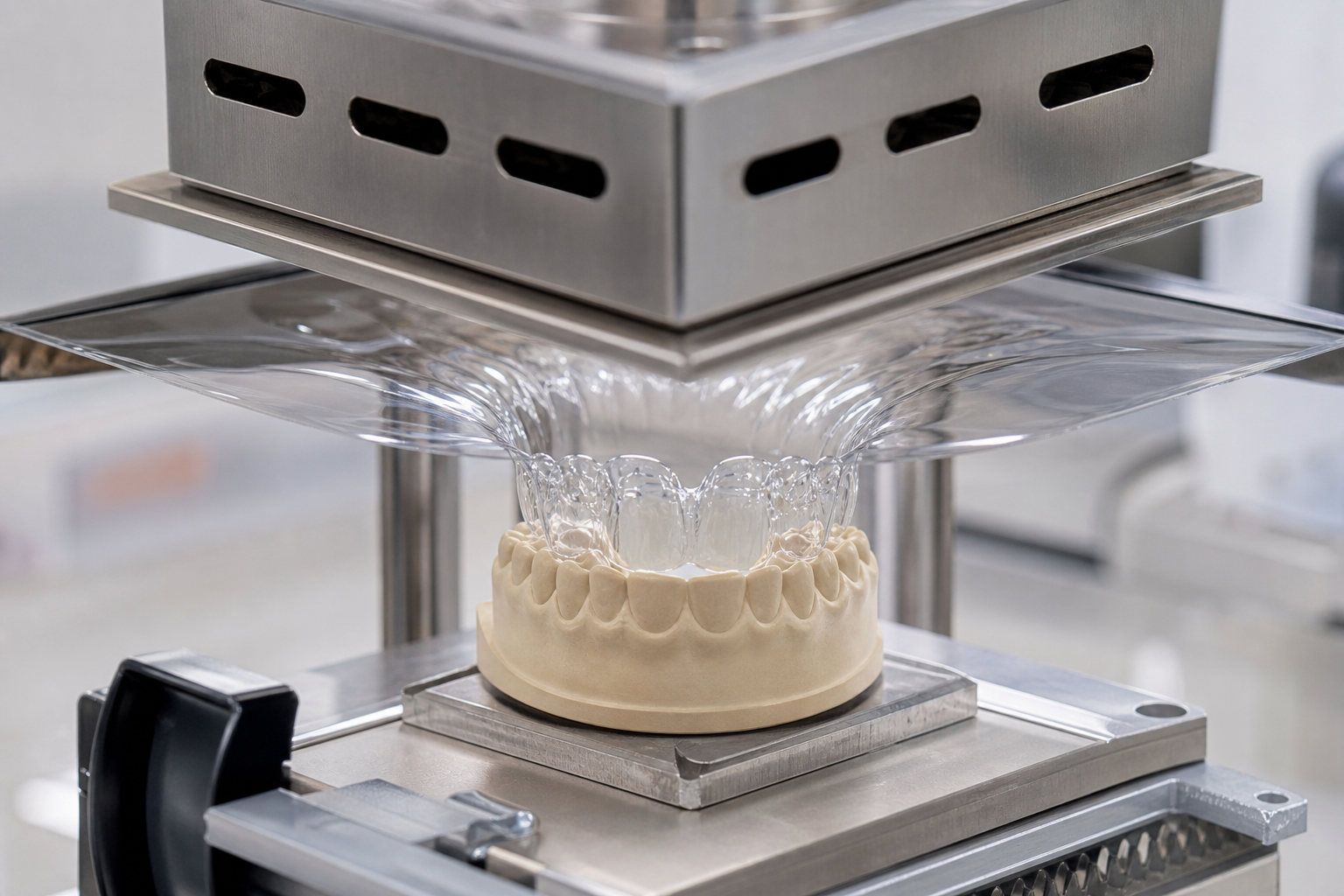
The choice of thermoplastic – typically PETG or PU – influences the aligner's transparency, elasticity, and durability. It is vital to account for material thinning during this process. Thermoforming can reduce the nominal thickness of a sheet by 15% to 40%, a phenomenon that is often non-uniform. Thinning occurs most prominently at the anterior teeth and gingival centers where the material must stretch the furthest to cover the anatomy.
Post-Production Finishing and Quality Assurance
The final stage transforms the raw thermoformed plastic into a comfortable clinical appliance. This involves removing excess material and ensuring the borders are smooth enough for prolonged intraoral use.
- Trimming: The aligner is gross-trimmed to remove the model base, followed by detailed trimming with rotary tools to establish a straight or scalloped edge line just below the gingival margin.
- Polishing: All edges are smoothed using fine abrasives or polishing wheels to prevent gingival irritation and ensure patient comfort.
- Final Inspection: A multi-stage quality control process verifies the fit, adaptation, and surface finish against the original prescription and digital plan before the appliance is cleaned and packaged.
The Evolution toward Direct-Print Aligners
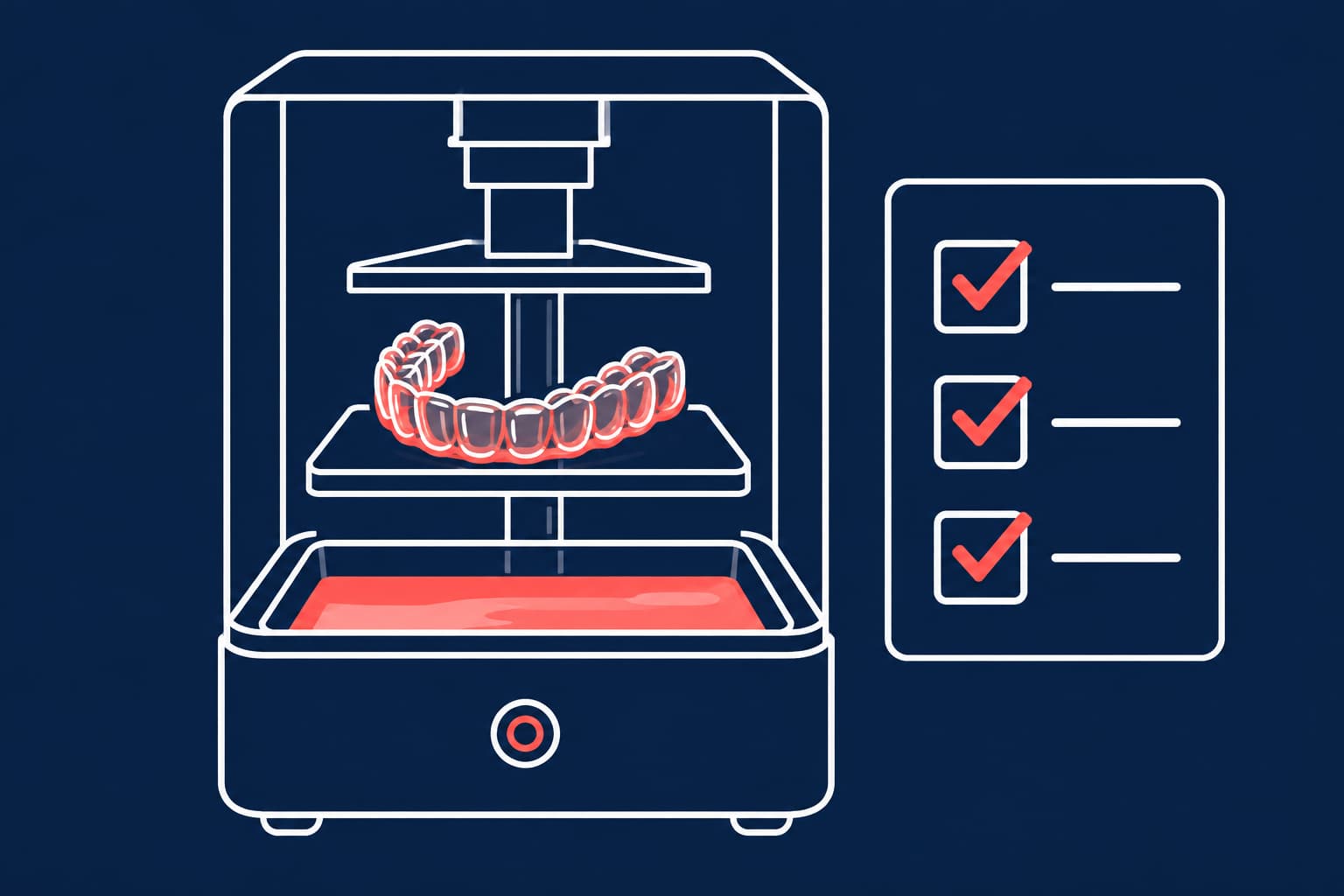
While thermoforming is the traditional path, the industry is seeing a shift toward direct 3D-printed appliances. Using biocompatible resins like Graphy's Tera Harz, aligners can be printed directly from a CAD file, bypassing the need for physical models and thermoforming machines entirely. This novel approach eliminates several sources of error, such as material stretching and trimming variability, allowing for truly uniform wall thickness and sharper anatomical detail.
Optimize Your Production with NordicDens
Managing the complexities of resin chemistry, printer calibration, and thermoforming physics requires significant technical overhead and specialized expertise. By partnering with NordicDens, you leverage an industrial-grade digital workflow that ensures every appliance is an exact physical manifestation of your treatment plan. We handle the technical burden of maintenance and tolerance testing so you can focus on clinical outcomes.
Submit your next case to NordicDens and experience the precision of our modern orthodontic laboratory services.