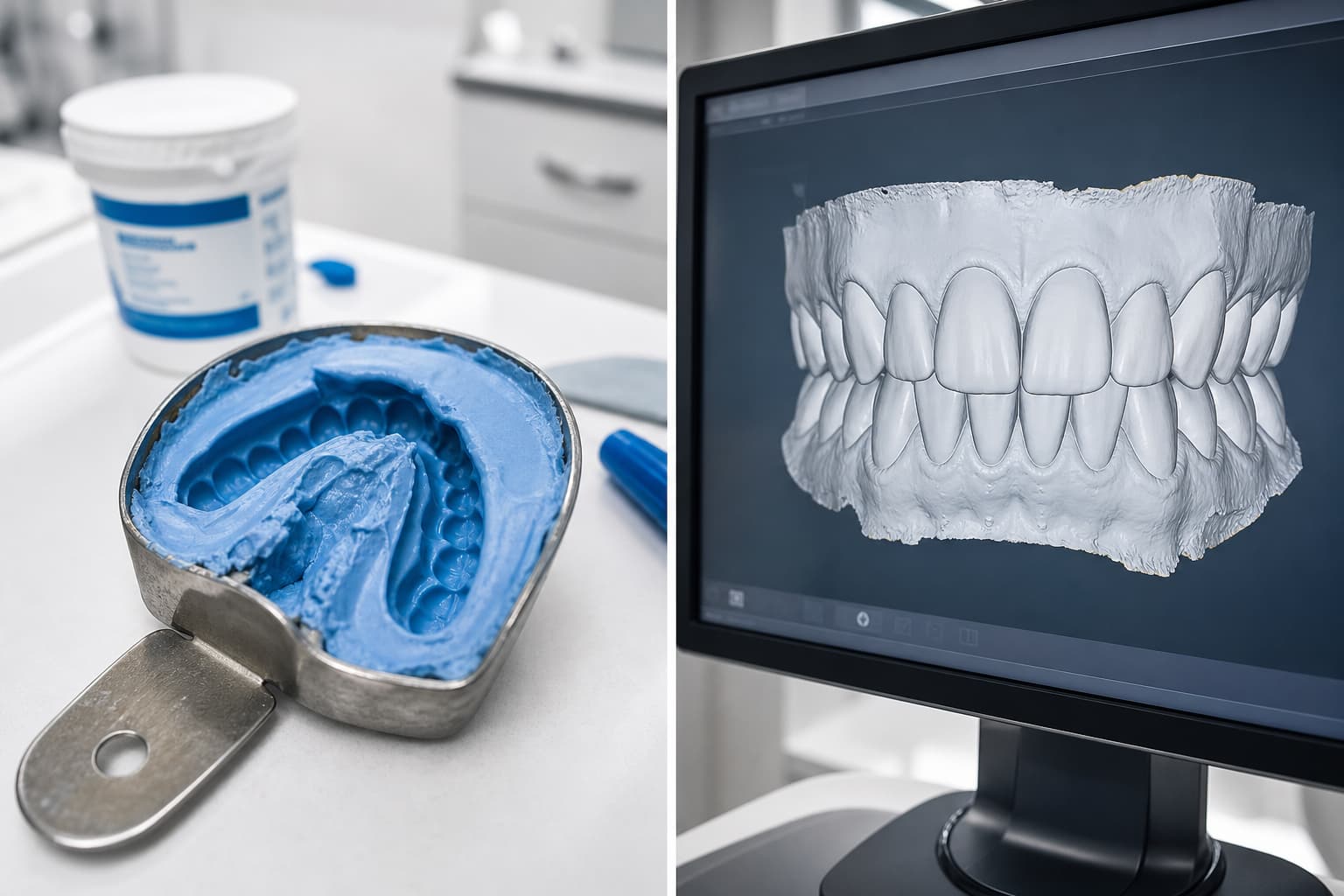
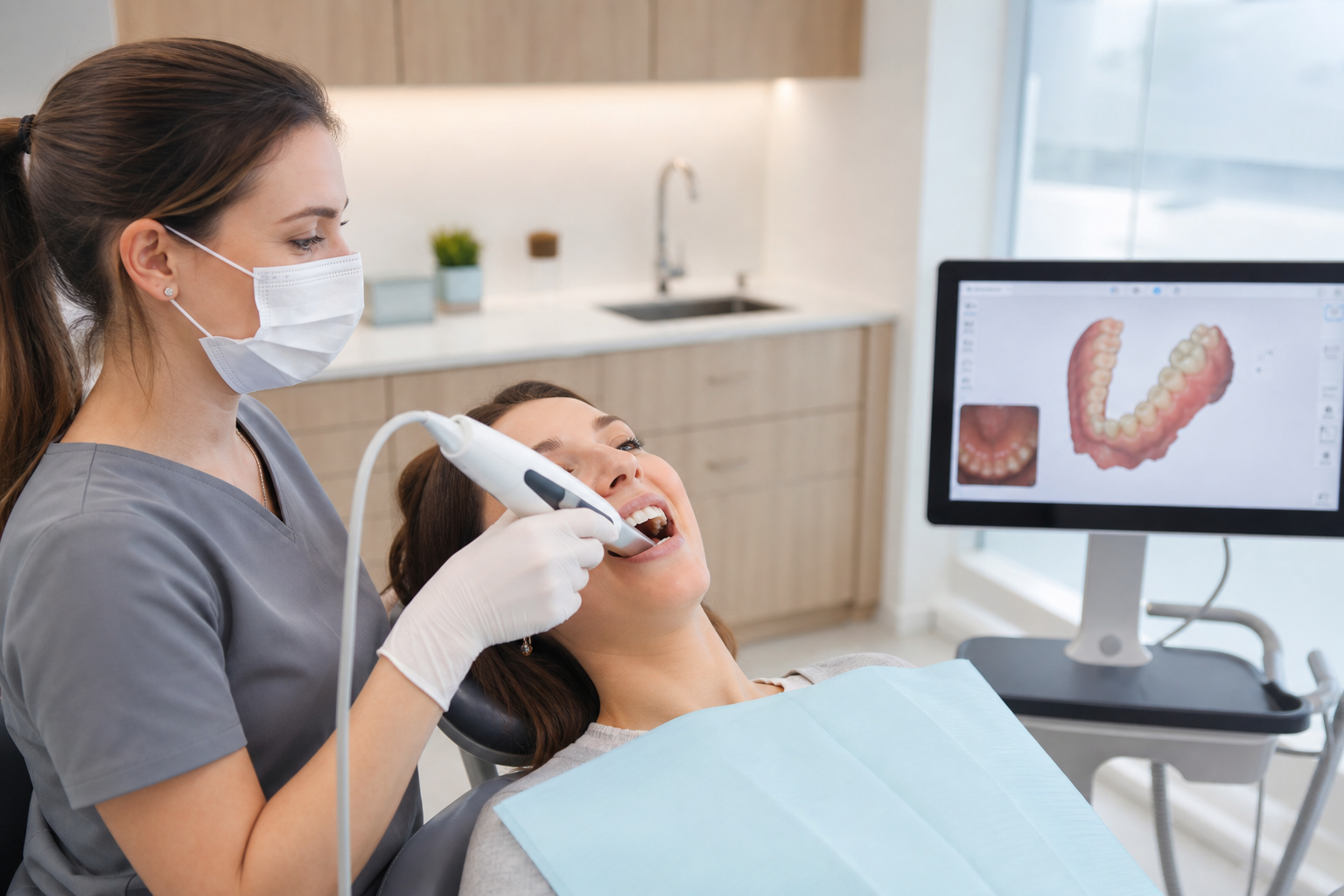
Intraoral scanning has effectively replaced traditional impressions in modern orthodontics by providing comparable accuracy with significantly higher patient comfort and workflow speed. While traditional alginate and PVS impressions remain clinically viable, adopting a digital workflow eliminates the material degradation and shipping delays inherent in analog methods. This transition allows you to move from the inherent variability of plaster models to the precision of micron-level data.
Accuracy and Dimensional Stability
The primary metric for any impression is trueness – how closely the model matches your patient’s actual dentition. In many clinical scenarios, digital full-arch impressions show similar transfer accuracy to conventional alginate. However, the digital method often yields more consistent results because it bypasses the "error chain" associated with physical materials.
When you take a physical impression, you must account for tray seating pressure, material shrinkage, and the expansion of the plaster pour. In contrast, high-resolution STL files capture anatomy as a static 3D mesh. This digital dataset maintains a dimensional tolerance within ±0.25 mm for individual teeth, which serves as the definitive benchmark for predictable tooth movement and appliance fit.
While some studies indicate minor discrepancies in the posterior regions during full-arch scans, modern systems like iTero, 3Shape TRIOS, and Medit have reached a level of precision that matches or exceeds traditional techniques. The reliability of these scans is why understanding orthodontic 3D printer accuracy has become a focal point for labs; the precision of the final appliance is only as good as the initial data captured in your chair.
Elevating the Patient Experience
For many patients, the most novel aspect of modern orthodontics is the absence of the impression tray. Traditional elastomeric impressions are often time-consuming and uncomfortable, frequently triggering a gag reflex or causing anxiety, especially in pediatric cases.
Research indicates a clear patient preference for digital scanning. In clinical trials comparing the two, intraoral scanning consistently receives higher satisfaction scores – often rated 8.6 out of 10 compared to 6.9 for conventional methods. By eliminating the mess of alginate, you not only improve the clinical outcome but also enhance your practice’s reputation for modern, patient-centric care.
Workflow Efficiency and Lab Integration
The most significant advantage of digital impressions lies in the speed of the "digital thread." By mastering the management of STL files, your clinic can ensure higher precision and fewer manufacturing errors.
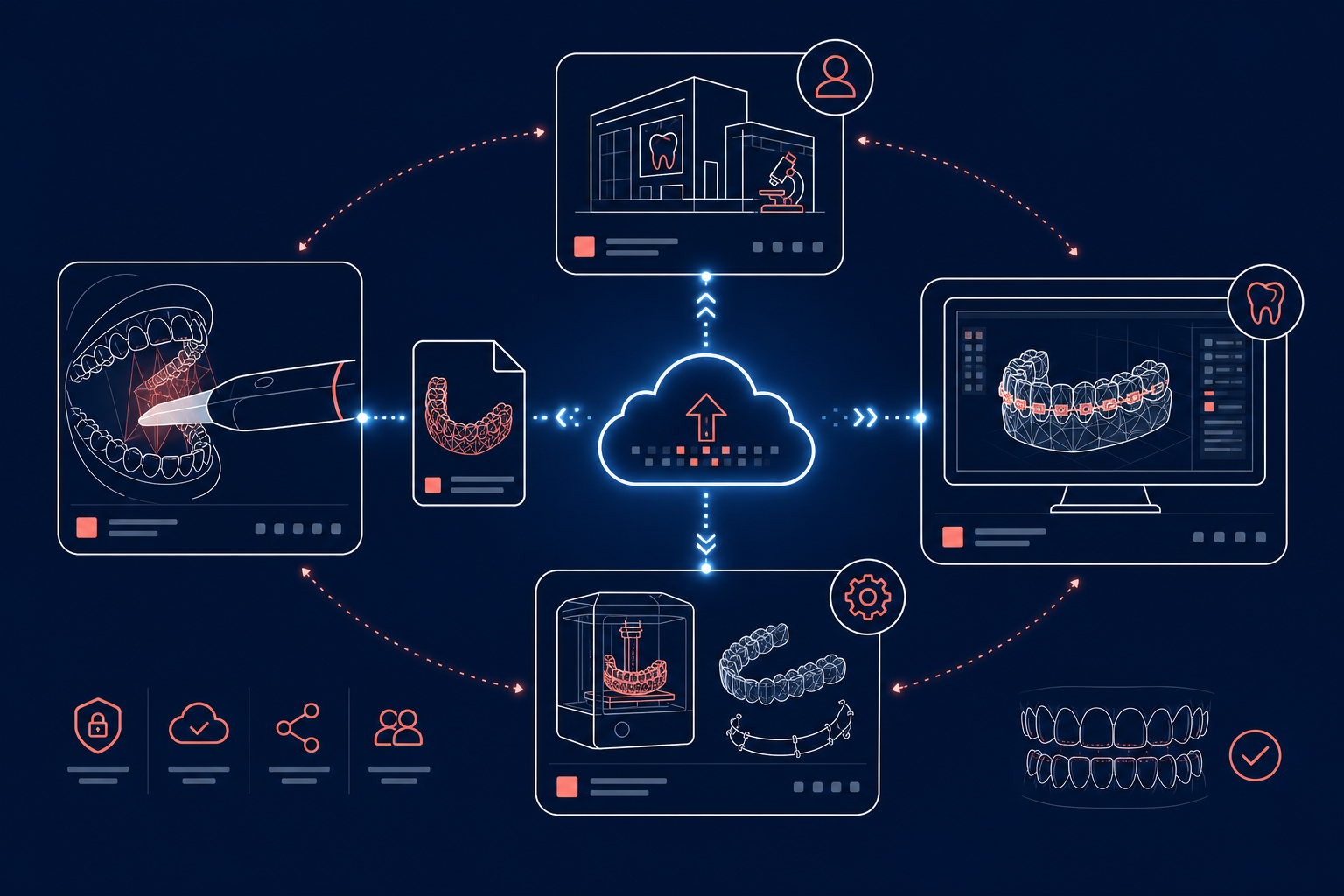
- Immediate Validation: You can review the scan on-screen instantly. If a margin is missed or a contact is unclear, you rescale that specific area in seconds rather than retaking the entire impression.
- Instant Logistics: Instead of packing a physical box and waiting for a courier, you upload the digital files to a secure portal. The lab receives precise data within seconds, eliminating transit time and the risk of physical damage.
- Advanced Manufacturing: Digital files allow for CAD/CAM orthodontics, where appliances are designed on virtual models. This allows you to review and approve designs before any physical production begins, drastically reducing the risk of remakes.
This efficiency extends to record-keeping. Digital models require no physical shelf space and can be retrieved instantly for treatment planning or insurance audits.
Addressing the Tradeoffs
To steelman the argument for traditional methods, it is important to acknowledge that the transition to digital requires a significant upfront investment in hardware and a learning curve for your clinical team. Traditional impressions are tried and true, and for a practitioner with decades of experience, the tactile feedback of a tray might feel more familiar.
However, the cost of traditional impressions is often hidden in the labor required for plaster pouring, the cost of impression materials, and the chair time lost to retakes. When you calculate the total cost per arch, the efficiency of a digital scan typically offsets the initial equipment investment over time.
Precision from Scan to Appliance
Transitioning to digital impressions is the first step in a larger evolution toward precision-fabricated devices. By moving away from the inherent variability of plaster and alginate, you provide a more comfortable environment for your patients and more predictable results for your clinical team. Shifting the technical burden of maintenance and tolerance testing to a specialized facility eliminates the trial-and-error phase associated with analog production.
If you are ready to leverage your intraoral scanner for high-precision manufacturing, explore how our orthodontic lab quality control protocols ensure your digital files are translated into perfectly fitting appliances.
Send your first digital case to Nordicdens today and experience the precision of a fully digital workflow.