Match the appliance to the habit, then to the patient's cooperation. A palatal crib or Bluegrass appliance targets thumb and finger sucking. A tongue crib or bonded spurs target tongue thrust and the open bite it produces. A Hawley with crib suits the patient who will reliably wear a removable device. None of them cures anything on its own: they remove the reward or the mechanical opportunity, and the child still has to stop.
That caveat matters because the evidence base is thinner than clinical habit suggests. A systematic review of six trials covering 252 children rated the evidence for any single treatment for non-nutritive sucking as low quality. Below, you get the appliance types, the numbers that do exist, the decision criteria, and what the lab needs from you to build them.
| Appliance | Main target | Fixed or removable | Key design feature |
|---|---|---|---|
| Palatal crib | Thumb or finger sucking, open bite | Fixed (banded) | Wire fence behind upper incisors |
| Tongue crib | Tongue thrust, open bite | Fixed or removable | Vertical wire barrier to forward tongue |
| Bonded spurs | Anterior tongue posture | Fixed (bonded) | Small projections on the lingual of incisors |
| Bluegrass | Thumb sucking, some tongue thrust | Fixed (banded) | Free-rolling roller or bead on the palate |
| Hawley with crib | Tongue thrust, cooperative patients | Removable | Crib or spikes on a Hawley base |
| Quad helix with crib | Sucking habit plus narrow upper arch | Fixed | Expansion and habit deterrent in one |
When to intervene
Timing decides whether you need an appliance at all. The AAPD recommends discontinuing non-nutritive sucking by 36 months, and notes that pacifier use beyond 18 months can contribute to anterior open bite, posterior crossbite and Class II malocclusion. Prevalence helps set expectations: about 60% of children suck a pacifier or digit at 15 months, falling to roughly 40% by 36 months, and most thumb sucking resolves spontaneously by age 4.
In practice, that gives you three rules:
- Under 3 years: counsel the parents and do not fit an appliance. Teaching material from the University of Baghdad's dental college makes the same point, since most children outgrow the habit by 5 and the bite self-corrects if the habit stops before the permanent teeth erupt.
- Ages 3 to 4: look for the emotional trigger rather than the habit itself, a point made in the StatPearls review of non-nutritive sucking.
- Persistent habit with a measurable open bite or overjet, typically in the mixed dentition: appliance therapy becomes reasonable. The randomized trials below enrolled children aged 6 to 11.
Appliances belong after gentler approaches have failed. A review of oral habits describes palatal cribs and Bluegrass appliances as very effective with few adverse effects, but says they must be used with the child's cooperation and never as punishment.
The appliance types and how each works
Palatal crib
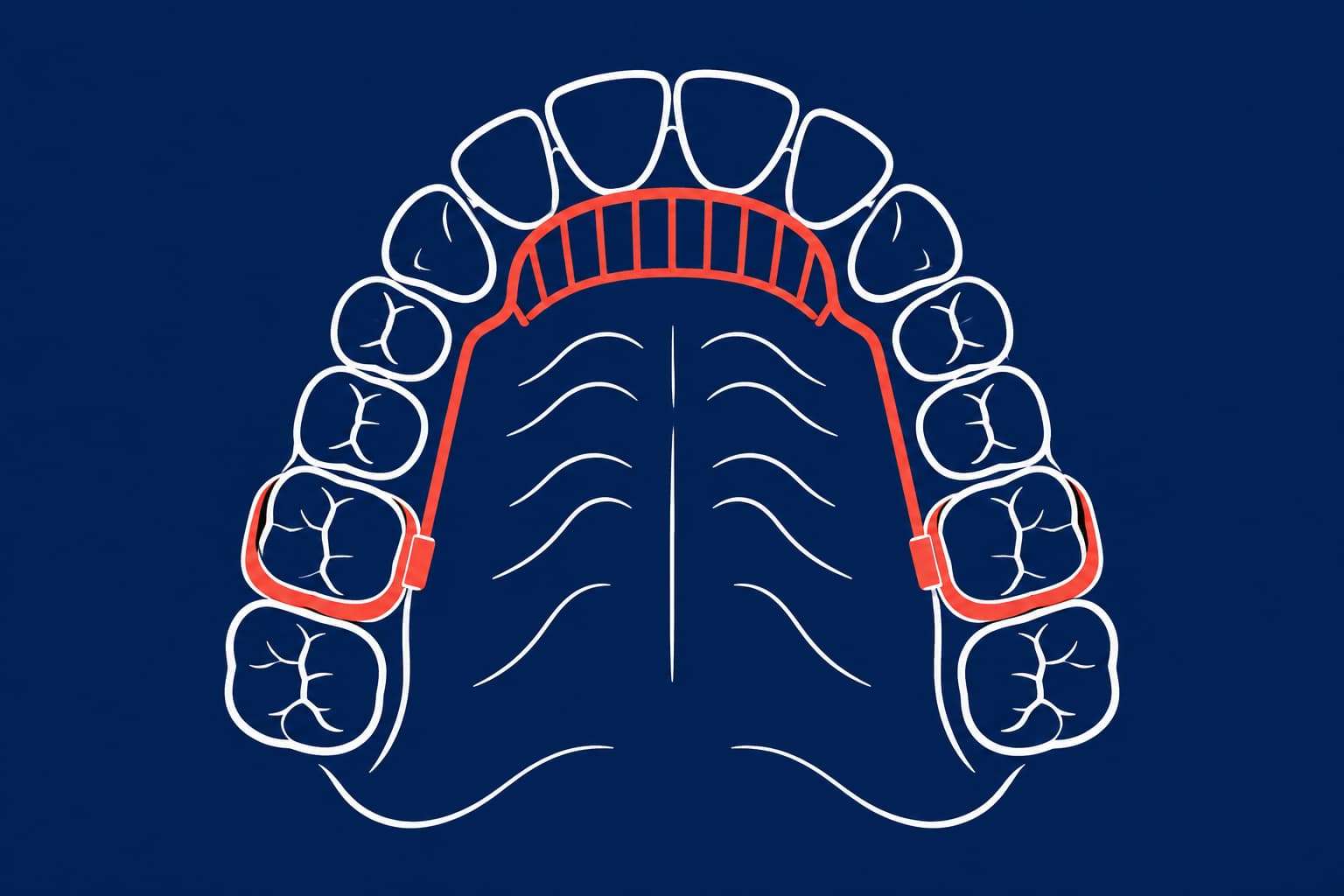
A palatal crib is a stainless steel wire cage fixed to molar bands, sitting behind the upper incisors. It stops the thumb from sealing against the palate, which removes the pleasure of sucking, and it also keeps the tongue from resting on the incisors. That double action makes it the workhorse for patients who suck a thumb and have a low tongue posture. Teaching texts describe it as used mainly in children without posterior crossbite.
Tongue crib and bonded spurs
A tongue crib uses vertical fencing to block the tongue from pushing forward against the incisors in swallowing and at rest. Bonded spurs do the same job with small projections on the lingual surfaces of the front teeth: they restrain the tongue and remind the patient to keep it back. Spurs avoid the bulk of a crib, but the one head-to-head trial below shows a price in effectiveness.
Bluegrass appliance
Haskell and Mink's design places an acrylic roller high in the palate, welded to molar bands and not touching the tissue. When the urge to suck arrives, the child rolls the roller with the tongue instead. Published descriptions call it non-punitive habit reversal. It is not enough for everyone: in severe tongue thrust with anterior open bite, a bead alone may fail to restrict the habit, and a crib is the safer choice.
Hawley with crib
A removable Hawley with a crib, rake or spikes behind the upper incisors restrains the tongue and doubles as a retainer. It only works if worn: one early-orthodontics reference says it must be worn all day and night except while eating. For a patient you trust to comply, it removes the cementation and hygiene problems of banded appliances.
Combination designs
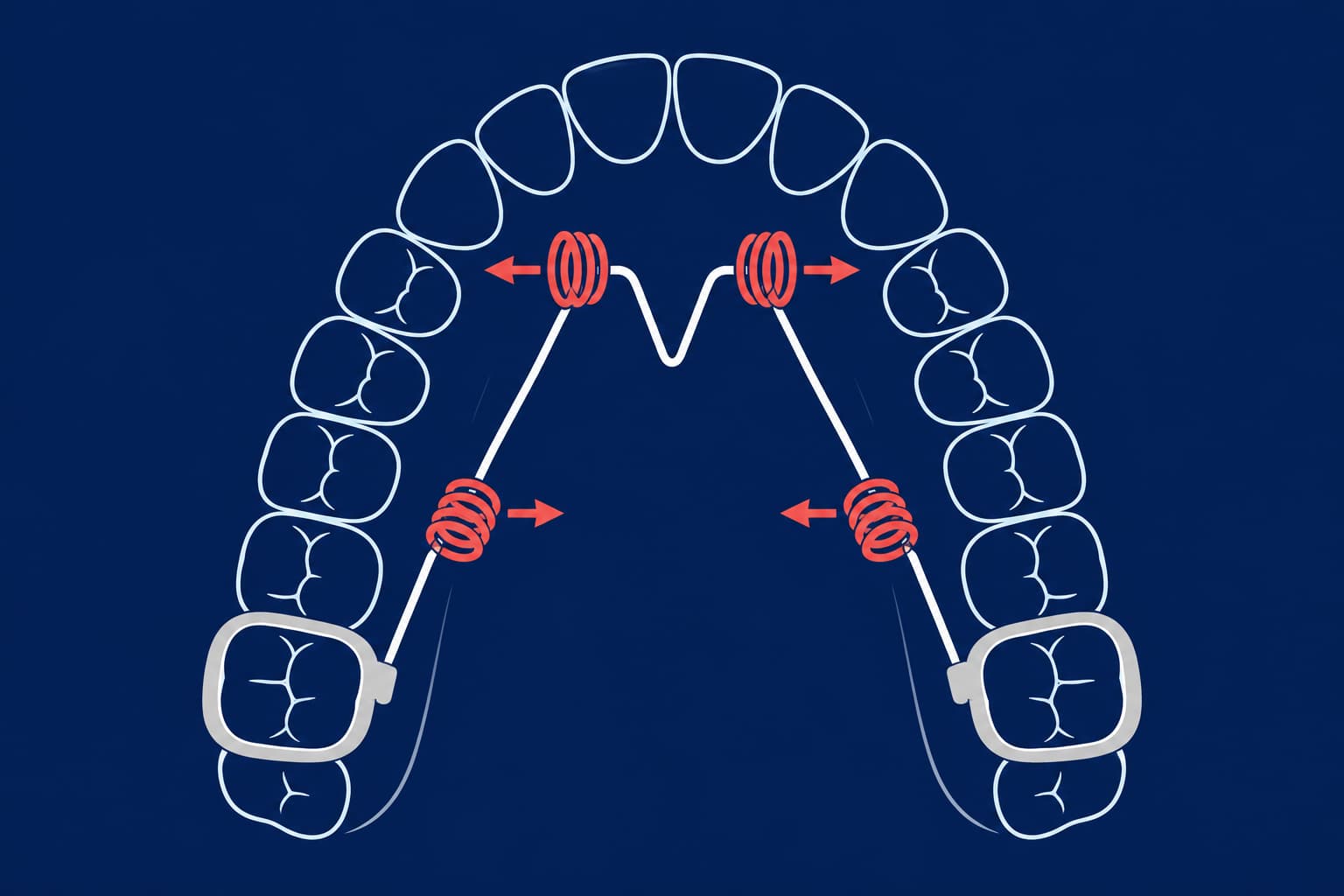
When a sucking habit comes with a constricted maxillary arch and posterior crossbite, a quad helix with a crib handles both. A JCO case report describes a digitally designed rapid palatal expander with an integrated tongue crib in a Class III open bite patient. For the expander side of this, see our guide to palatal expander types, and for functional approaches to jaw growth, our overview of functional orthodontic appliances.
What the evidence shows
The numbers are encouraging in the short term and cautious in the long term.
- Crib versus bonded spurs. In a randomized trial of 30 children aged 6 to 11, followed for 12 months, 73.33% of the fixed palatal crib group achieved a positive overbite, against 6.67% with bonded spurs. The crib worked mainly through dentoalveolar changes such as incisor retroclination, not skeletal change.
- Four appliances compared. A trial of 99 children (mean age 8.4) compared bonded spurs, chin cup, fixed palatal crib and removable palatal crib. All groups averaged 3.1 mm of open bite correction over 12 months, with no significant difference between groups.
- Crib versus electronic reminder. In a pilot randomized study of 22 children, habit cessation at 6 and 9 months was 54.5% with a palatal crib and 27.3% with a wristwatch reminder. The difference was not statistically significant, and the sample is small.
- Tongue crib versus tongue tamers. A randomized trial in subjects aged 14 to 30 found both improved tongue position, with the crib more effective clinically and the tamers more comfortable.
- Stability. A meta-analysis in the European Journal of Orthodontics found crib therapy gave about 3.1 mm of overbite correction but concluded that most of the dental effects appear to be lost with time.
The relapse finding changes how you plan. Retention after the habit stops is part of treatment, not an afterthought. One clinical review recommends keeping the appliance in place for 3 to 6 months after the habit has been eliminated, and another advises re-evaluating the patient within three months after therapy ends.
Myofunctional therapy is often paired with appliances for tongue posture. A systematic review concluded that its effectiveness has yet to be confirmed in the literature, so treat it as a reasonable adjunct, not a proven requirement.
Choosing between them
Use these criteria:
- Pure thumb or finger sucking, no crossbite: palatal crib, or Bluegrass for a motivated child who responds to non-punitive reminders.
- Sucking habit plus posterior crossbite or a narrow arch: quad helix with crib, so you do not fit a crib and then need a second appliance.
- Tongue thrust with open bite: tongue crib. Bonded spurs are a lighter option, but the trial data above favour the crib for open bite closure.
- Cooperative older child or teenager who may be bothered by a fixed device: removable Hawley with crib, accepting the compliance risk.
- Tongue thrust with no malocclusion and no speech problem: reconsider treatment. A review of tongue thrust notes that treatment is generally not recommended in that case, and that when a malocclusion is present, correcting it usually eliminates the tongue thrust.
A common mistake is to prescribe the appliance for the open bite without confirming that a habit is the cause. If no habit is present, the crib has nothing to interrupt, and the reviews above describe only dentoalveolar change as its mechanism.
What patients should expect
Brief your families before cementation. Speech changes at first, and one instruction sheet suggests reading aloud for 5 to 10 minutes a day to speed adaptation. Eating is awkward for the first few days, so soft foods and small pieces help. Plaque and tartar collect on the wires, so brushing after meals matters. In the tongue crib versus tongue tamer trial, the crib group reported more discomfort, speech and eating difficulty, and tongue irritation. The available research does not establish how often these complications occur. Also warn patients that playing with the appliance using the tongue can loosen or break it.
Lab production: what we need from you
Most habit appliances are simple, which is why they are often underspecified. A clear order saves a remake.
Fixed designs. The usual published workflow is: fit bands on the first permanent molars (or primary molars), take alginate impressions of both arches, transfer and stabilize the bands in the impression, pour stone casts, then adapt 0.9 mm stainless steel wire to the cast. The wire is either soldered to the bands or engaged in lingual sheaths. The appliance is then cemented, for example with type I glass ionomer in one reported case. The 0.9 mm gauge is what most case reports use, not a universal standard, so state your preference on the order.
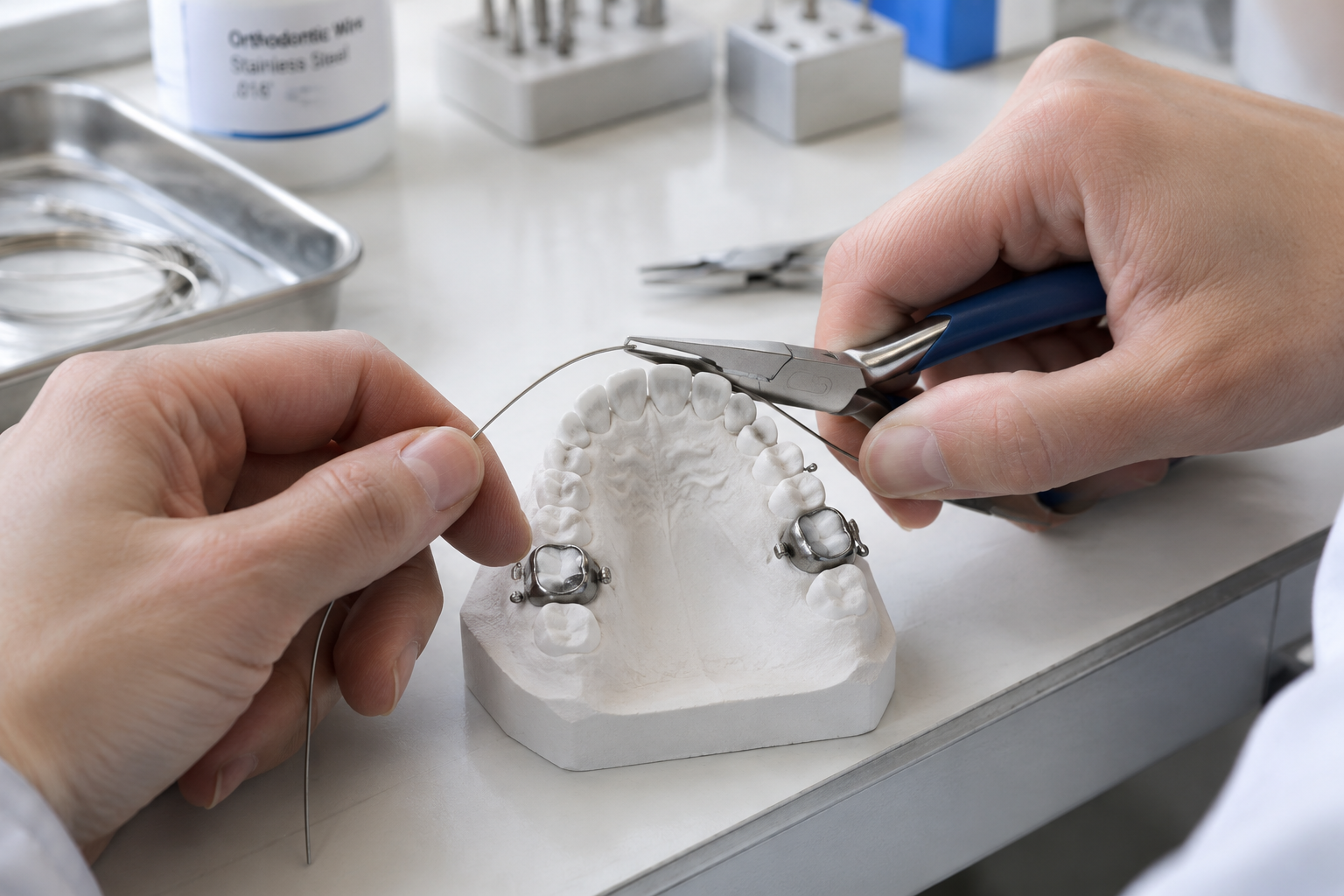
Crib position. One lab specification for a lower tongue thrust appliance places the crib wires 2 mm above the incisal edges of the lower anterior teeth. Tell the lab whether you want the crib tip aligned with the incisal edges or extended beyond them, and which teeth it should span.
Removable designs. A removable tongue crib can be built as a wire crib embedded in a vacuum-formed plastic appliance made on the cast, using 0.9 mm stainless steel wire. This links habit appliances to thermoforming; see our comparison of PETG vs polypropylene in orthodontic thermoforming for material behaviour, and our article on the Hawley versus clear retainer for the removable base.
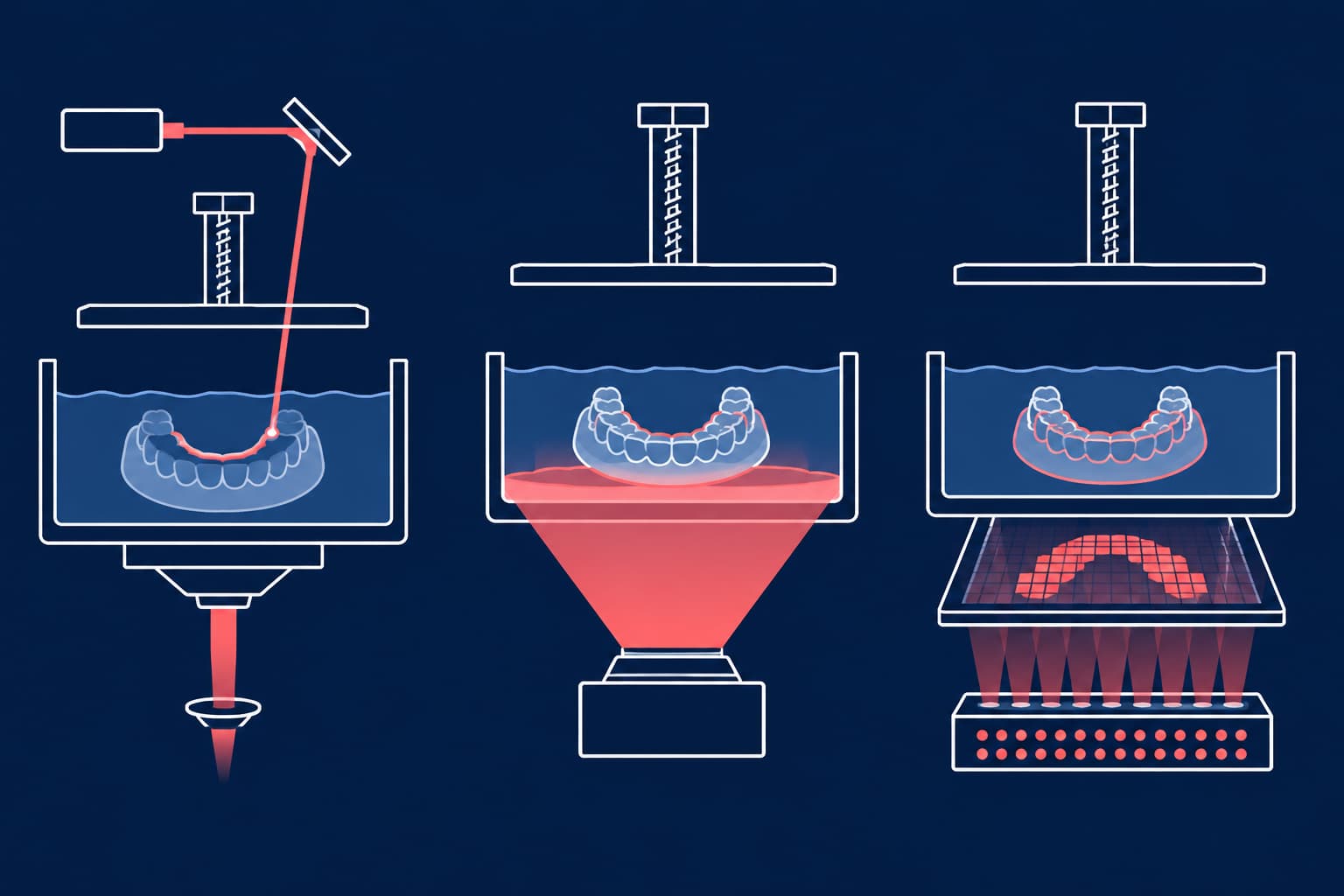
Digital input. Digital appliance workflows start with an intraoral scan, or a desktop scan of an impression or model, which feeds CAD software for design. Stainless steel appliances can also be produced on SLS printers according to a review of 3D-printed orthodontic appliances. The published evidence is thinner for habit appliances specifically: we found a digitally designed tongue crib as part of a customized expander in a case report, but no established standalone protocol for printed palatal or tongue cribs. That means scan-based ordering is realistic today, while a fully printed crib should be discussed case by case with your lab. For file handling, see our guide to STL files in orthodontics, and for printed parts in general, orientation and support rules for orthodontic 3D printing.
Order your next habit appliance with a clear brief
The takeaway: pick the appliance for the habit, check the arch for crossbite, and plan retention as carefully as the active phase. If you want to move habit appliances from stone casts to scan-based ordering, send your next case to the Nordicdens lab with the habit, the crib position you want and the wire gauge, and we will confirm what can be produced digitally. More clinical and production guides are on the Nordicdens blog.