Digital workflows using additive manufacturing replace manual solder joints and hand-poured acrylic with high-precision metal 3D printing. Fabricating a Herbst appliance using CAD/CAM software and selective laser melting (SLM) yields custom cobalt-chromium or titanium frameworks with micron-level fit accuracy, substantially reducing cement washouts, solder failures, and chairside seat time.
Analog methods like physical impressions, hand-bent support wires, and cold-cure acrylic resin remain familiar to many clinics because they require minimal initial digital software setup. However, traditional solder joints and cold-cure resins introduce inherent mechanical vulnerabilities, high fracture rates, and residual monomer shrinkage. Shifting to direct-metal digital production standardizes framework wall thickness, automates undercut compensation, and establishes an archived digital thread that guarantees perfect reproducibility whenever a component replacement is needed.
Biomechanical Design & Anchorage Configurations
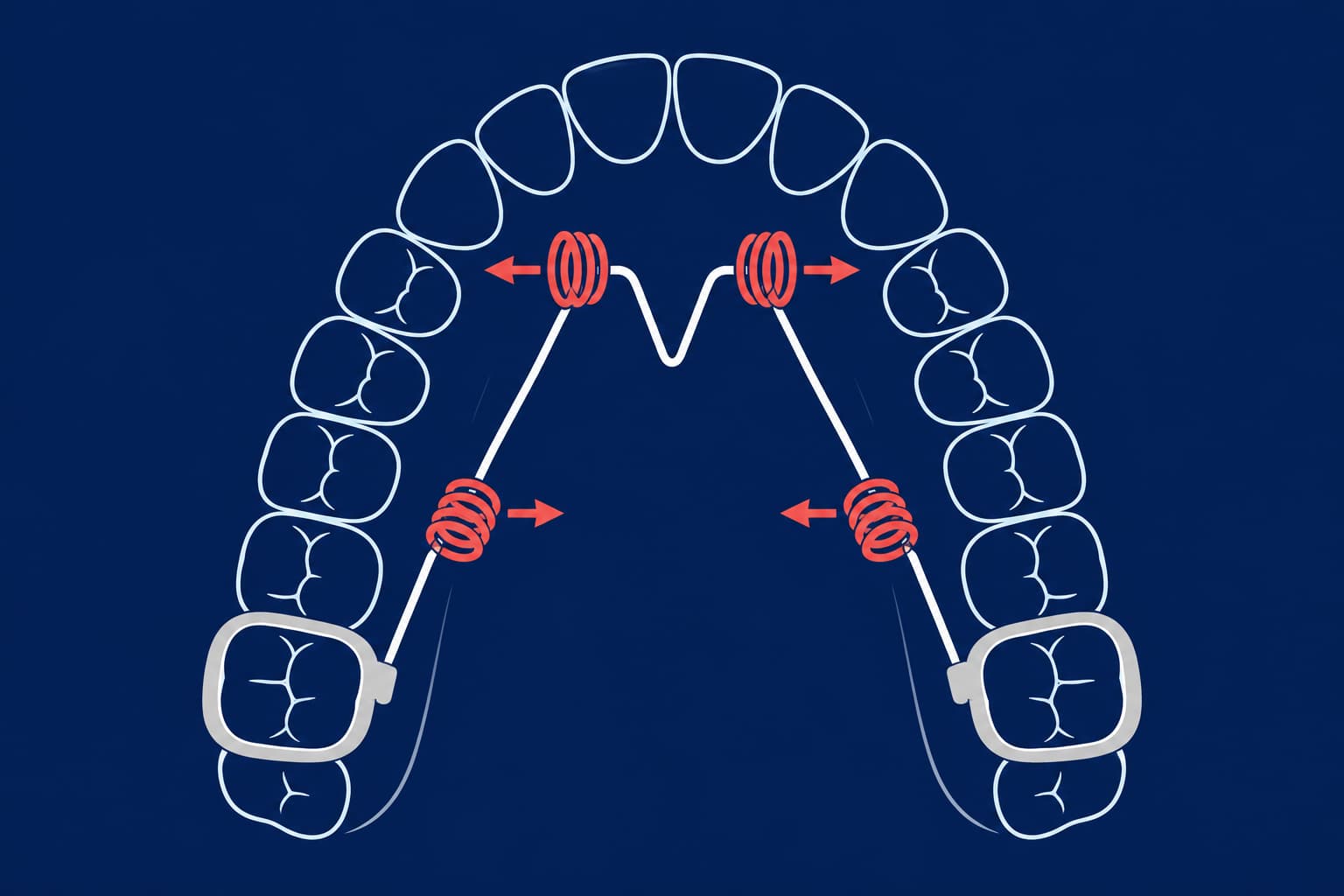
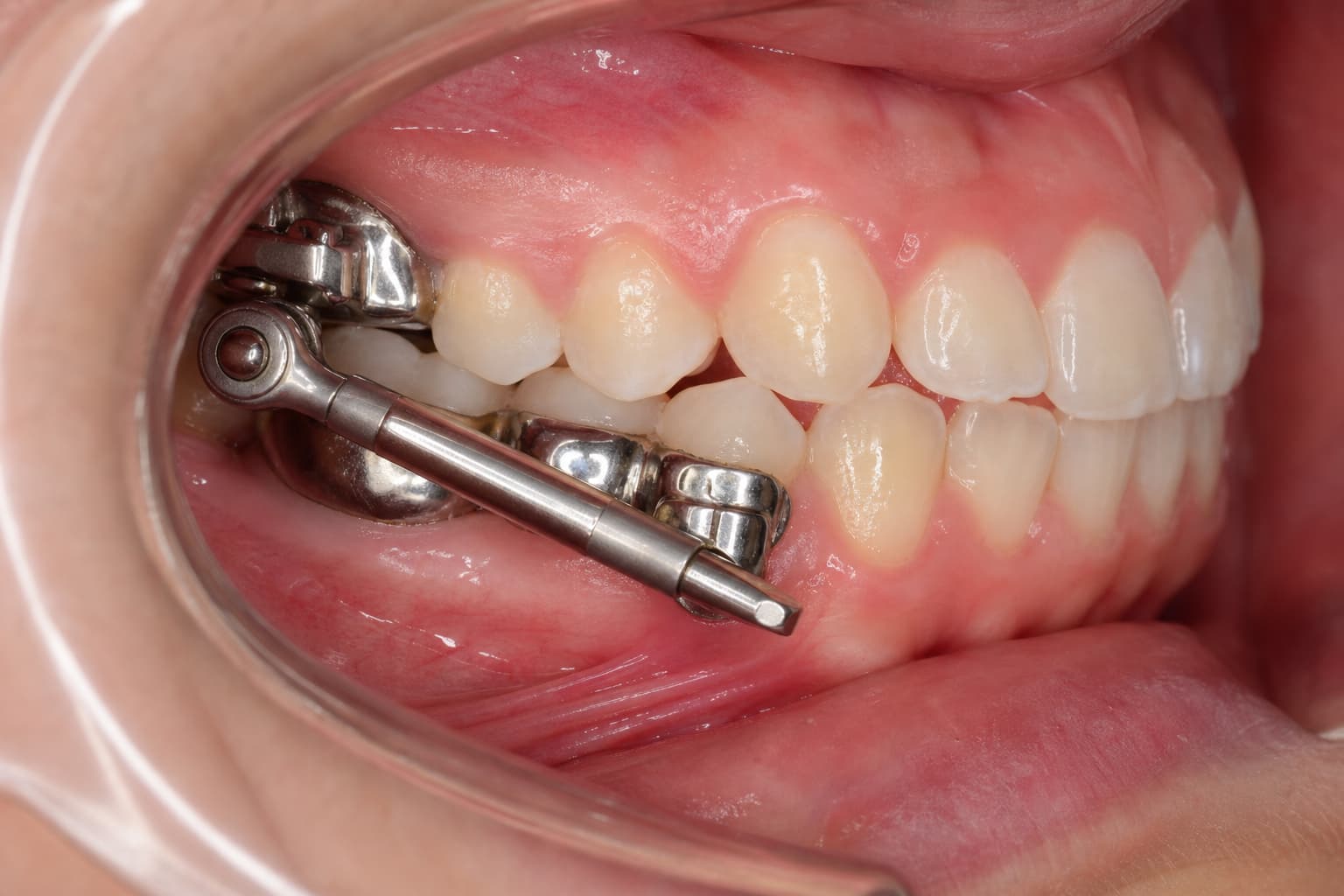
The Herbst appliance corrects skeletal Class II malocclusions by posturing the mandible forward into a Class I relationship using a bilateral telescopic tube-and-plunger mechanism. This intermaxillary mechanism exerts a continuous forward vector on the mandibular arch while applying an equal and opposite force to the maxillary complex.
Because the appliance operates continuously in the oral cavity under heavy occlusal forces, maintaining structural integrity and preventing anchorage loss dictates your choice of framework configuration. Clinicians select from four primary design variations:
- Banded Frameworks: Custom CAD-designed bands seated on the maxillary and mandibular first molars, reinforced with lingual or palatal arches for cross-arch stability.
- Stainless Steel Crowns and Direct Metal Bands: Custom SLM-printed crowns or rigid metal bands offering maximum retention and minimal debonding rates under severe bite force.
- Cast or Printed Metal Splints: Full- or partial-coverage metal frameworks that distribute orthopedic forces evenly across the posterior segment to reduce single-tooth stress.
- Acrylic Splint Herbst: Wire frameworks embedded in thermoformed or acrylic splints covering the occlusal surfaces, selected when vertical dimension control or intrusive vectors are required.
To mitigate lower incisor proclination – a frequent side effect of mandibular advancement – clinicians can incorporate temporary anchorage devices (TADs) directly into the CAD design. Transferring force vectors to cortical bone minimizes anchorage loss while maximizing skeletal adaptation. To evaluate how fixed mechanics compare to other orthopedic devices, explore our technical breakdown of functional orthodontic appliances.
Analog Limitations vs. Direct-Metal CAD/CAM Solutions
Traditional manual fabrication relies on casting, manual wire bending, and hand soldering. These labor-intensive steps introduce human variability and structural weak points that account for the high emergency rate associated with legacy Herbst appliances.
Additive manufacturing and digital CAD design eliminate these failure modes through metallurgical and engineering precision:
| Parameter | Manual Fabrication Workflow | Fully Digital CAD/CAM Workflow |
|---|---|---|
| Material Base | Solder-joined wires, poured acrylic, generic bands | Monolithic Cobalt-Chromium or Grade 5 Titanium |
| Fit & Margin Precision | Dependent on impression distortion and plaster expansion | Micron-level accuracy derived directly from optical scan data |
| Undercut Relief | Manual wax trimming and hand grinding | Automated digital undercut algorithm compensation |
| Breakage Risk | High at solder seams and acrylic-metal junctions | Low due to seamless, unibody 3D metal printing |
| Component Replacement | Requires physical impressions and complete remake | Instant re-printing of identical components from archived CAD files |
By manufacturing custom bands, lingual arches, and telescope pivot bases as a single continuous structure, additive metal printing creates a monolithic appliance built to withstand demanding biomechanical loads.
Step-by-Step Digital Fabrication Workflow
Transitioning a Herbst case from optical scan to final insertion involves a structured, four-phase digital process.
Data Acquisition and Construction Bite
The clinical process begins with full-arch optical impressions captured by an intraoral scanner. Capture the complete clinical crown anatomy, gingival margins, and deep palatal vault.
Record a digital bite registration in the intended forward posture, typically establishing 4 to 6 mm of mandibular advancement based on the clinical protocol. Export all scan files in open, high-resolution mesh formats. For detailed guidance on data handling and transfer, review our analysis of STL files in orthodontics.
CAD Design and Virtual Articulation
In the laboratory, technicians import your digital impressions into dedicated orthodontic CAD software to model the appliance sub-structure:
- Software algorithms clean the mesh topology, define tooth boundaries, and establish passive insertion paths.
- Digital offsets establish internal cement space, typically calibrated between 30 and 50 microns, guaranteeing optimal hydraulic cement flow without loose seating.
- Custom bands, lingual support arches, or full-coverage splints are drawn directly over the digitized dental crowns.
- Telescopic pivot bases are oriented in three-dimensional space to ensure unhindered extension and flexion without impinging on cheek mucosa or opposing teeth.
Additive Manufacturing and Production
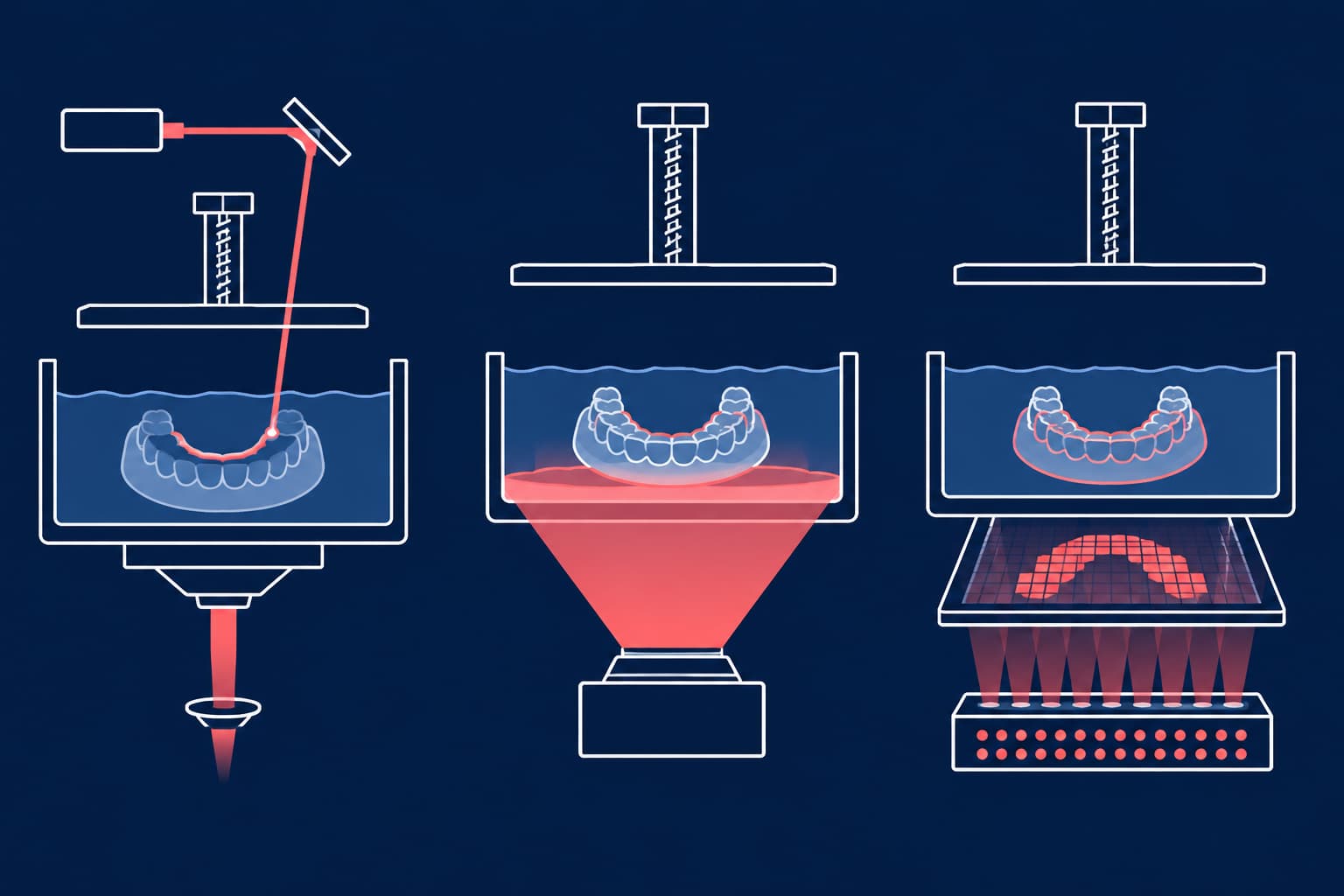
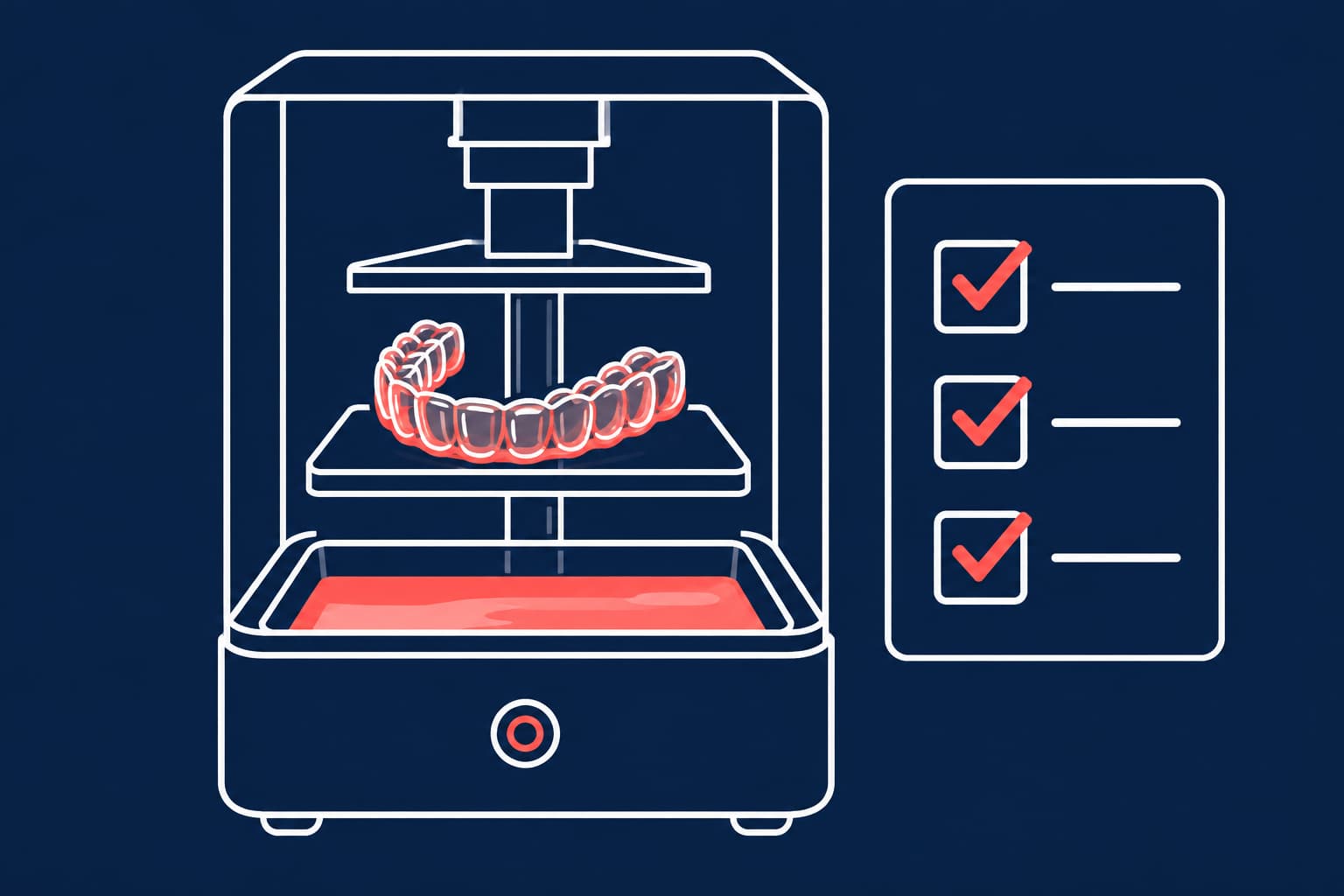
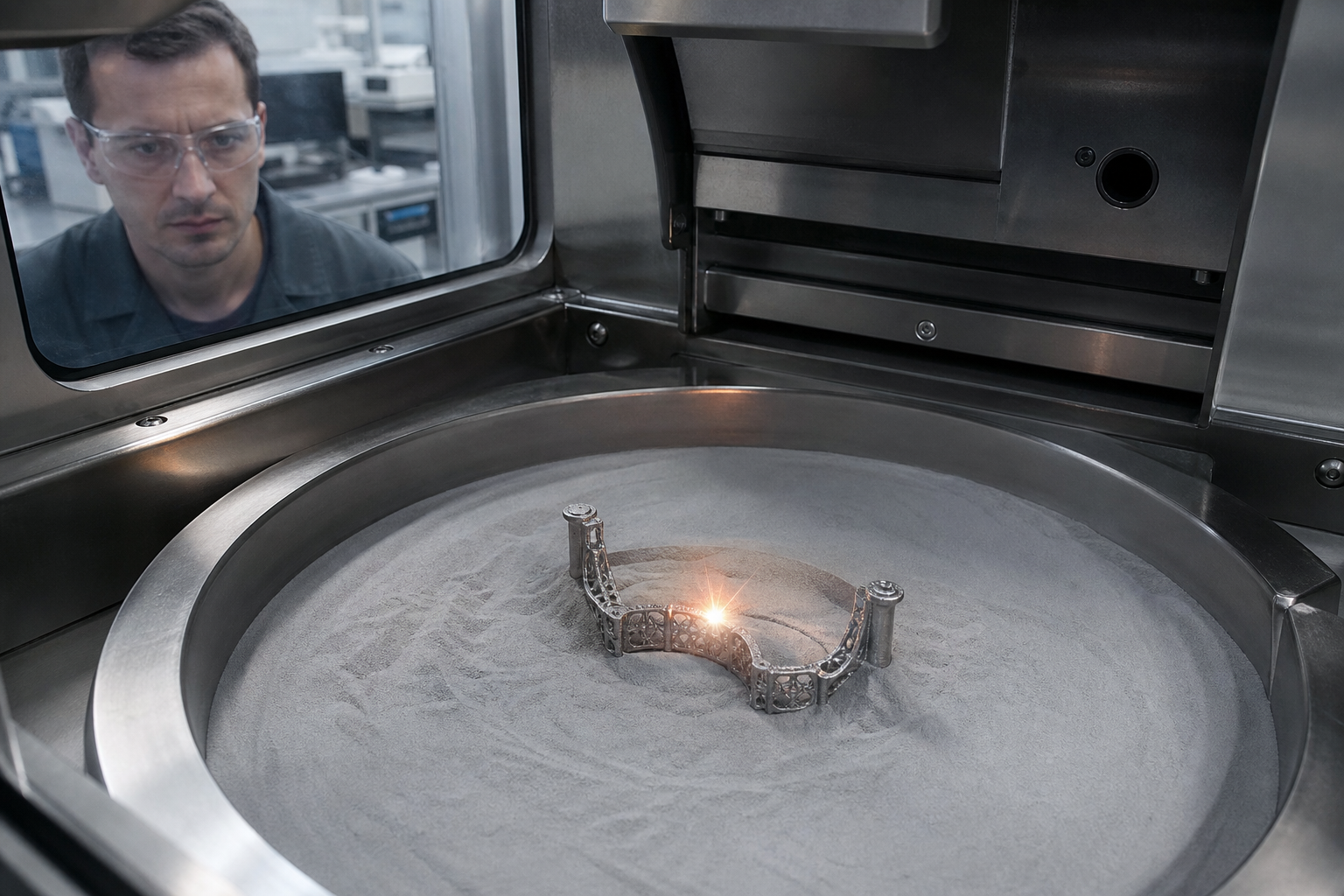
Following virtual approval, the laboratory exports the digital CAD files for production. Industrial Selective Laser Melting (SLM) or Direct Metal Laser Sintering (DMLS) systems fuse powdered cobalt-chromium or Grade 5 titanium alloy layer-by-layer to create the monolithic metal framework.
Concurrently, working master models are produced using high-precision resin printers to support physical verification during post-processing. Read more about additive equipment and materials in our overview of the 3D printing revolution in orthodontics.
Laboratory Finishing and Assembly
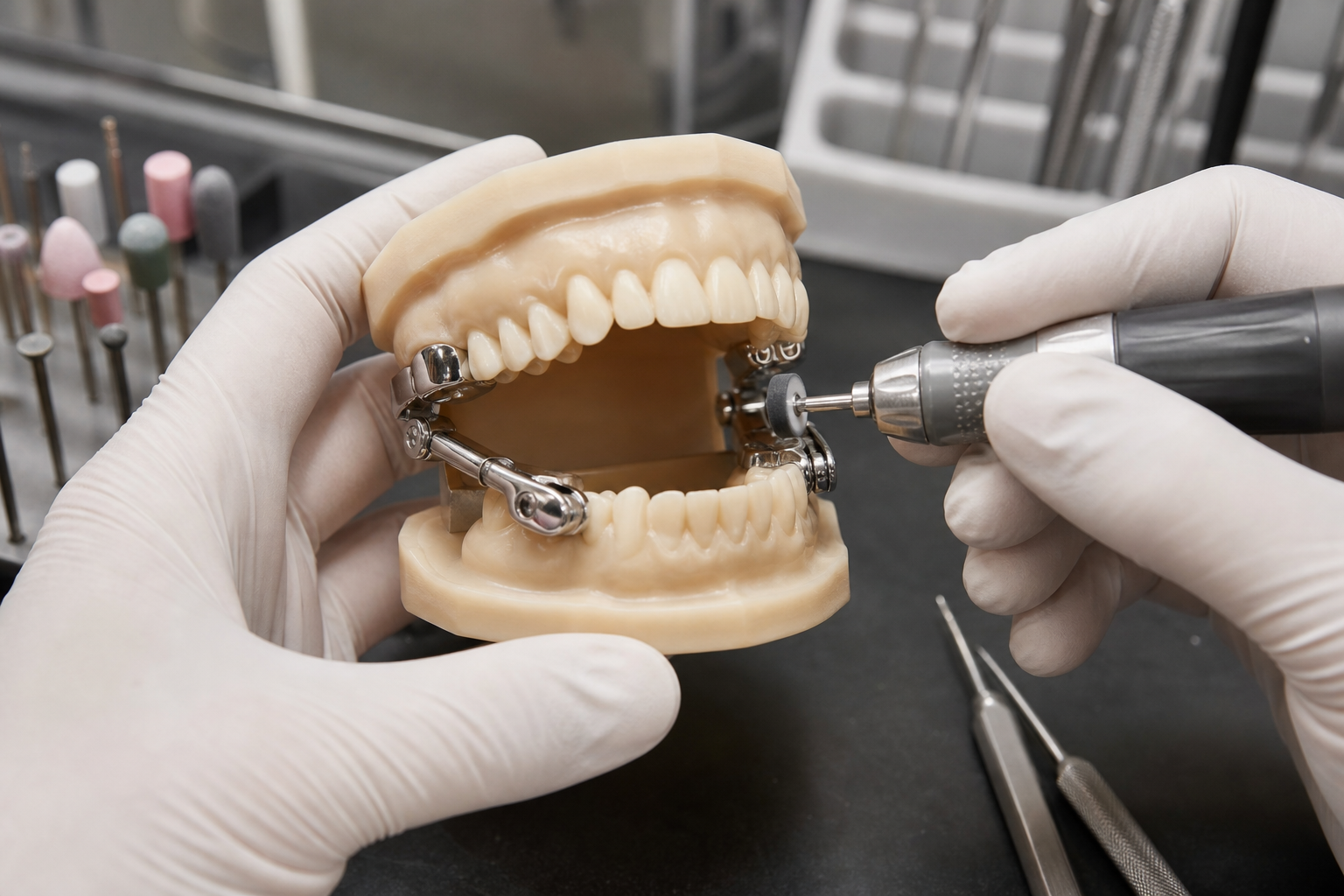
After metal printing, laboratory technicians remove print support structures, smooth contact zones, and verify passive insertion on the 3D-printed resin model. Technicians precisely align the double-telescope mechanism and laser-weld it directly onto the printed pivot bases. High-shine polishing eliminates surface roughness to protect surrounding soft tissues.
To understand how clinical data moves through each quality checkpoint, review our step-by-step breakdown of the digital workflow from intraoral scan to appliance.
Clinical Integration and Emergency Reduction
Integrating digitally fabricated Herbst appliances directly improves practice efficiency. Because the custom metal framework matches the patient's unique anatomy with micron precision, chairside delivery requires minimal wire bending or occlusal grinding.
Should an appliance component suffer damage during treatment, your clinic no longer needs to schedule emergency physical impressions. Because the master CAD file remains archived in the cloud, the laboratory can immediately re-print and laser-weld an identical replacement component, restoring treatment progress without delay.
Fixed Herbst mechanics provide consistent compliance advantages over removable Class II options. If your clinical practice also uses removable functional devices, compare these clinical workflows with our technical guide to Twin Block appliance production.
Streamline Your Class II Workflows with Nordicdens
Modernizing your laboratory workflow with direct-metal CAD/CAM orthodontics delivers exceptional appliance strength, predictable fit, and reduced chairside delivery time. Nordicdens provides complete digital manufacturing support across the Baltics and Scandinavia, combining additive metal printing with expert orthodontic laboratory engineering.
Ready to reduce remakes and elevate your Class II orthopedic results? Submit your intraoral scan and digital prescription to Nordicdens today to start your first digital Herbst case.