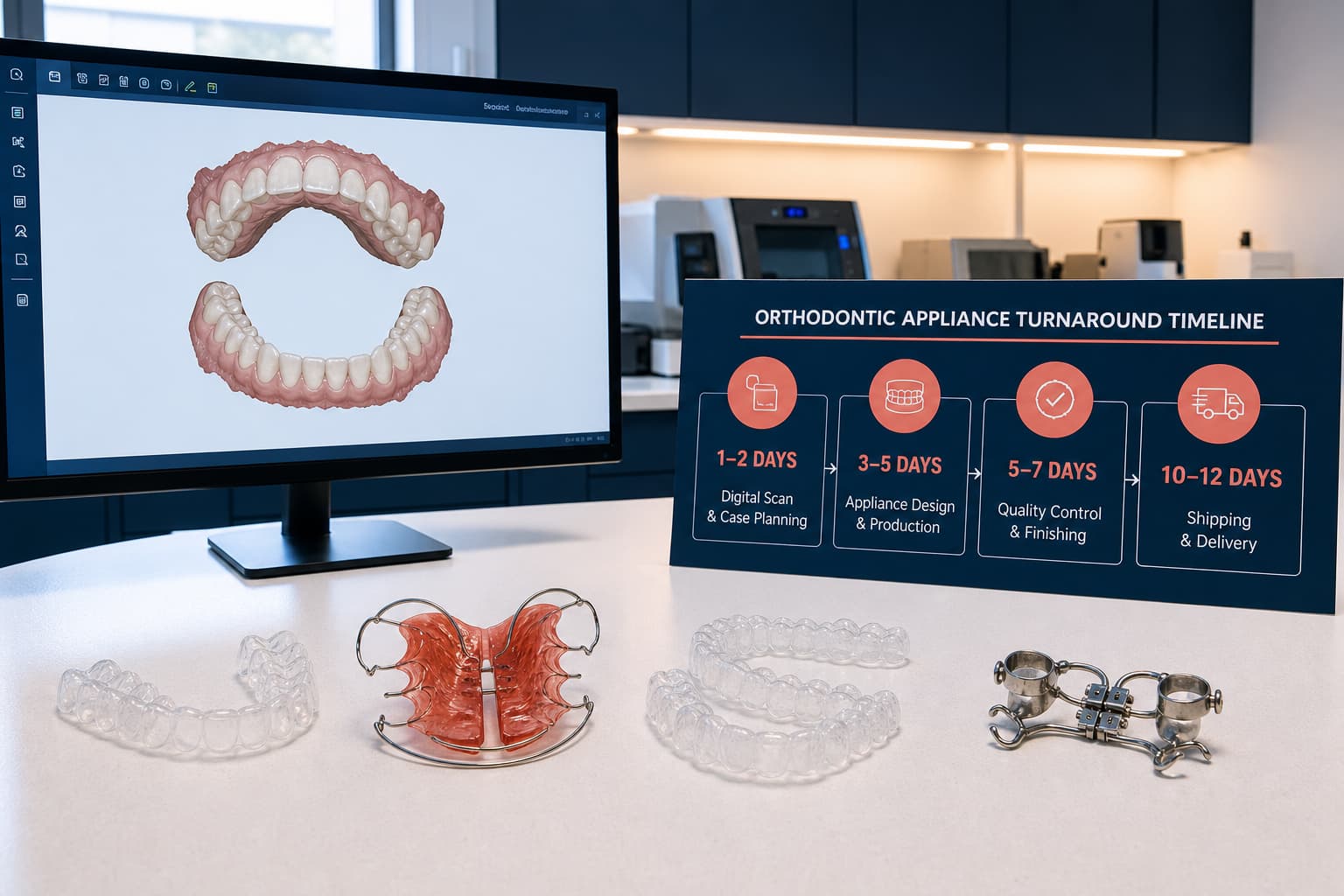
Precision Twin Block fabrication hinges on exact construction bite registration and tight adherence to a 70° inclined plane geometry. Transitioning your practice from traditional cold-cure acrylics to a digital workflow reduces laboratory active hands-on time from 72 minutes to 38–45 minutes, while tightening fitting accuracy down to 0.12–0.18 mm. While some clinicians rely on manual acrylics for rapid chairside wire adjustments, direct 3D printing and digital CAD/CAM methodologies eliminate internal resin porosity and wire distortion during curing. Understanding these technical parameters ensures optimal skeletal Class II correction while reducing patient chair time.
By evaluating the structural mechanics and manufacturing paths of modern functional orthodontic appliances, you can establish reproducible protocols across every case.
Technical Specifications and Design Architecture
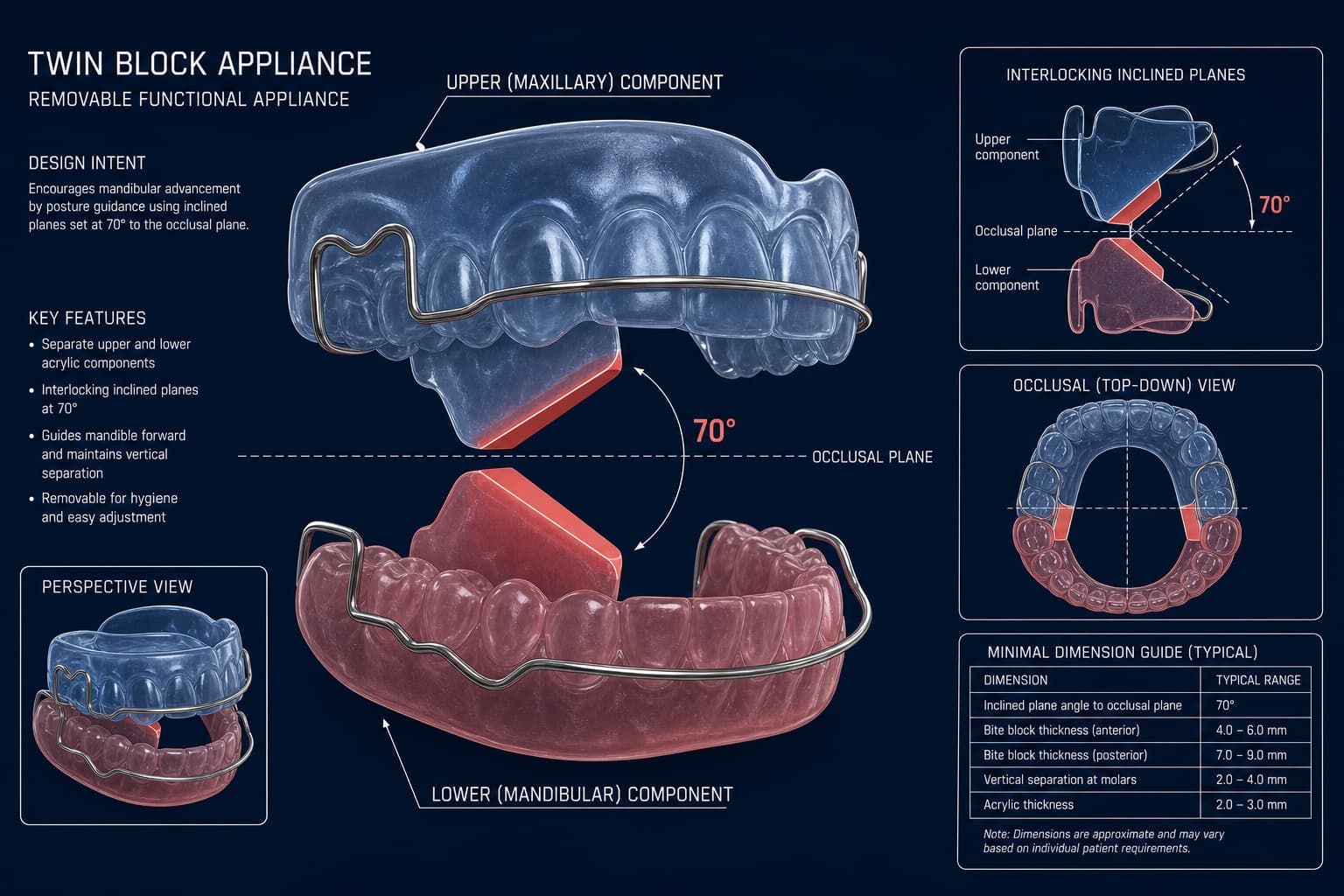
The core functional mechanism of the Twin Block relies on two opposing bite blocks that posture the mandible forward during closure via interlocking inclined planes.
Bite Block Geometry and Spatial Boundaries
- Upper bite blocks cover the maxillary posterior segments, extending from the first permanent molars to the mesial boundary of the second premolars.
- Lower bite blocks extend over the mandibular premolar region, from the mid-cusp of the second premolars to the mesial edge of the first premolars.
- Inclined planes interface at a 70° angle relative to the occlusal plane, generating the necessary vector to posture the lower jaw forward and preventing backward slipping during speech and mastication.
- Vertical dimensions maintain 5–7 mm of posterior clearance, effectively uncoupling the dentition and encouraging targeted eruption.
Clinical Construction Bite Parameters
Dimensional stability in your registration material dictates the precision of the physical or digital working model. Your laboratory team relies on specific interincisal clearances tailored to the patient's malocclusion profile:
- Class II Division 1 (Deep Bite): Requires approximately 2 mm of interincisal clearance to yield 5–6 mm of premolar opening, providing space for block thickness while allowing posterior eruption.
- Class II Division 2: Targets edge-to-edge incisal contact (0 mm clearance), creating immediate 5–6 mm premolar separation and opening vertical space.
- Class II (Anterior Open Bite): Requires increased clearance (4 mm or more) to compensate for existing vertical space and preserve block integrity.
For severe overjets exceeding 6–7 mm, you can record a bite that advances the mandible 4–6 mm initially for progressive reactivation, or register a single-stage advancement directly to an edge-to-edge stance.
Conventional Cold-Cure vs. Digital Workflows
Traditional fabrication involves hand-bending 0.7 mm stainless steel Adams clasps for molar retention and ball-end clasps for lower incisors. Technicians mount stone models on an articulator using the physical construction bite, build wax shuttering around the arches, and hand-apply cold-cure polymer and monomer. While functional, this approach introduces variability from monomer shrinkage, internal void formation, and prolonged bench work averaging 66 to 72 minutes per appliance.
Adopting a complete CAD/CAM orthodontics workflow transforms these technical steps into a streamlined digital pipeline:
- Fabrication Speed: Active labor drops significantly to 38–45 minutes per appliance.
- Volumetric Accuracy: Digital Twin Blocks demonstrate superior dimensional stability, with vertical fitting deviations between 0.12 and 0.18 mm compared to 0.47 to 0.78 mm in cold-cure acrylics.
- Material Options: Software models support thermoformed dual-layer baseplates (1.5–2.0 mm biocompatible plastic reinforced with internal acrylic) or direct 3D printing using medical-grade Class IIa resins.
Step-by-Step Digital Production Workflow
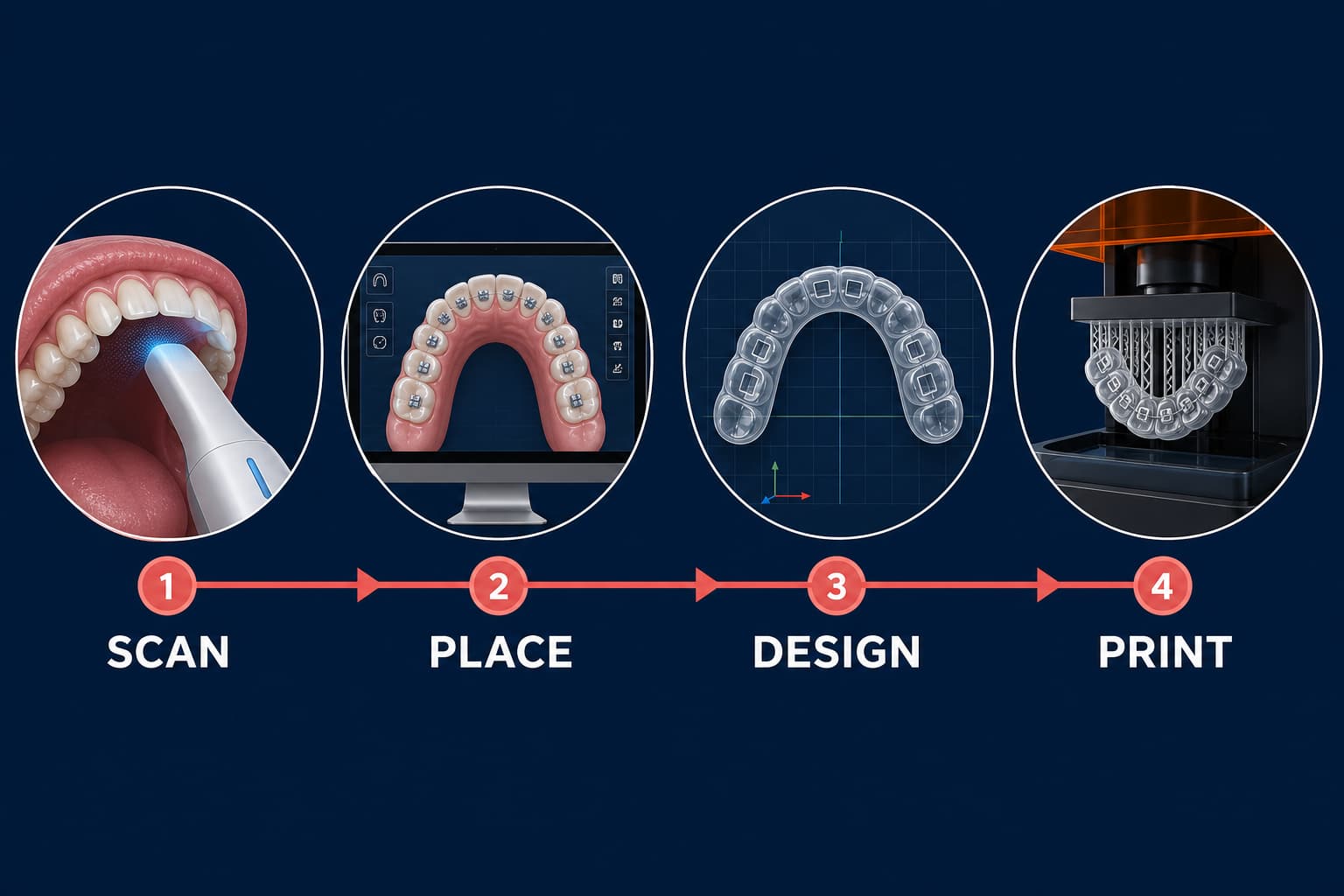
Transitioning your clinical practice to digital appliance manufacturing relies on four defined technical phases.
Data Acquisition and File Import
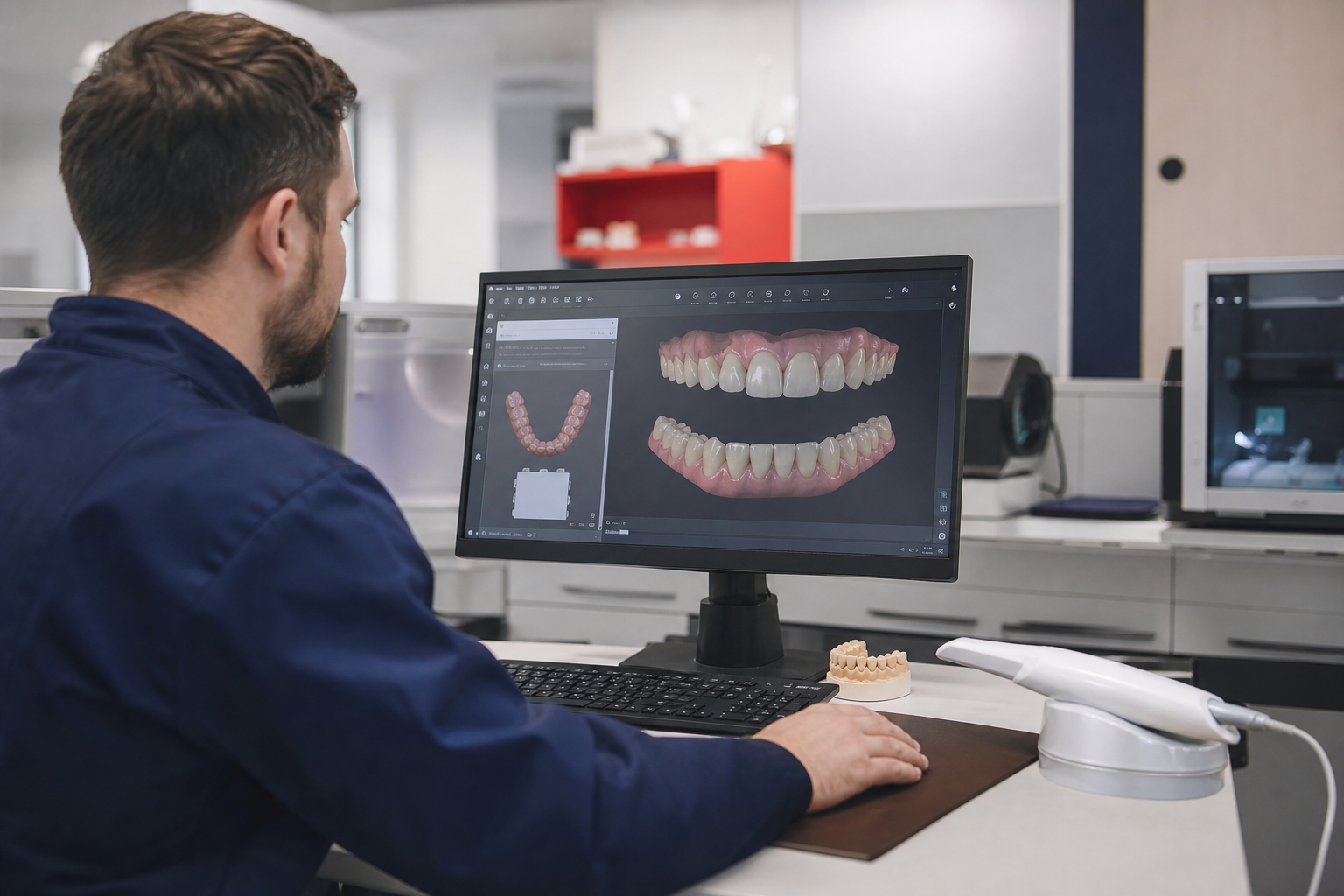
The process begins with a comprehensive intraoral scan capturing full maxillary and mandibular arches, extending deep into the palatal vault and lingual sulcus. You then export these watertight STL files in orthodontics alongside the digital bite registration, uploading them directly into the laboratory management portal.
Digital CAD Design
Laboratory technicians align the virtual models using the registered construction bite. Within the software, technicians map baseplate boundaries, digitally block out deep undercuts, and integrate midline expansion screws into the upper palate. The opposing 70° bite blocks are generated with exact mathematical symmetry.
Additive Manufacturing
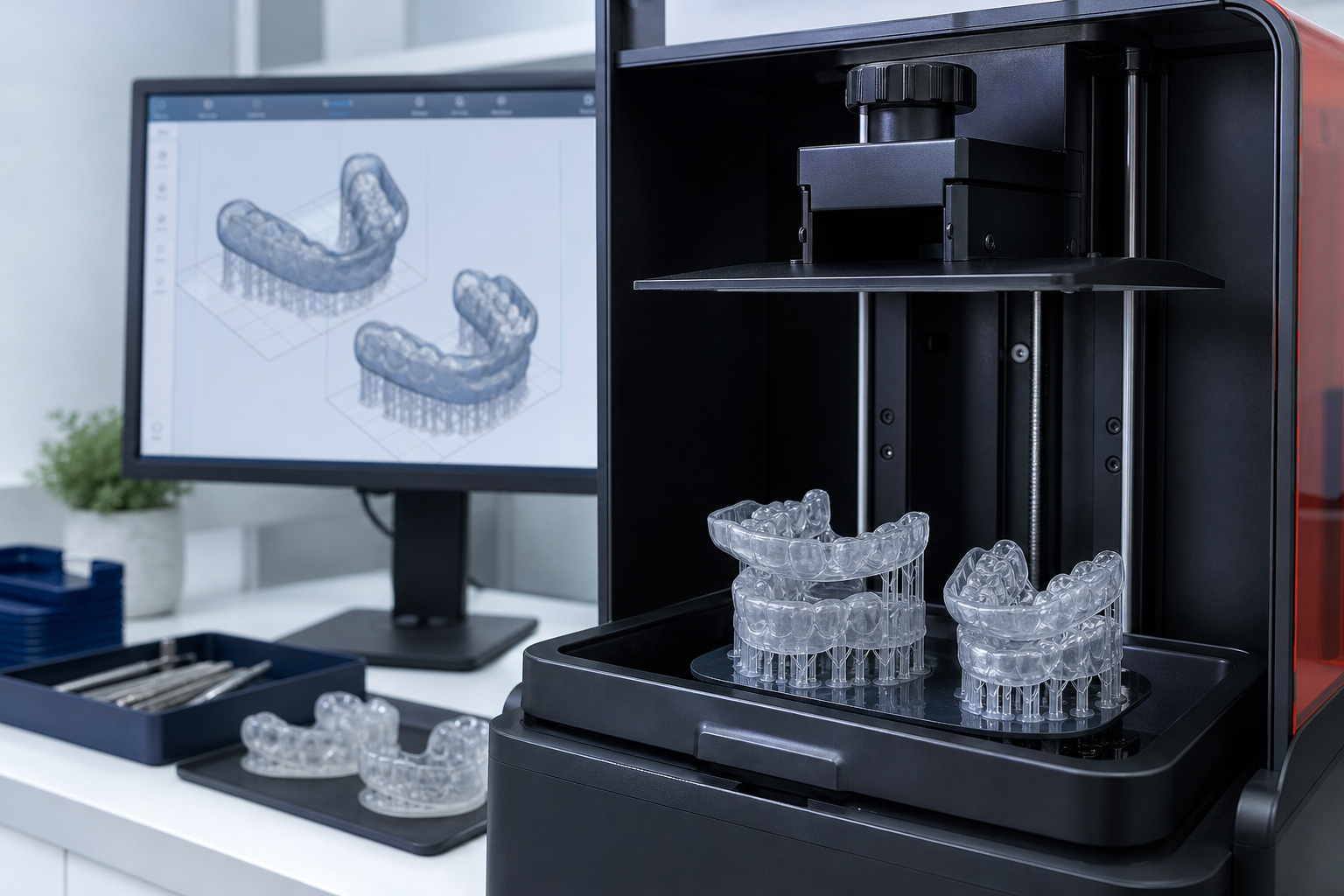
When producing direct-printed Twin Blocks, technicians import the completed CAD files into slicer software. Positioning the appliance with its flat virtual base on the build platform minimizes support structure touchpoints on the functional 70° inclined planes, preserving surface fidelity.
Post-Processing
Achieving biocompatibility and long-term mechanical stability demands a strict post-processing regimen:
- Solvent Washing: A controlled, two-stage high-grade solvent wash thoroughly dissolves uncured liquid monomer from intricate surface detail.
- Automated Curing: The printed component undergoes UV curing inside a temperature-controlled, nitrogen-purged unit to ensure maximum polymer cross-linking.
- Mechanical Finishing: Technicians remove remaining support nibs and apply a high-gloss polish to lower surface roughness and minimize microbial adherence.
To review the complete transition from raw intraoral data to physical delivery, inspect our guide on the digital workflow from intraoral scan to appliance.
Avoiding Common Fabrication and Fit Errors
Preventing clinical delivery errors requires attention to critical laboratory metrics before the appliance reaches your chairside:
- Insufficient Occlusal Block Thickness: Constructing bite blocks too thin remains the most prevalent fabrication error. When vertical opening fails to separate the posterior teeth beyond resting posture, patients comfortably posture backward under the blocks, negating skeletal correction.
- Excessive Vertical Height: Over-dimensioned blocks trigger masseter fatigue and speech impediments, directly degrading patient compliance. Maintaining a 5–6 mm clearance at the premolar region balances therapeutic force with patient comfort.
- Intaglio Mesh Discrepancies: Scan distortion or uncaptured tissue landmarks lead to ill-fitting baseplates. Systematically auditing incoming mesh files through an established orthodontic lab quality control system ensures digital artifacts are resolved prior to 3D printing.
Modernize Your Appliance Production
Modernizing your Twin Block fabrication from hand-poured acrylics to direct-printed CAD/CAM appliances ensures superior dimensional accuracy, faster turnaround times, and predictable patient outcomes. By standardizing construction bite parameters and leveraging biocompatible additive resins, your clinic eliminates chairside adjustments and optimizes Class II interceptive therapy across the Baltics and Scandinavia.
Partner with Nordicdens today to integrate precision 3D printing and digital appliance workflows into your clinical practice.