To scale orthodontic laboratory production without turnaround delays, you must calculate step-by-step cycle times, strictly limit work-in-process (WIP), and cross-train technicians across digital and finishing stages. Simply purchasing extra 3D printers or hiring technicians when backlogs build appears to be an immediate solution. However, expanding capital expenditure without identifying true operational constraints merely shifts bottlenecks downstream – such as to computer-aided design (CAD), post-processing, or quality control – while inflating fixed overhead. Systematic capacity planning eliminates these systemic constraints to unlock latent lab throughput.
Calculate True Lab Capacity and Identify Bottlenecks
Accurate capacity planning starts by measuring maximum output per unit of time across every production phase. Calculating process capacity requires evaluating individual operation cycle times, setup intervals, and manual handling durations.
In modern orthodontic production, individual operation durations vary significantly:
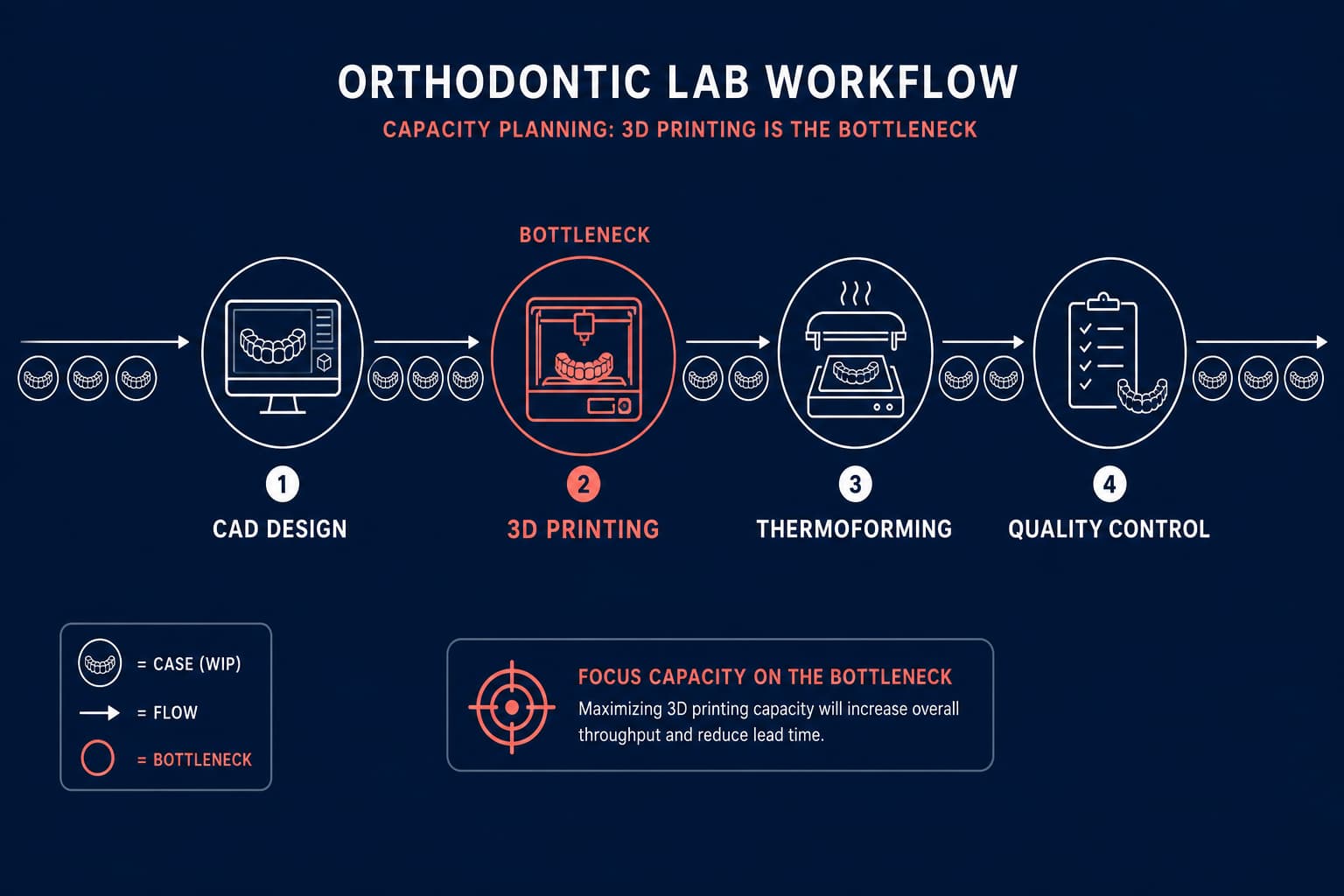
- Digital intake and design: 10 to 25 minutes per case in specialized orthodontic CAD software.
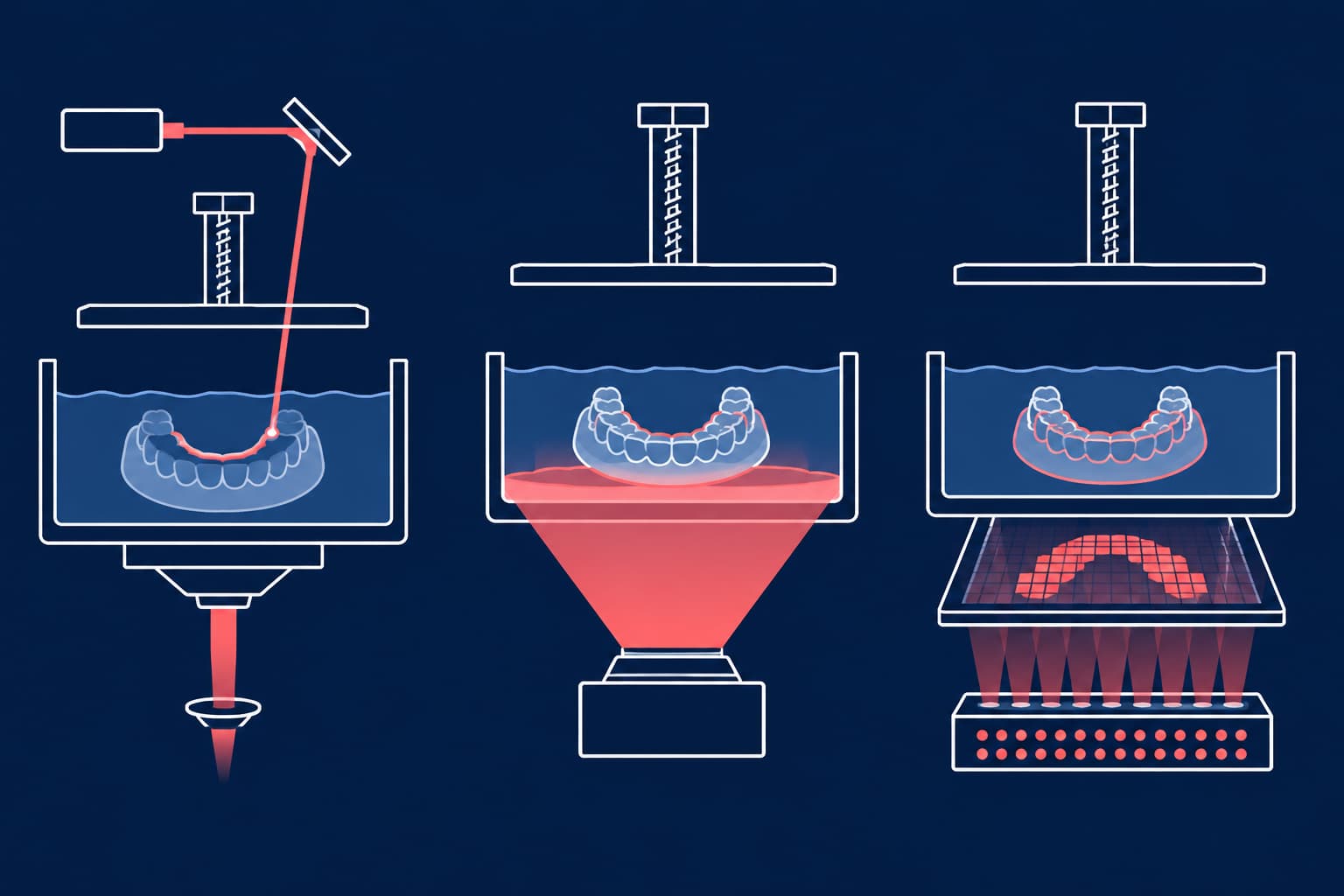
- Additive manufacturing: 30 to 90 minutes per batch print on vat photopolymerization or liquid crystal display (LCD) 3D printers.
- Resin post-processing: 15 to 30 minutes for solvent washing, resin stripping, and ultraviolet (UV) curing.
- Thermoforming and finishing: 5 to 12 minutes per appliance for sheet heating, pressure molding, trimming, and polishing.
The step with the lowest maximum output rate dictates total lab throughput. If your CAD design station processes 20 cases daily but your thermoforming bench caps out at 12, your effective delivery capacity remains 12 cases.
To prevent queues from accumulating, implement strict work-in-process control. Applying Little's Law – where manufacturing lead time equals work-in-process multiplied by cycle time – shows that allowing unmanaged physical models or digital files to pile up before a bottleneck directly lengthens turnaround time. Releasing work onto the production floor in time-based increments matching your bottleneck step, rather than releasing entire customer order batches at once, maintains steady queue lengths and stabilizes lead times.
Key Performance Indicators for Capacity Monitoring
Tracking operational metrics through your laboratory management system or doctor communication portal allows you to detect emerging bottlenecks before turnaround commitments fail:
- Turnaround time (TAT): Total duration from digital scan intake to final dispatch.
- Work-in-process (WIP) volume: Active cases currently staged between intake logging and final packaging.
- Resource utilization: Percentage of available technician hours and equipment runtime spent on active production.
- Unplanned equipment downtime: Machine hours lost to technical failures, calibration, or maintenance relative to backlog growth.
Equipment and Technology Scaling Strategies
Transitioning from physical plaster processes to an end-to-end digital scan-to-appliance workflow significantly alters operational capacity. Digital workflows substantially reduce active technician working time per case compared to conventional laboratory procedures, enabling lean teams to handle higher case volumes.
To scale physical production predictably, align hardware investments with specific operational thresholds.
High-Throughput Thermoforming Equipment
Manual vacuum-forming units create severe production delays as aligner and retainer volumes grow. Upgrading to positive-pressure machines offers faster cycle times and superior adaptation to 3D-printed models. When choosing hardware, prioritize units equipped with infrared thermal sensors and automated pressure controls to ensure precise heating without continuous manual oversight. Review operational criteria in our detailed guide on dental thermoforming machine selection.
Additive Manufacturing and Resin Safety
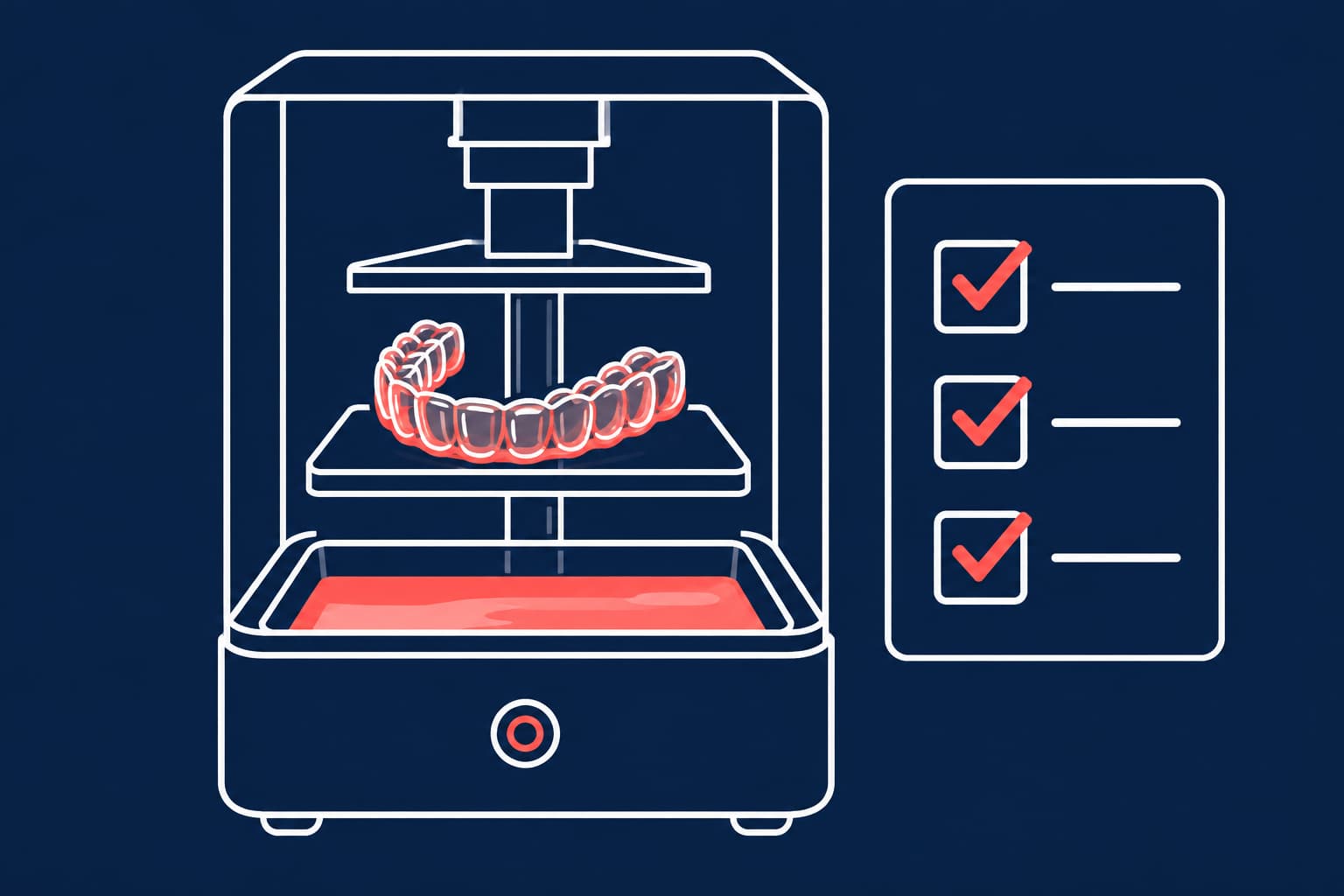
When scaling 3D printing capacity, weigh build-plate dimensions against print speed. Operating multiple medium-format printers provides tactical redundancy over relying on a single large-format industrial machine. If one printer requires maintenance or calibration, production continues on remaining units without complete operational shutdown.
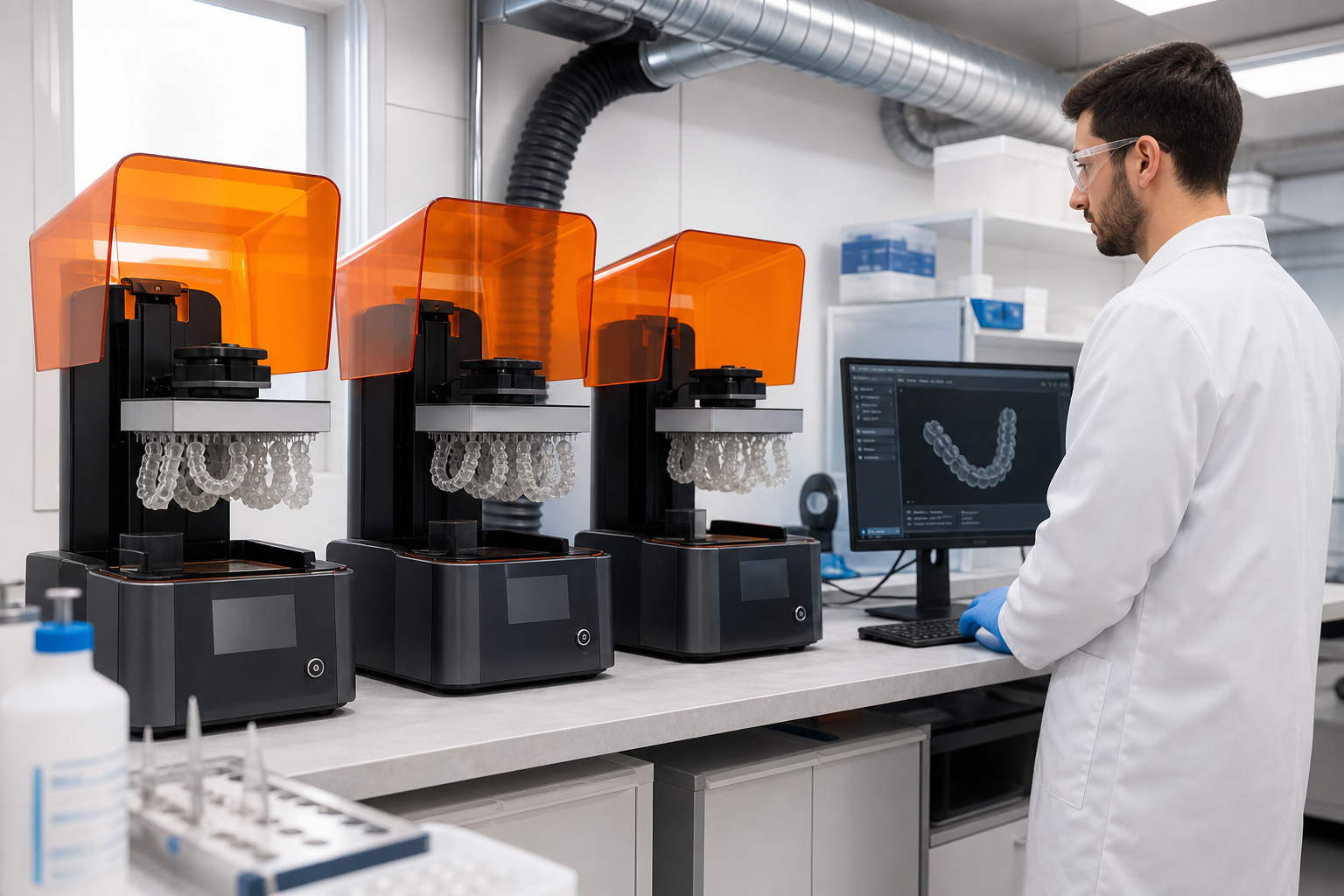
Scaling resin printing also requires strict safety and environmental controls:
- Install local exhaust ventilation, snorkel fume extractors, or enclosed ventilated printer cabinets to manage volatile organic compound emissions.
- Implement mandatory personal protective equipment standards, requiring nitrile or acrylate-resistant gloves, UV protective eyewear, and lab coats during resin handling, washing, and solvent management.
Equipment Continuity and Backup Planning
Unplanned equipment downtime on critical machinery halts case delivery instantly. Maintain a written preventive maintenance schedule covering light-engine calibration, resin tank replacement, and heating element testing. Furthermore, establish contingency arrangements with secondary equipment suppliers or third-party laboratories to serve as offsite backups during maintenance cycles or sudden order spikes.
Staffing and Cross-Training Matrix
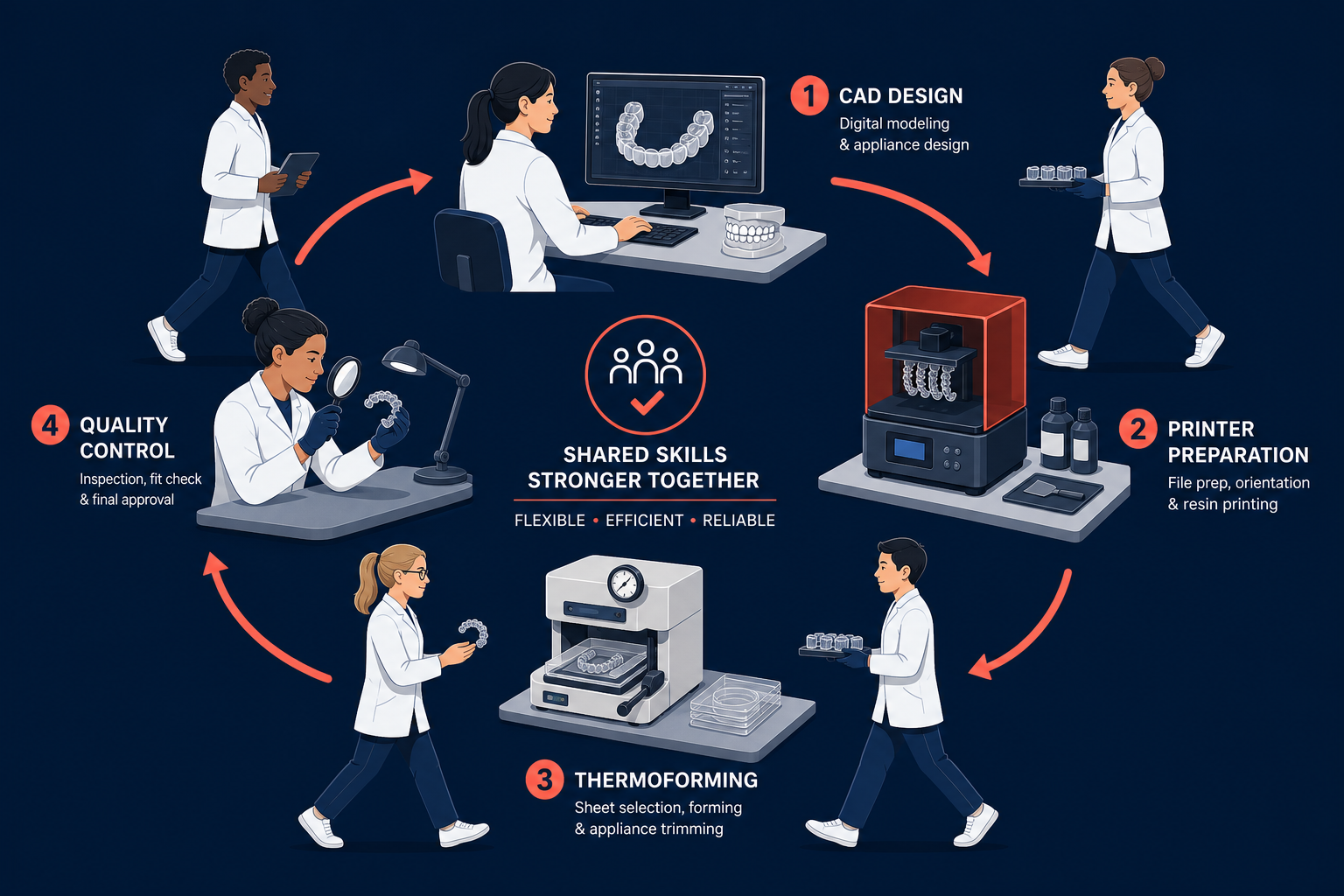
Hardware capacity remains useless without qualified personnel. Scaling an orthodontic lab requires transitioning technicians from conventional manual tasks – such as plaster pouring and wire bending – to digital mesh preparation, CAD nesting, and automated post-processing.
To prevent human resource bottlenecks, implement a standardized skills training matrix. Mapping individual technician qualifications across core operational steps exposes coverage gaps:
| Technician | Intraoral Mesh QA | CAD Appliance Design | 3D Printer Prep & Wash | Thermoforming & Trim | Final QC Check |
|---|---|---|---|---|---|
| Technician A | Primary | Expert | Competent | Basic | Primary |
| Technician B | Competent | Training | Primary | Expert | Competent |
| Technician C | Basic | Basic | Competent | Primary | Basic |
Cross-training ensures staff can shift dynamically when intake surges occur in specific departments, preventing work from stalling at single-operator stations.
Eliminating Turnaround Delays at the Intake Stage
Capacity issues frequently stem from input defects rather than shop-floor inefficiencies. Incomplete digital prescriptions, distorted intraoral scans, or missing bite registrations pause work, forcing technicians to stop production for clinical clarification.
Streamlining intake protects upstream design and manufacturing capacity:
- Standardize digital submission protocols: Require clinics to upload watertight scan files, verified occlusion data, and clinical photographs using a structured digital case submission checklist.
- Automate initial mesh integrity checks: Run automated software verification upon file upload to catch non-manifold meshes, missing anatomy, or scan gaps before queuing cases for CAD design.
- Enforce multi-stage quality control gates: Implement structured inspection checkpoints – covering CAD design review, post-production inspection, and final pre-packaging verification. Rigorous orthodontic lab quality control lowers your internal orthodontic appliance remake rate, keeping machine capacity dedicated to new production.
Strategic Capacity Balancing: Hybrid Production
Expanding internal capacity requires substantial capital investment, floor space, and continuous technical staffing. For growing clinics across the Baltics and Scandinavia, combining internal production with a specialized digital laboratory provides a flexible framework to scale without taking on fixed overhead burdens.
In a hybrid production model, your clinic manages urgent chairside tasks internally while sending complex functional appliances, indirect bonding trays, and high-volume clear aligner batches to an offsite lab. Evaluating the financial and operational mechanics of orthodontic lab outsourcing allows you to turn rigid equipment and labor expenses into variable costs that track actual case volume.
At NordicDens, we help growing clinics maintain reliable turnaround times through modern additive manufacturing, expert CAD setup, and express courier delivery. Explore our technical resources on the NordicDens blog or contact our technical team today to discuss your clinic's production capacity requirements.