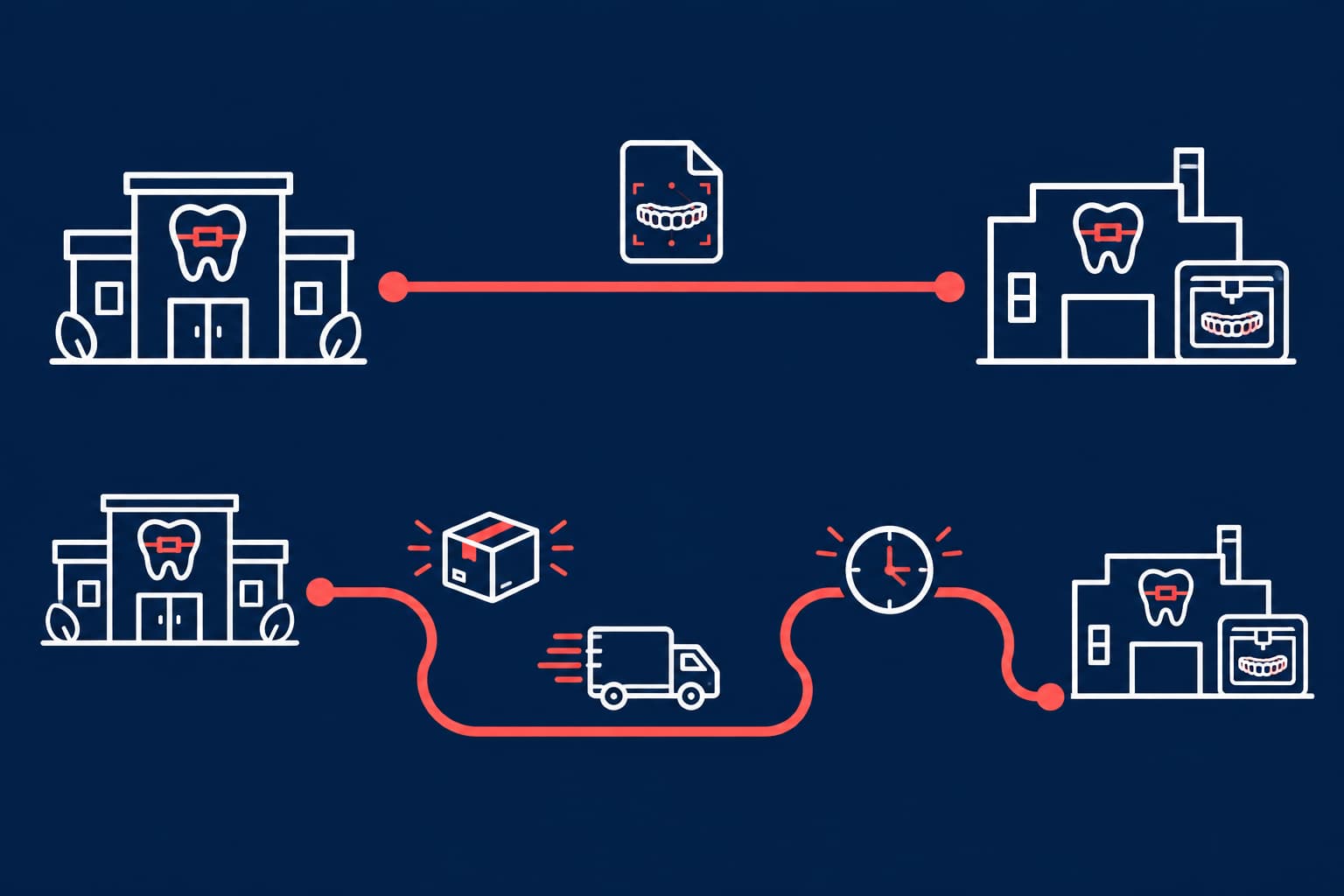
The most reliable way to fix lab shipping is to ship less. Send scan files instead of impressions, and keep physical freight for the finished appliance. When a case does have to travel as an impression, disinfect it, document the disinfection, and match the pour window of the material to the courier's transit time. Across EU borders your parcel moves without customs. Into Norway, it does not.
This guide covers the three places cases go wrong in transit: the impression itself, the appliance on its way back, and the paperwork at the border.
| Situation | What to send | Rule that matters most |
|---|---|---|
| Intraoral scanner available | STL, PLY or DCM file plus photos and prescription | Use a case code, not the patient's name |
| Alginate impression | Impression in a humid, sealed bag | Check your product's pour window against the courier's delivery day |
| PVS impression | Disinfected, rigid-tray impression | Stable for days, but keep the disinfection record with it |
| Finished appliance (lab to clinic) | Express courier, rigid box | Keep it away from heat |
| Shipment to or from Norway | Any of the above | Customs declaration needed, even for a small parcel |
Why a scan file removes the riskiest leg
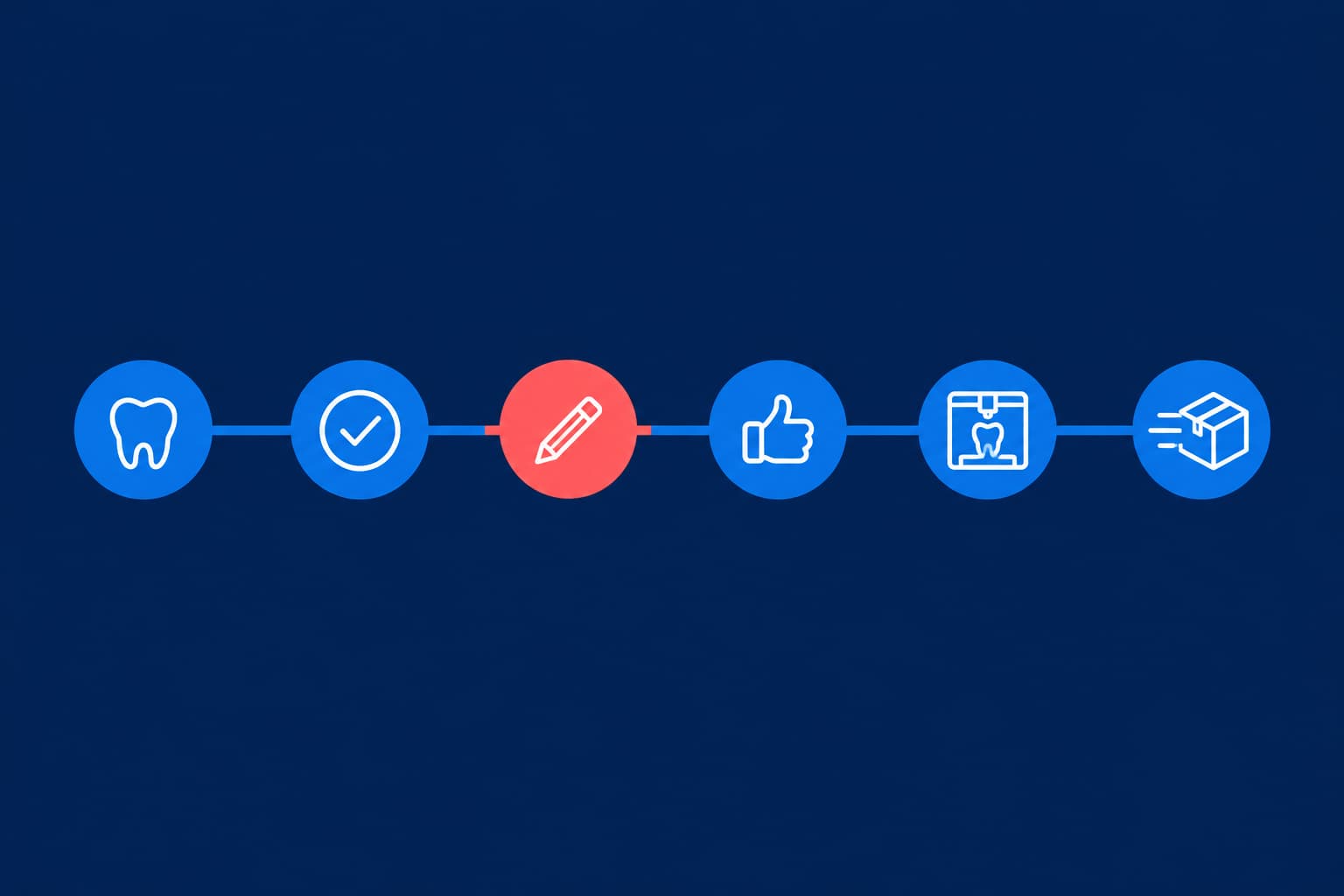
An impression is a perishable object. Alginate gains or loses water, silicone relaxes, and every hour in transit is an hour of dimensional change. A scan file has none of that. Nordicdens accepts STL, PLY and DCM files, and a clinic can send them with clinical photographs and a digital prescription through a secure portal. The lab receives the data within seconds, and the case is logged on receipt.
The objection is fair: scanners are not perfect. In one in-vitro comparison of seven intraoral scanners for full-arch work, conventional impressions had the best trueness (24.5 µm against up to 95 µm for the scanners), though every scanner stayed under 100 µm. A systematic review of nine studies found contradictory full-arch results, with most studies reporting similar accuracy for both methods. So scan quality is a real variable. Our guide to intraoral scan errors in orthodontics lists the usual causes and fixes, and the digital case checklist covers what to verify before you press send.
Shipping impressions is also not inherently inaccurate. A study from an orthodontic department at the University of Aarhus compared plaster casts poured immediately with casts poured after a 3 to 5 day mailing of alginate impressions, and found no statistically detectable difference between the models. The risk is not the parcel. The risk is an unmanaged parcel.
Shipping physical impressions: the protocol
Disinfect, rinse and write it down
The US Centers for Disease Control and Prevention (CDC) guideline is the reference most clinics follow. It says impressions, bite registrations and orthodontic appliances should be cleaned of blood and bioburden, disinfected with an EPA-registered hospital disinfectant with a tuberculocidal claim, and rinsed before they go to an off-site lab. It also asks the sender to provide written information on the disinfectant used and the exposure time. These are US rules, so check your national requirements in Estonia, Finland, Sweden, Norway, Denmark, Latvia and Lithuania too.
Contact time is set by the disinfectant's label, not by a universal number. One laboratory study recommended 0.5% sodium hypochlorite sprayed on alginate for 10 minutes, and 0.5% hypochlorite or 2% glutaraldehyde by immersion for 10 minutes on elastomeric materials. Be careful with soaking alginate, because it takes up water. Check compatibility with the impression material manufacturer.
The lab will disinfect again on arrival to protect its own staff. The note is not redundant, because it tells the technician what the material has already been through.
Match the pour window to the courier
Dimensional stability depends on the material, and the published numbers differ:
- Conventional alginate: manufacturers typically recommend pouring within about 12 hours, because distortion increases between 12 and 24 hours.
- Extended-pour alginate: in one study, Hydrogum 5 could be poured after up to 120 hours and Alginoplast after 72 hours, but Tropicalgin should be poured immediately and stored for no more than 24 hours. All were stored in sealed bags at 100% humidity.
- PVS (polyvinyl siloxane): generally described as stable enough to pour within 1 to 2 weeks.
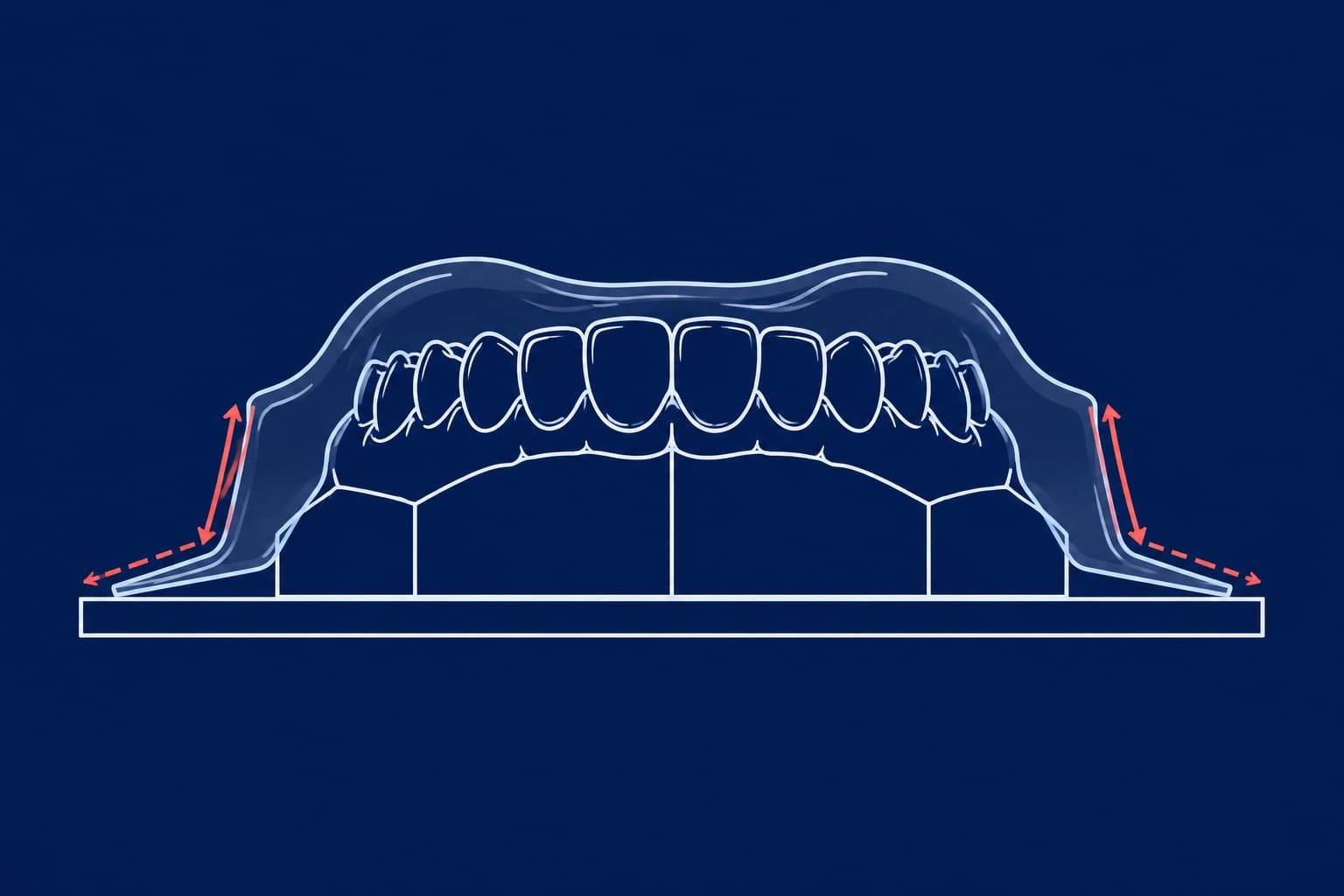
If you ship alginate, keep it humid. A moistened paper towel or a sealed bag with a little water works. Remove unsupported excess material before packing, because it can distort during transport.
Appliances on the way back: heat is the hidden variable
Thermoformed aligner materials have high glass transition temperatures (Tg), the point where the plastic softens. One laboratory comparison measured 79.9 °C for CA Pro, 92.2 °C for Zendura A and 107.1 °C for Zendura FLX. The 3D-printed shape-memory resin in the same study, TC-85, had a Tg of 42.3 °C and lost stiffness between 20 and 45 °C. Other direct-printed aligner resins are formulated differently: Luxcreo DCA and DCA Plus show Tg values of 118 °C and 130 °C.
The practical point is that material behaviour varies a lot, and some resins are designed to respond near body temperature. We found no study that quantifies deformation of finished appliances during transport, so treat the following as precaution rather than measured fact. Do not leave a parcel in a parked vehicle or in direct sun, and tell the courier the contents are heat-sensitive. Ask your lab which resin your appliance uses before assuming it is heat-tolerant.
Printed models are less of a concern. A six-month study of 3D-printed aligner models stored in the dark at 25 °C found no statistically significant dimensional change.
When the appliance arrives, clean and disinfect it before it goes into the patient's mouth. The CDC guidance applies in both directions.
Crossing borders in the Baltics and Scandinavia
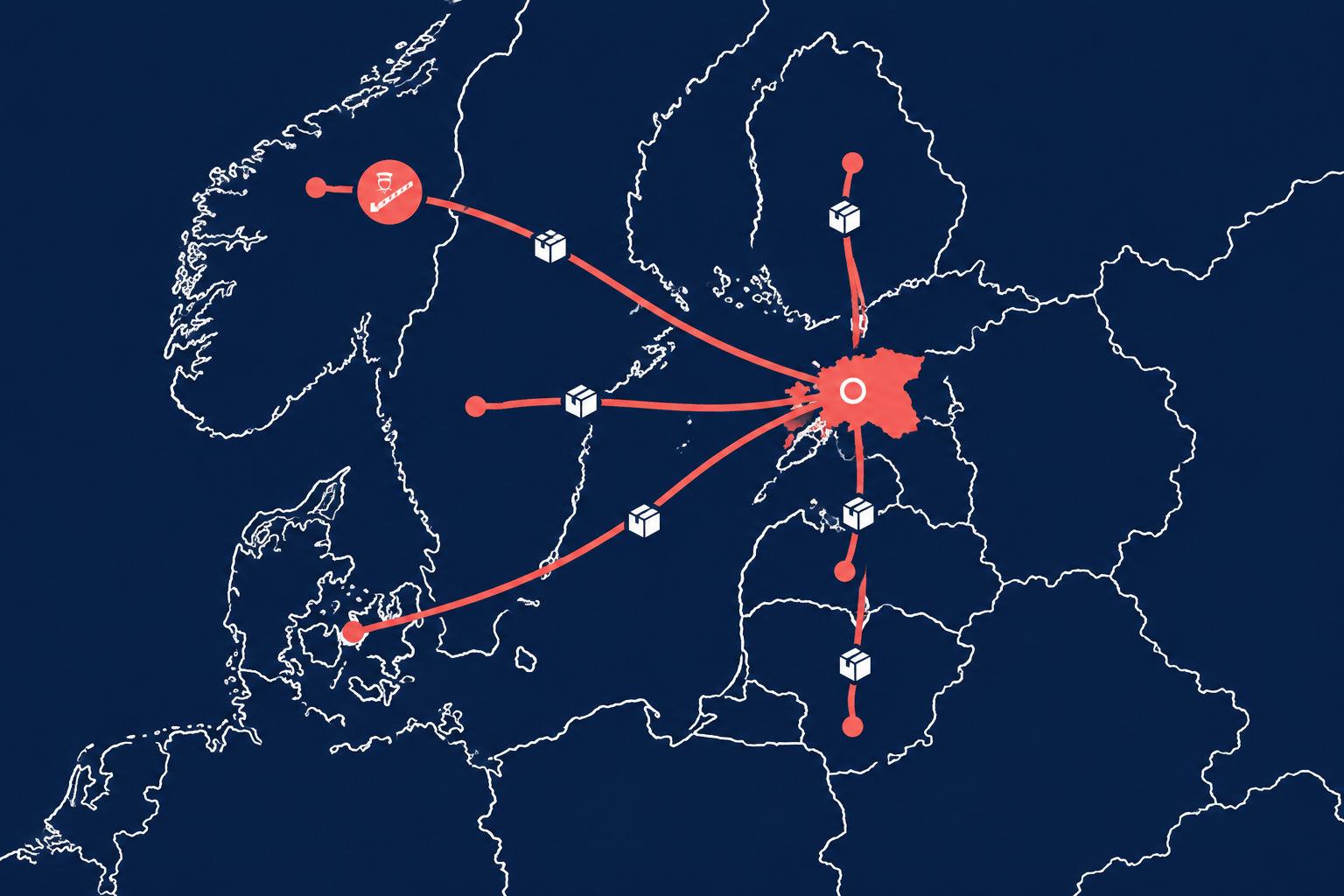
Nordicdens works from Tallinn and serves clinics across the Baltics and Scandinavia. Finished appliances leave the lab securely packaged by express courier. Courier transit times are indicative and depend on pickup time, service and customs requirements:
- Latvia and Lithuania (EU): Omniva reports next working day delivery to Latvia and second working day to Lithuania.
- Finland, Sweden and Denmark (EU): DHL Express Estonia states that parcels to a metropolitan area in the EU are normally delivered the next working day. Omniva's Finland pick-up service reaches Helsinki the next day if handed over in Tallinn by noon, and other places can take up to four days.
- Norway (EEA, outside the EU customs area): DHL Express states that parcels outside the EU can take an extra day. We found no route-specific transit time for Estonia to Norway, so ask your courier for a quote with a date.
EU destinations
Goods move between EU countries without customs formalities. VAT is handled as an intra-EU transaction between VAT-registered traders. Ask your accountant to confirm the VAT treatment for your clinic's registration.
Norway
As of November 2026, Norway is in the EEA but outside the EU customs union. Goods leaving the EU for Norway generally need an EU export declaration, and Norwegian Customs requires an import declaration. Every item is classified by commodity code, and heading 9021 covers artificial teeth and dental fittings, but the correct 8-digit code depends on the product, so ask your customs broker or carrier. Norway's low-value exemption no longer applies, since the customs declaration exemption for small consignments was abolished in 2024. VAT-registered businesses report import VAT to the Norwegian Tax Administration themselves rather than on the declaration.
Remakes need the same planning. Norwegian tax guidance says goods that are sent back should be treated like any other import. A remake loop between Oslo and Tallinn therefore crosses a customs border twice, and each crossing adds time.
Paperwork that travels with the device
The EU Medical Device Regulation (MDR) applies in Norway through the EEA Agreement. A custom-made device must be accompanied by the Annex XIII statement, which identifies the patient by name, acronym or numerical code. The manufacturer must keep it for at least 10 years. The Norwegian Medical Products Agency also requires information accompanying devices in Norwegian. National registration differs: Sweden requires manufacturers of custom-made devices to be registered with its Medical Products Agency. Our article on orthodontic lab regulatory compliance goes deeper into MDR and quality standards.
Using a case code in place of the patient's name serves both the MDR and data protection. Our piece on orthodontic lab GDPR and patient data explains why codes plus an encrypted portal reduce risk faster than policy documents do.
A worked example: the Friday impression
Take a hypothetical clinic in Riga. It takes an alginate impression on Friday at 15:00, and the courier collects at 17:00. With next-working-day delivery, the parcel arrives Monday, about three days later.
- Conventional alginate (about 12 hours): outside the window. Do not ship.
- Extended-pour alginate such as Hydrogum 5: inside the window in one study (up to 120 hours), but that result applies to that product, stored sealed and humid.
- Alginate such as Tropicalgin (no more than 24 hours): outside the window.
- PVS: inside the window.
Decision rules you can apply:
- If you have a scanner, scan. It removes the transit leg altogether.
- If you ship impressions, use PVS for any dispatch the courier cannot deliver within a day.
- If you must use alginate, send it Monday to Wednesday and check the material's stated pour window against the delivery day.
- If the destination is Norway, add customs time to your estimate and ask for a dated quote.
Mistakes that cost the most time
- No disinfection note. The lab has to treat the case as undocumented and disinfect it again.
- Patient name on the box. Use a case code, and keep the key in your clinic system.
- Assuming Norway is like Latvia. It is the one destination on this list that requires customs paperwork.
- A late-week dispatch of unstable material. It sits in a depot over the weekend.
- An incomplete case. Our analysis of why orthodontic lab cases get rejected shows that missing data causes delays long before the courier does.
For lab selection, our 7-point lab checklist includes delivery arrangements, and the digital scan turnaround guide shows how much time a scan-first workflow removes.
Shipping is a controllable part of your lab turnaround, and the surest control is to stop posting impressions. Send your next case as an STL file and ask Nordicdens how your case would be submitted and shipped back to your clinic. Write to info@nordicdens.eu with your country and the appliance types you order most.