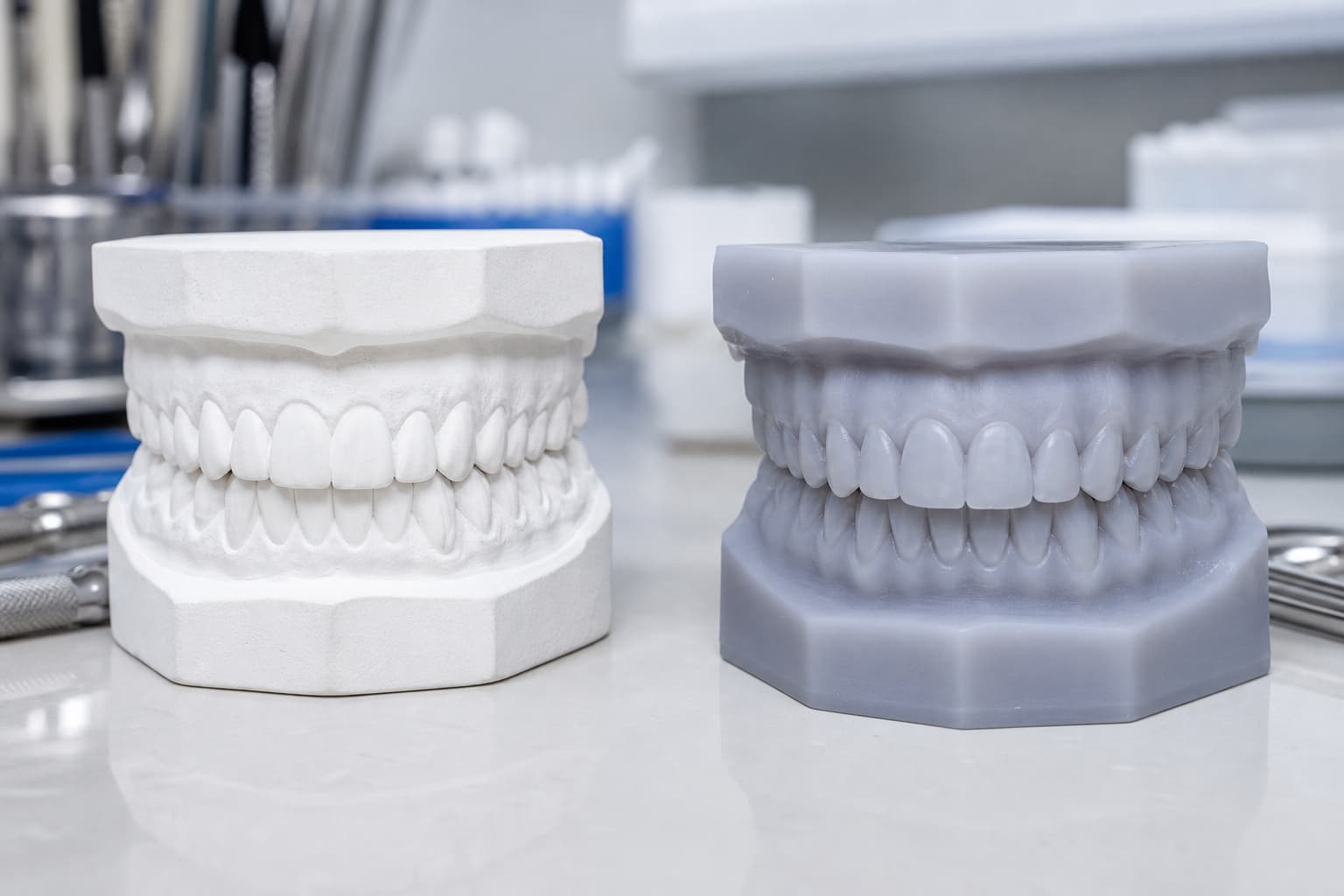
Additive manufacturing delivers diagnostic accuracy comparable to traditional stone models while eliminating physical storage overhead and accelerating treatment planning. Systematic literature reviews demonstrate that the mean linear measurement difference between 3D-printed resin models and plaster casts is 0.22 mm – well within the established orthodontic clinical tolerance threshold of ±0.25 mm. While plaster casts retain a minor advantage in raw volumetric stability and manual orthognathic model surgery, calibrated 3D printing workflows reduce diagnostic analysis time by five minutes per case and achieve full cost parity within 3.6 years.
Dimensional Accuracy and Stability: What the Evidence Shows
Clinicians frequently question whether light-cured resin models match the dimensional fidelity of dental stone. Plaster casts do maintain excellent dimensional stability after setting, exhibiting negligible volumetric change over time. Uncalibrated 3D printers, conversely, can introduce minor transversal contraction or Z-axis distortion – particularly when printing hollow shell models flat on the build platform.
However, when printing protocols are properly controlled, modern 3D-printed models prove clinically interchangeable with plaster casts for routine diagnosis, aligner fabrication, and appliance design:
- Linear measurement tolerances: Measurements across dental arches on 3D-printed models typically deviate by 0.22 mm compared to physical plaster casts. Because individual tooth movements require a threshold of ±0.25 mm and arch dimensions require ±0.5 mm, this variance remains clinically negligible.
- Dimensional stability: While traditional plaster casts exhibit minimal shrinkage post-setting, resin models can experience minor dimensional shifts if post-curing light exposure or build orientation are suboptimal.
- Calibration and repeatability: Partnering with a specialized laboratory mitigates these printing anomalies. Industrial Digital Light Processing (DLP) systems consistently achieve repeatability where over 98% of physical measurements fall well within strict clinical tolerances.
Understanding how machine settings and printing angles influence final tolerances is explored further in our guide on orthodontic 3D printer accuracy.
Workflow Efficiency: From Intraoral Scanning to Diagnostic Analysis
Replacing plaster models with digital files streamlines patient intake and diagnostic administration across your practice.
1. Model Preparation and Record Generation
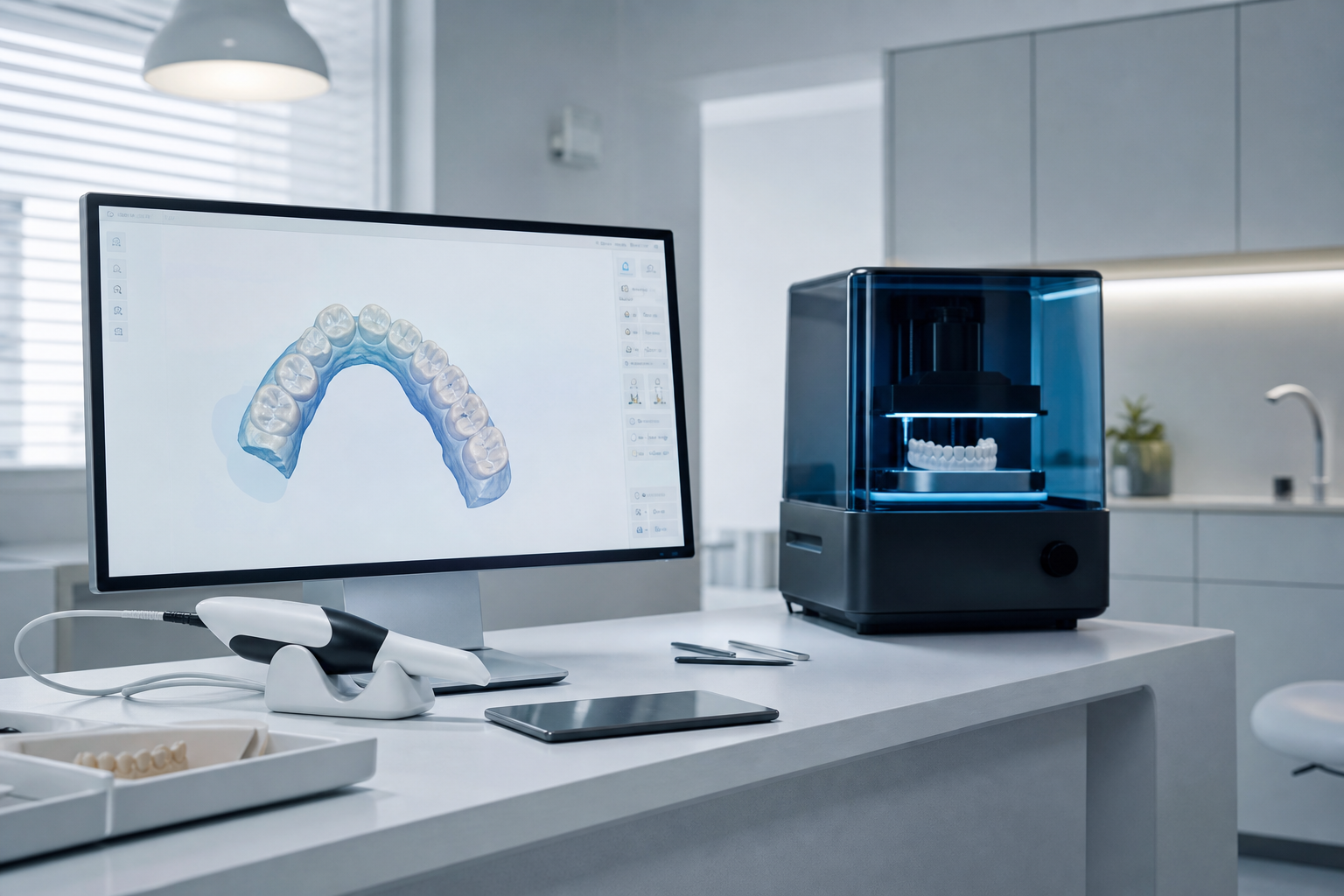
Preparing physical plaster models from traditional alginate impressions requires pouring, setting, trimming, and hand-finishing, taking an average of 20.2 minutes per set. In contrast, acquiring an intraoral scan takes approximately 8.3 minutes. While direct chairside acquisition times are comparable, digital workflows eliminate messy laboratory handling and physical tray preparation entirely.
2. Diagnostic Analysis
Performing routine digital treatment planning – including space analysis and Bolton analysis – on digital meshes takes roughly 298 seconds (five minutes) less per patient than measuring stone models with physical calipers, without sacrificing measurement precision.
3. Record Management and Distribution
Master records stored as lightweight STL files in orthodontics eliminate dedicated archive rooms, prevent model breakage, and remove manual retrieval delays. You can share files instantly with interdisciplinary specialists or re-print physical models on demand.
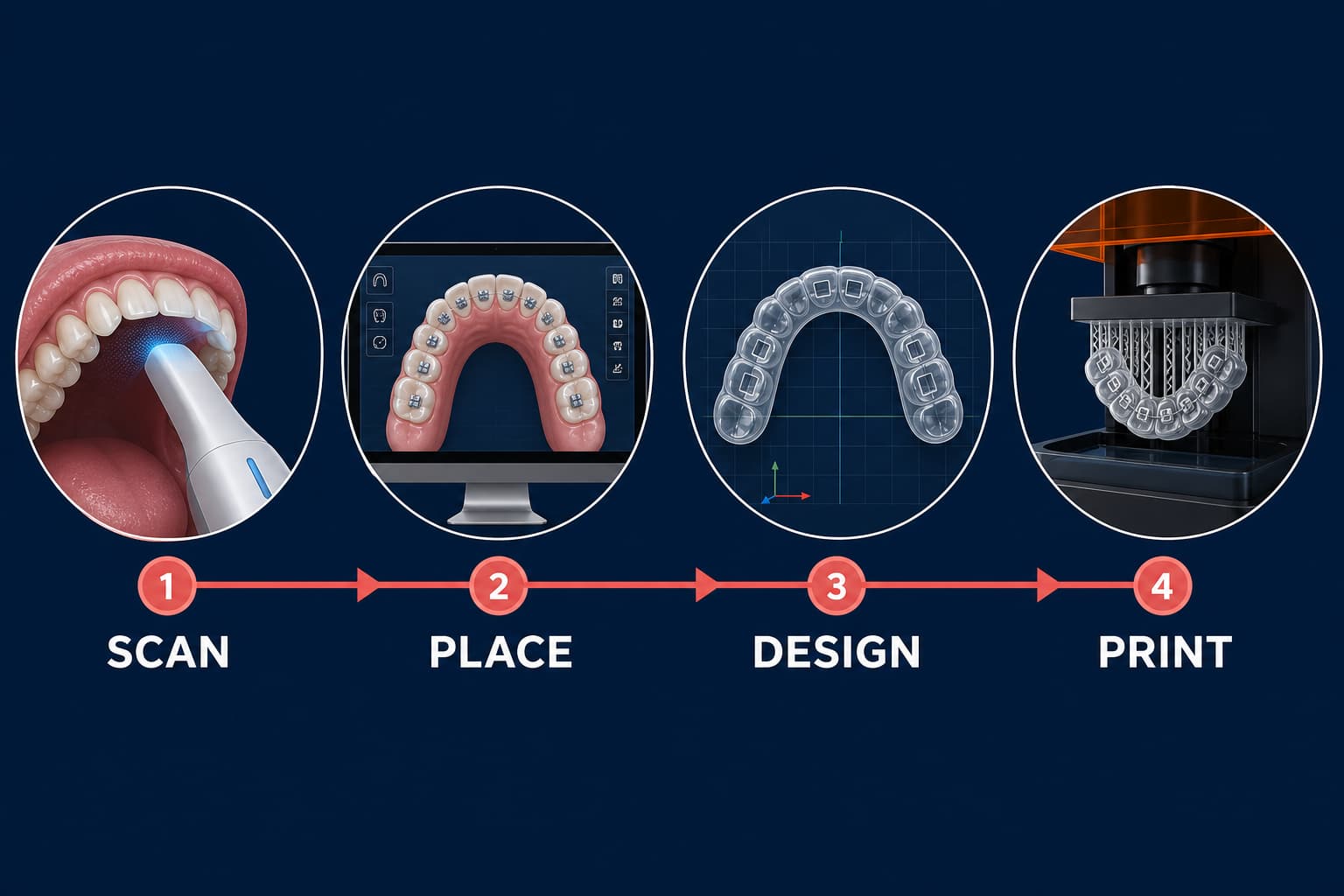
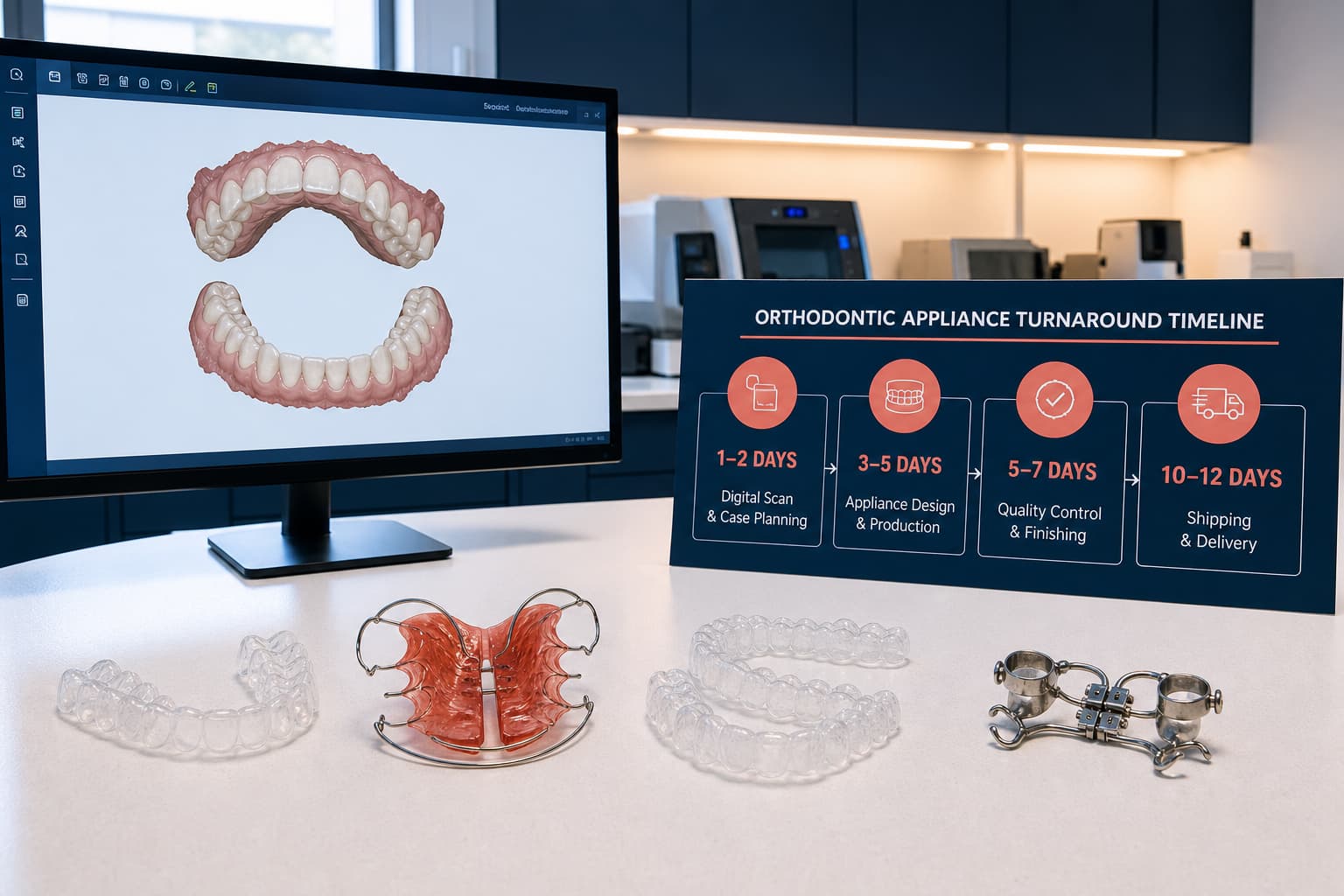
For a detailed look at how intraoral scans transition into physical appliances, read about our digital workflow from scan to appliance.
Financial Breakdown: Capital Overhead vs. Long-Term Yield
Transitioning from plaster to digital workflows shifts expenditure from ongoing physical storage and manual labor to up-front hardware and software investment:
| Metric | Plaster Model Workflow | 3D Printed Model Workflow |
|---|---|---|
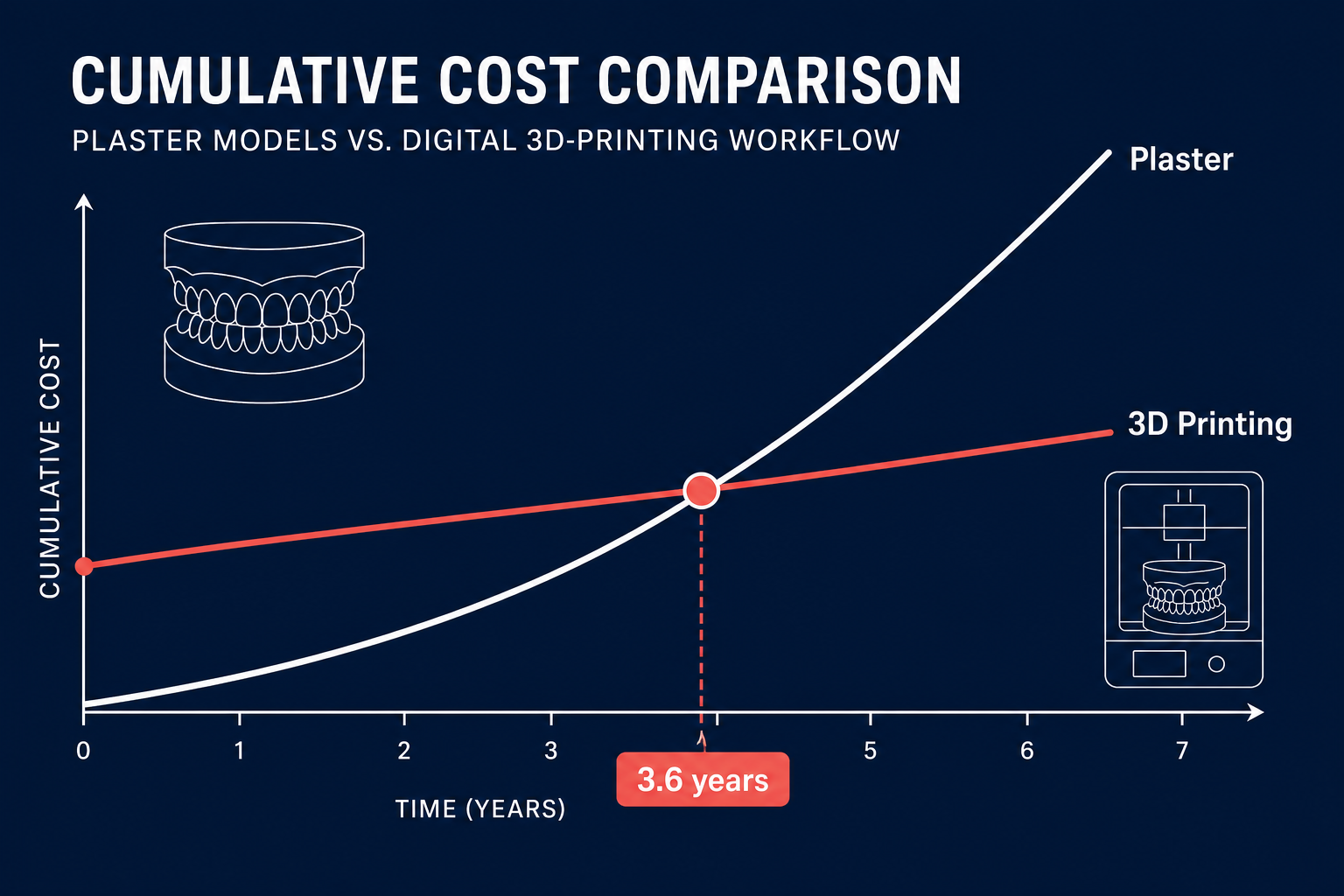
| Initial Investment | Low (impression trays, plaster trap, vibrator) | High (~10.7x higher initial outlay for scanners & printers) |
| Breakeven Horizon | N/A | ~3.6 years |
| Physical Storage Cost | High (ongoing physical square footage required) | Zero (cloud/digital server storage) |
| Model Reproduction Cost | High (requires new patient impression) | Low (re-print existing digital file) |
While initial capital outlay for intraoral scanners and high-resolution printers is approximately 10.7 times higher than plaster equipment, overall operational costs equalize after 3.6 years. Beyond this breakeven threshold, digital workflows become substantially more cost-effective due to zero physical square footage requirements, reduced labor overhead, and instant digital re-prints.
Clinicians evaluating whether to manage production internally or partner with a laboratory can compare operational trade-offs in our analysis of orthodontic 3D printing cost. Selecting optimized print orientations and high-yield orthodontic 3D printing materials further enhances resin efficiency.
Diagnostic Utility and Treatment Planning
Controlled diagnostic studies confirm that evaluating digital models yields identical treatment planning decisions – such as extraction versus non-extraction choices, arch expansion strategies, and anchorage design – when compared to evaluating physical plaster casts.
The primary clinical area where physical casts retain a distinct procedural role is orthognathic surgery planning, where manual model surgery on stone provides valuable tactile feedback during surgical splint fabrication. For virtually all other diagnostic, retention, and thermoforming needs, 3D-printed working models serve as a precise foundation within the broader 3D printing revolution in orthodontics.
Modernize Your Practice's Model Production
Replacing physical plaster archives with calibrated 3D-printed models improves diagnostic efficiency, eliminates storage overhead, and delivers research-backed clinical accuracy.
Nordicdens provides orthodontic practices across Scandinavia and the Baltics with high-accuracy resin study models, diagnostic model sets, and digital bracket removal services tailored to modern clinical workflows.
Contact Nordicdens today to discuss your lab requirements and integrate precise 3D-printed models into your practice workflow.