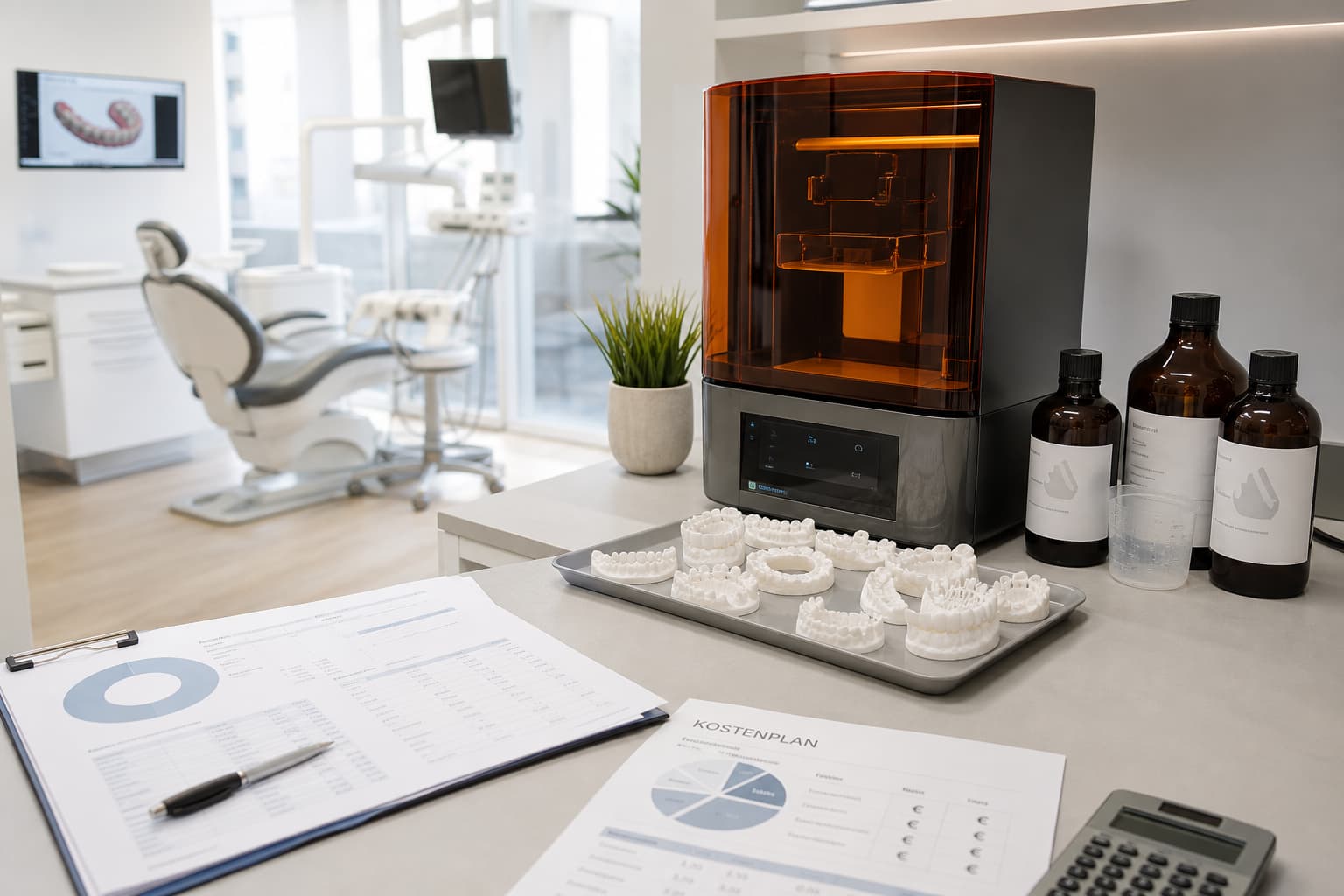
Integrating 3D printing into an orthodontic practice requires an initial capital expenditure between €5,000 and €25,000, with ongoing operational costs driven by biocompatible resins, software subscriptions, and skilled labor. While the raw material cost per model is relatively low, the comprehensive cost of ownership often exceeds simple resin-per-liter calculations. For most clinics, transitioning from fixed overhead to the variable costs of orthodontic lab outsourcing provides a more predictable path to profitability.
Hardware and Equipment Capital Expenditure
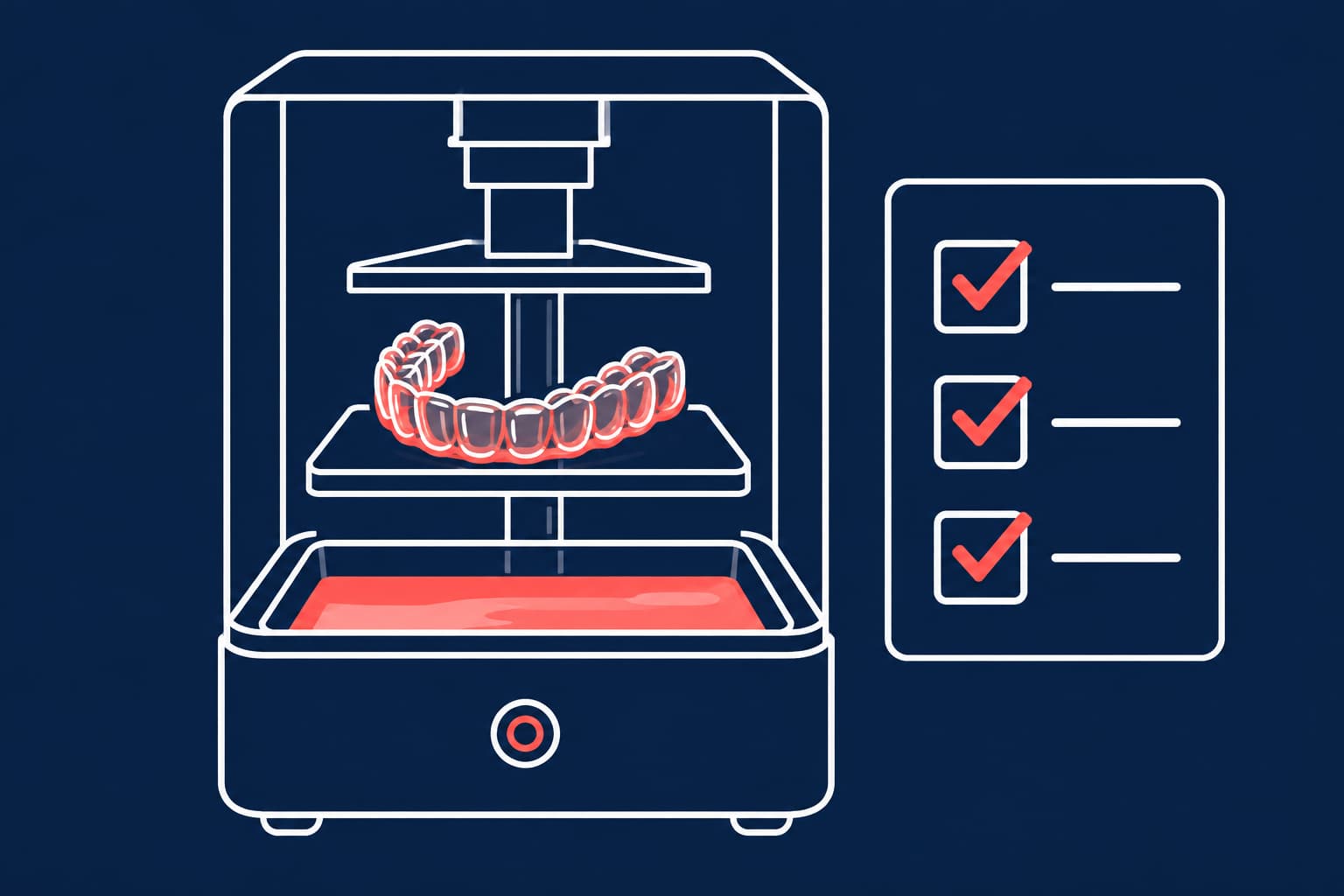
The hardware market for orthodontic 3D printing is bifurcated between entry-level desktop units and industrial-grade workhorses. Clinical success depends entirely on orthodontic 3D printer accuracy, which requires maintaining dimensional tolerances within ±0.25 mm for individual teeth to ensure a predictable fit.
- Entry-Level Systems (€2,500 – €7,000): Printers such as the Phrozen Sonic XL 4K or FlashForge Ultra 2 offer a gateway into digital workflows. While affordable, these units may require more frequent calibration and manual intervention to maintain clinical standards.
- Professional Workhorses (€10,000 – €17,000): Systems like the SprintRay Pro 2 or Asiga Max 2 are validated for high-volume production of direct 3D-printed orthodontic appliances and offer the higher repeatability necessary for a busy practice.
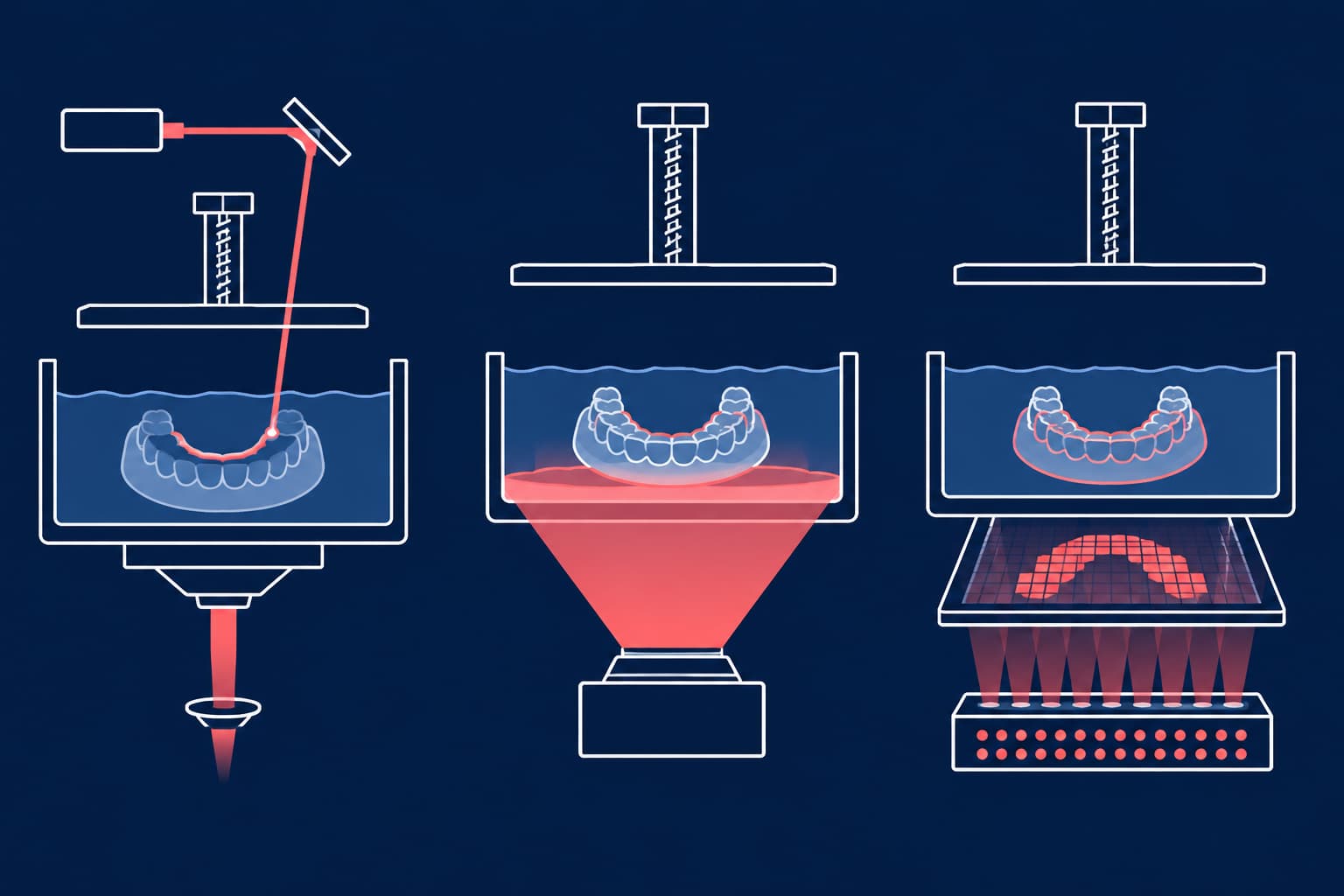
- Post-Processing Equipment (€300 – €1,500): Printed parts are not clinically ready the moment they leave the build plate. They must be washed in solvents and cured in a specialized UV oven. Professional curing units are essential for ensuring the biocompatibility and mechanical properties of resins, representing a distinct and necessary investment.
Consumables and Material Economics
Material costs vary significantly based on the specific clinical application. A common budgeting error is planning only for standard model resin while overlooking the high cost of medical-grade, biocompatible materials.
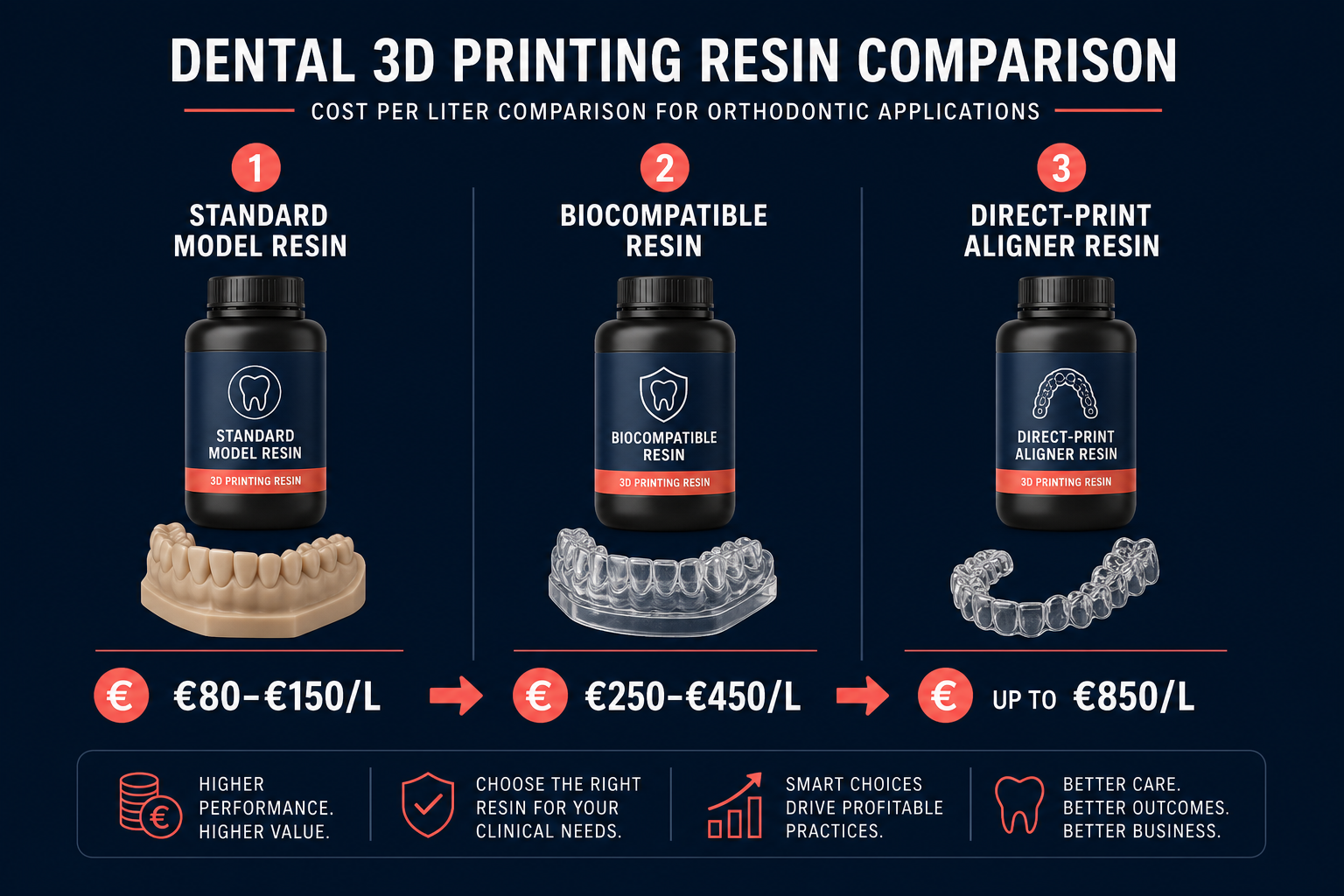
- Diagnostic and Working Models: Standard resins used for orthodontic thermoforming typically cost between €80 and €150 per liter. One liter can produce approximately 30 to 50 dental arches, depending on whether the models are printed solid or hollowed.
- Biocompatible Specialty Resins: Materials designed for indirect bonding trays (IBT) or occlusal splints are more expensive, ranging from €250 to €450 per liter.
- Direct-Print Aligner Resins: Novel materials like Graphy’s TC-85 represent the evolution of clear aligners by bypassing the thermoforming step entirely. These high-performance resins can cost up to €850 per liter.
Selecting the appropriate orthodontic 3D printing materials requires you to balance cost against the clinical necessity for dimensional stability and patient safety.
The Hidden Tax of In-House Production
The most overlooked expenses in a digital workflow from scan to appliance are software and labor. These recurring costs can quickly eclipse the original price of the printer.
- Software Licensing: Orthodontic CAD software often carries heavy subscription fees or "per-case" export fees. In many setups, these software costs add approximately €5.00 to the price of every single printed part.
- Labor and Design: Preparing STL files in orthodontics for printing is a labor-intensive process. A dedicated dental technician capable of managing complex CAD/CAM orthodontics workflows represents a significant salary burden, often reaching €70,000 annually. Without a technician, this burden falls on your clinical staff, diverting them from patient-facing tasks.
- Maintenance and Downtime: Resin tanks, LCD screens, and filters are consumables that require regular replacement. Unexpected hardware failure can halt your production entirely, creating bottlenecks that are easily avoided when using an external laboratory.
Outsourcing vs. In-House Financial Reality
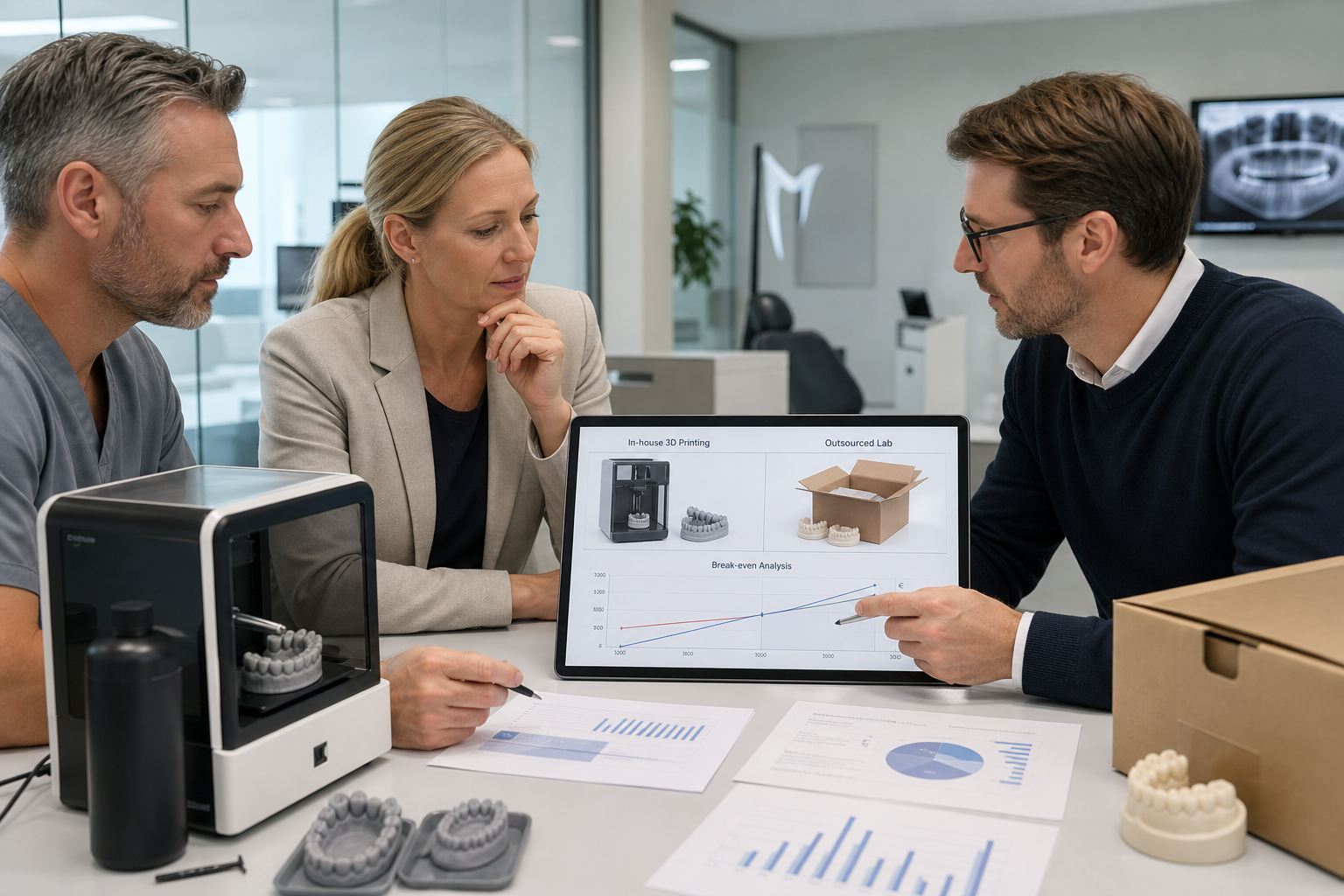
The 3D printing revolution in orthodontics has made in-house production more accessible, but the "break-even" point is higher than many practitioners realize. When outsourcing to a professional laboratory, clinics typically pay between €15 and €30 per 3D-printed model or appliance. This transparent fee includes the cost of the printer, resin, specialized labor, software, and rigorous quality control.
For a clinic producing fewer than 20–30 models per week, the total cost of ownership for in-house printing – when accounting for labor, equipment depreciation, and failed prints – often exceeds the cost of a lab-made product. While in-house printing provides maximum control over turnaround times and allows for immediate adjustments, this control comes at the price of turning your clinic into a mini-manufacturing facility. This introduces industrial risks and maintenance headaches into what should be a focused clinical environment.
Scaling Your Production Efficiency
For many Baltic and Scandinavian practices, the most efficient financial model is a hybrid approach or full outsourcing. By partnering with NordicDens, you eliminate the capital risk of hardware obsolescence and the recurring burden of resin chemistry and post-processing validation. We provide the precision of industrial-grade 3D printing without the overhead, allowing your team to focus on clinical outcomes rather than printer maintenance.
Whether you need high-resolution models for thermoforming or direct-printed biocompatible appliances, our laboratory ensures every device meets stringent accuracy benchmarks.
Contact NordicDens today to receive a customized quote for your clinic’s digital production needs.