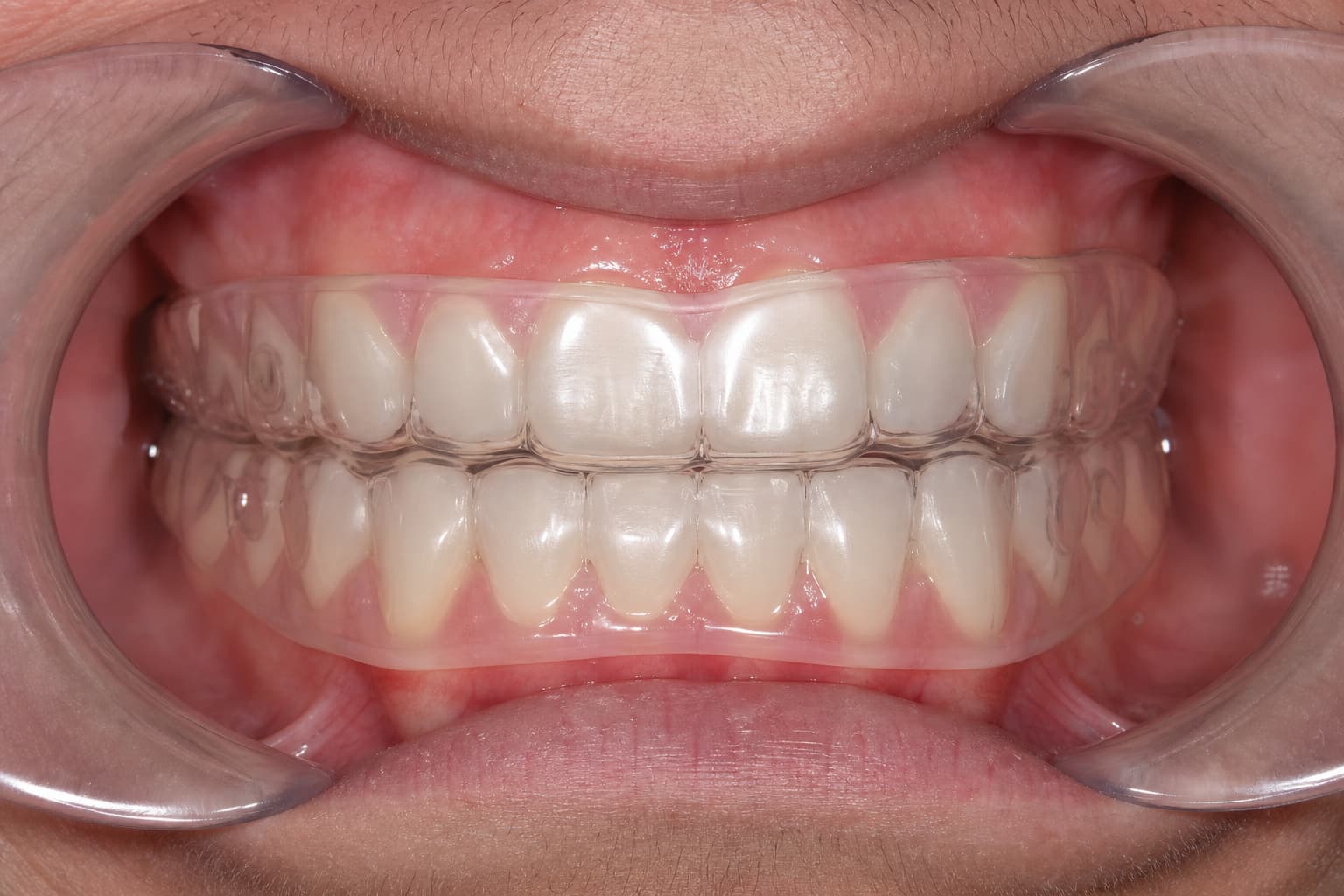
Orthodontic positioners are custom-made, resilient transmaxillary appliances that detail occlusion and guide tooth settling immediately after debanding fixed appliances. Constructed over an articulated setup of your patient’s dentition, a positioner applies active elastomeric force across both arches simultaneously. Delivering a positioner during the initial post-debond window accelerates final first-order alignment, closes minor residual spaces, and refines intercuspation – bridging the gap between active fixed therapy and long-term retention.
Clinical Applications and Occlusal Finishing
Positioners function primarily by tipping teeth into optimal intercuspation, making them an effective tool for fine-tuning treatment outcomes. Rather than prolonging fixed appliance therapy with complex archwire bends, you can leverage a positioner to resolve specific post-debond challenges:
- Guided Occlusal Settling: Positioners seat teeth into tight interdigitation when fixed appliances are removed early or when full occlusal contact remains incomplete at debonding.
- Minor Alignment and Torque Corrections: The elastomeric material exerts gentle force to resolve subtle labiolingual inclinations and minor mesiodistal alignment errors.
- Space Closure and Open Bite Reduction: Active jaw closure exercises against the resilient material help close minor residual interproximal spaces and anterior dental open bites.
Clinical research validates this targeted intervention. Evaluating post-treatment outcomes using the American Board of Orthodontics (ABO) cast-radiograph system demonstrates that patients using an active positioner for 4 to 6 weeks post-debond achieve lower penalty scores – reflecting superior alignment and contact points – compared to those transitioned directly to passive retainers.
Addressing Compliance and Retention Limitations
While positioners excel at short-term detailing, they are not a universal substitute for conventional retention systems. Skeptics rightly point out that positioners demand exceptional patient discipline and offer limited control over complex tooth movements.
- Compliance Requirements: The appliance relies on rigorous patient adherence. Typical protocols require 24-hour daily wear (excluding meals) for the first few weeks, or intensive daily biting exercises combined with night wear. Non-compliant patients risk rapid relapse rather than occlusal improvement.
- Rotational and Overbite Control: Positioners provide limited long-term control over severely rotated teeth or deep overbites.
- Transient Application: A positioner serves as a temporary finishing appliance, not a permanent retention device. Once target alignment is achieved – typically within 6 to 8 weeks – you must transition the patient to long-term options such as Hawley retainers or clear retainers to maintain structural stability.
When integrated as a short-term finishing phase rather than a permanent retention protocol, positioners deliver measurable clinical value without compromising long-term stability.
Production Process: Traditional vs. Digital Workflows
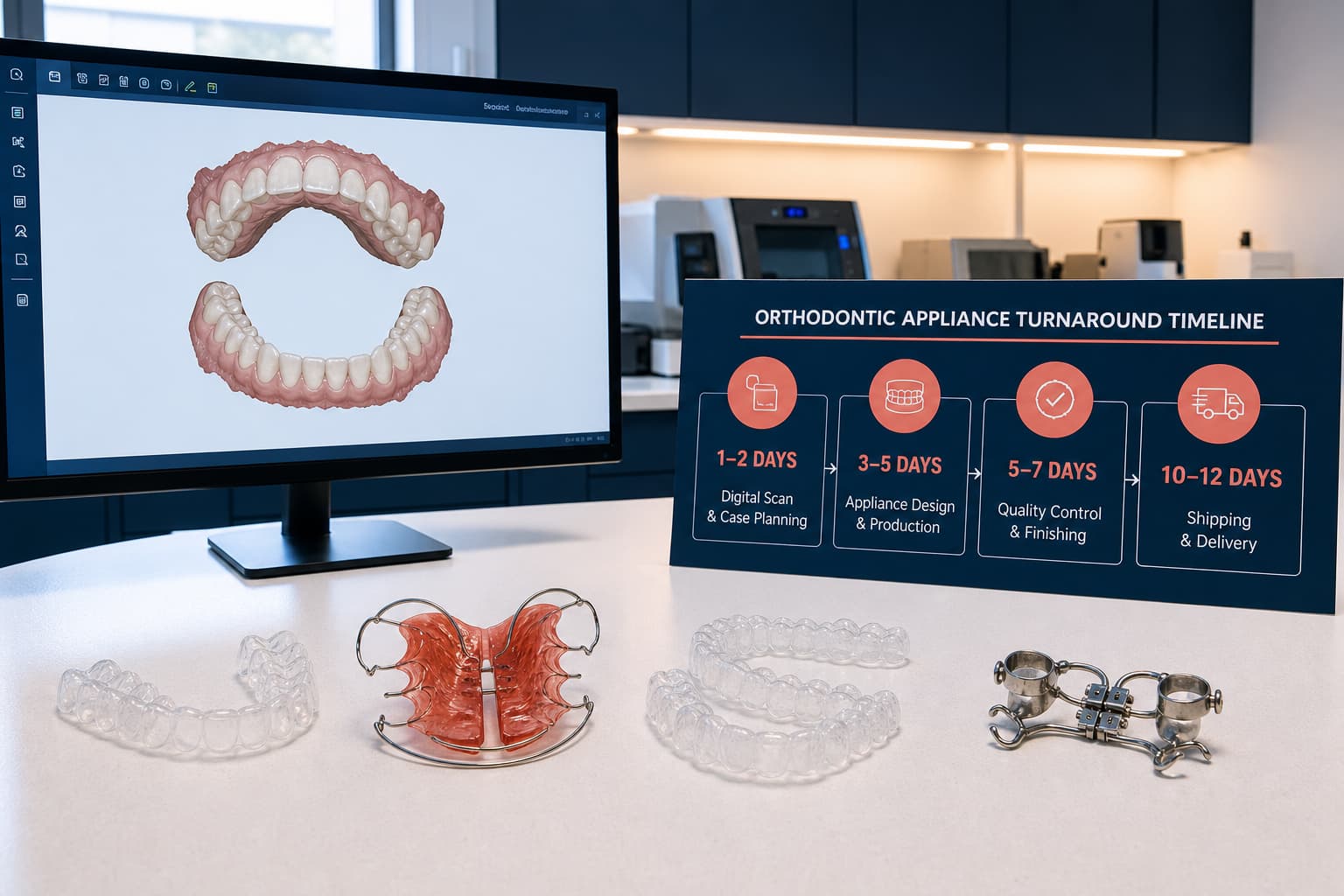
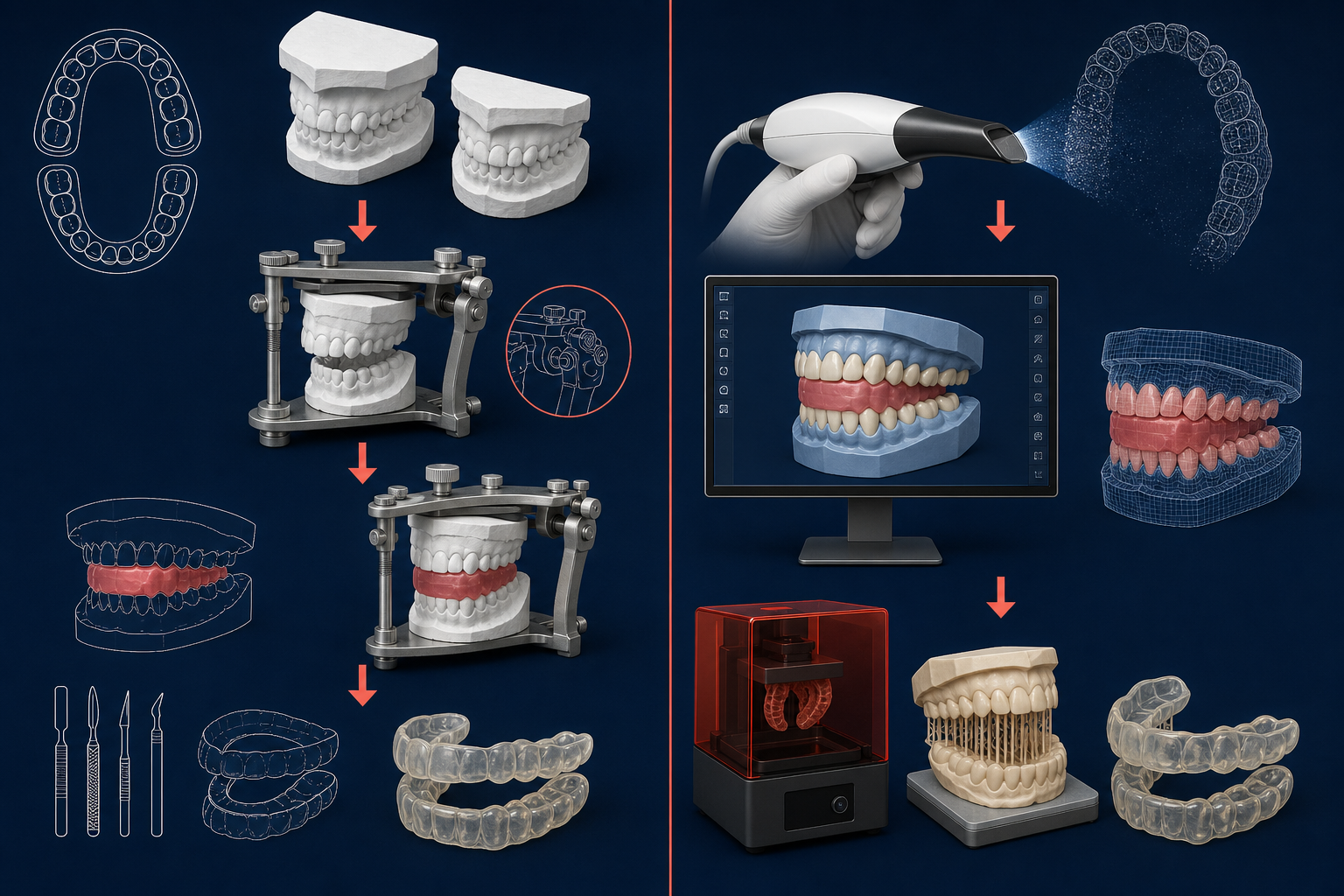
Fabricating a resilient positioner demands precise articulation and accurate setup construction. While traditional laboratory protocols rely on plaster casts and manual wax setups, modern digital manufacturing accelerates turnaround while improving dimensional accuracy.
Impression and Centric Articulation
- Traditional Protocol: Technicians take plaster impressions and a retruded wax bite registration before initial tooth contact to articulate physical casts on a hinge articulator.
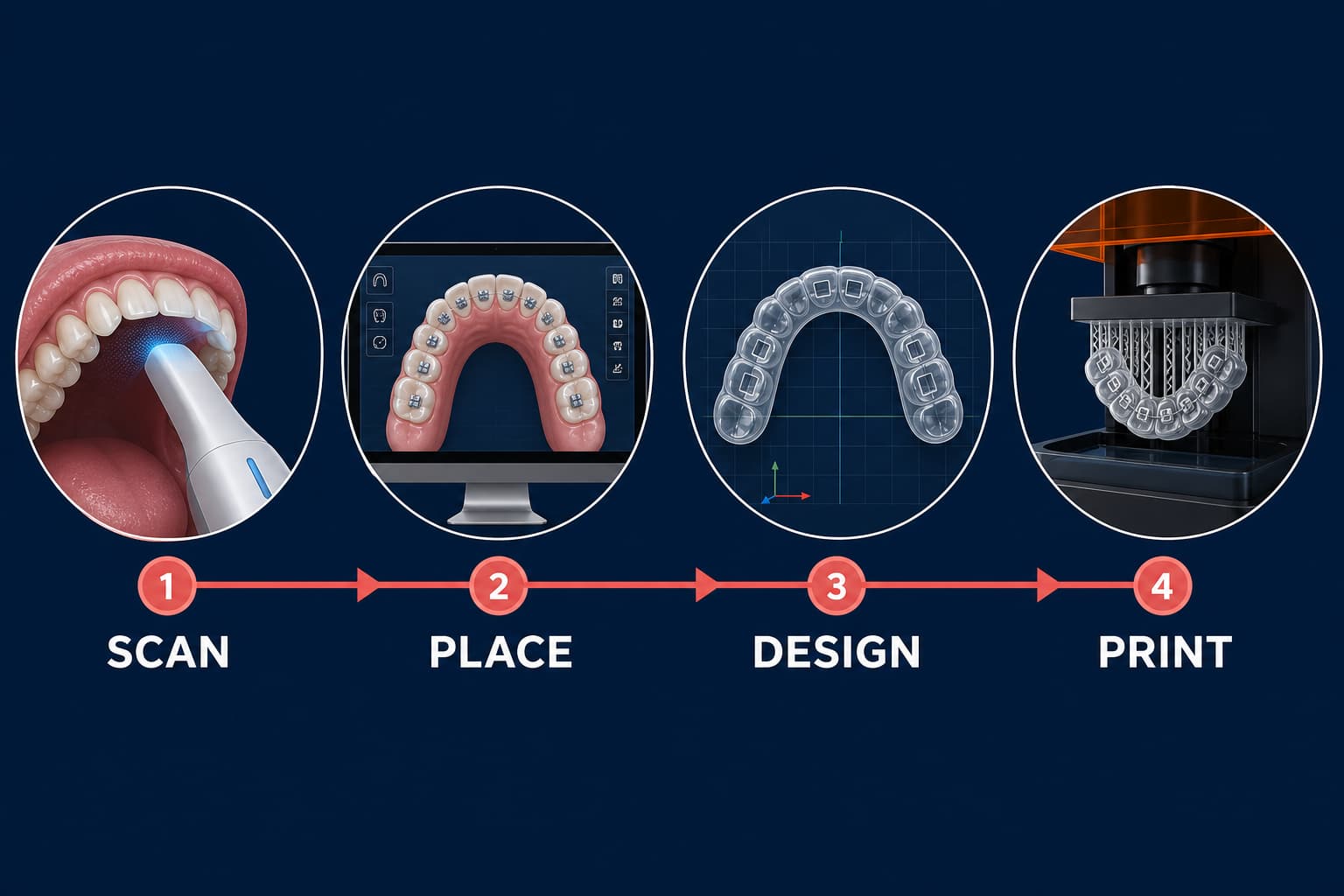
- Digital Protocol: Your clinic executes a digital intraoral scan workflow to record tooth anatomy and centric relation without patient discomfort. Exporting clean, uncompressed orthodontic STL files prevents geometry errors and preserves exact hinge-axis alignment.
Tooth Setup and Model Generation
- Traditional Protocol: Technicians physically saw individual plaster teeth from the cast and reset them manually in wax according to your prescription.
- Digital Protocol: CAD software automatically segments clinical crowns, allowing technicians to virtually adjust alignment, torque, and intercuspation. The finalized digital models are printed on high-resolution resin systems identical to those utilized in the clear aligner fabrication process.
Material Adaptation and Dual-Arch Fusion
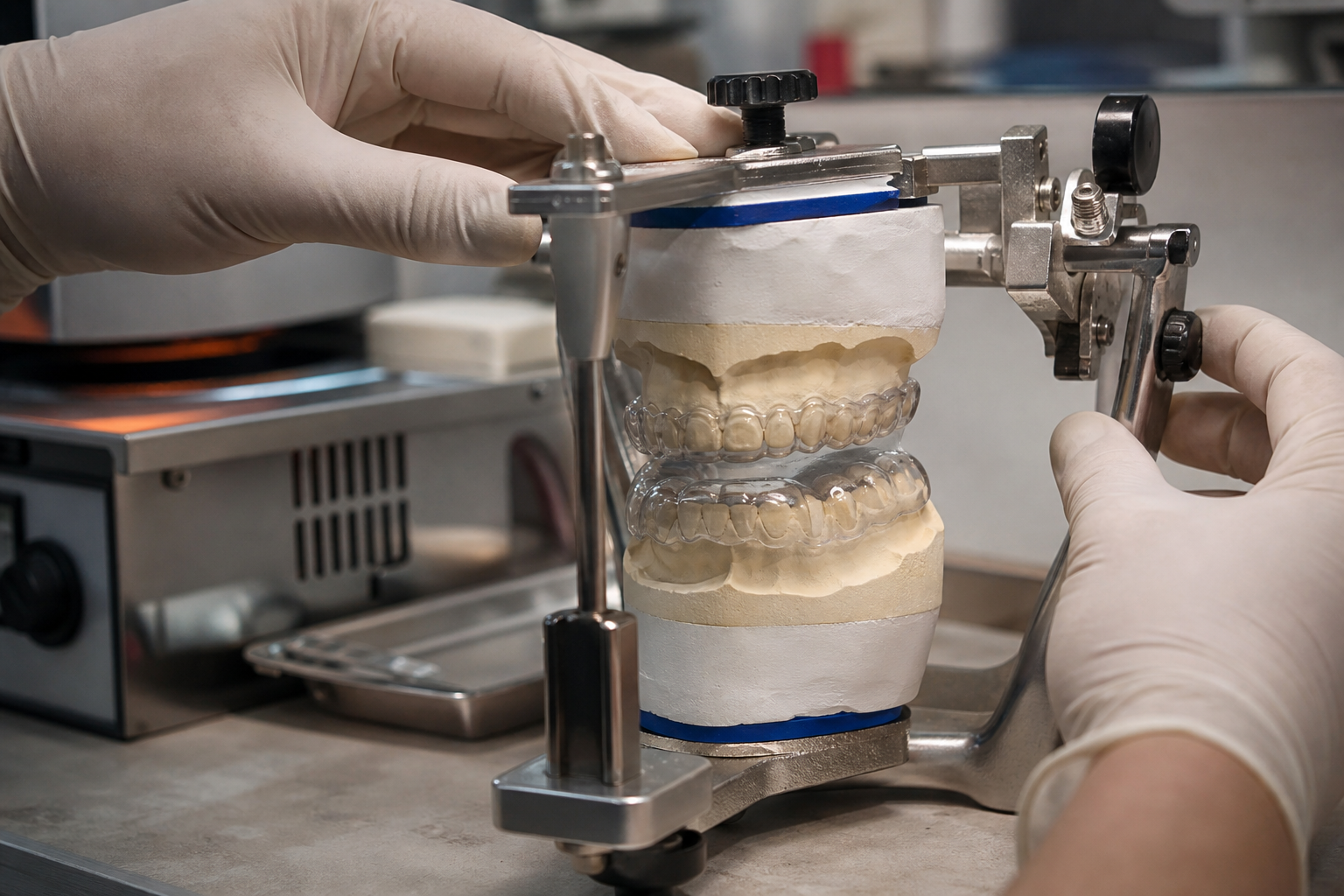
- Resilient thermoplastic blanks are adapted over upper and lower setup models mounted on an articulator.
- Technicians heat the occlusal surfaces of both thermoplastic layers until soft.
- Closing the articulator to the pre-established interocclusal distance fuses the upper and lower halves into a single transmaxillary appliance.
- Reheating along buccal and lingual joins guarantees structural fusion before trimming and polishing.
- Utilizing automated pressure-forming during the thermoforming process ensures uniform wall thickness, maximizing material elasticity and patient comfort.
Modernizing Your Appliance Strategy
Incorporating digital setup protocols into your finishing workflow allows you to optimize occlusal contact points without extending fixed appliance treatment. Transitioning from manual plaster setups to CAD-designed digital models guarantees predictable fit, decreases chairside adjustment time, and creates a smooth bridge from active therapy into permanent retention.
Ready to streamline your finishing workflows? Partner with Nordicdens to submit your intraoral scan files and access precision-fabricated appliances designed for your practice.