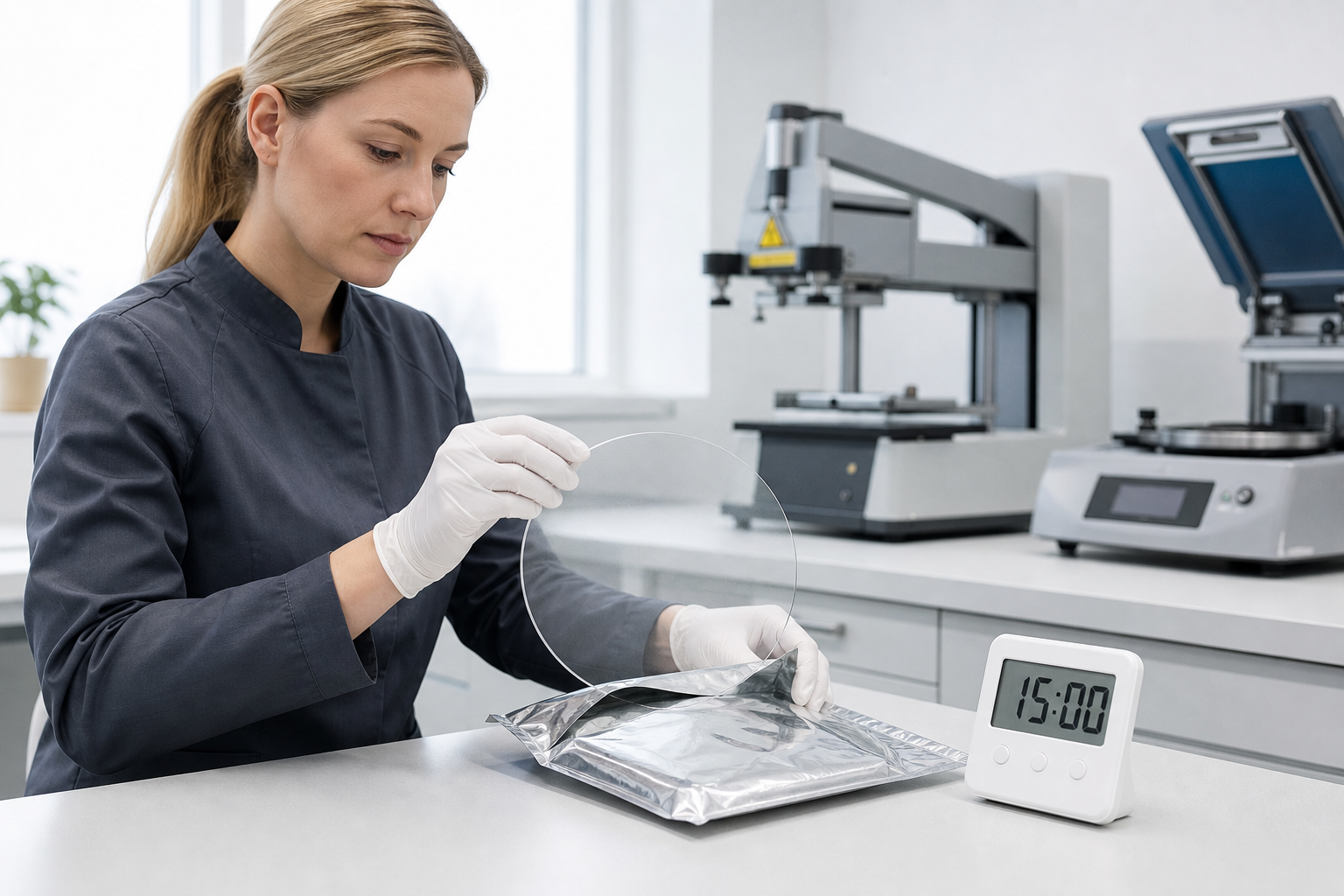
Maintaining structural integrity and optical transparency in orthodontic thermoplastics requires strict environmental control. Unopened vacuum-sealed sheets maintain a three-year shelf life when stored between 5 °C and 35 °C in dry, light-shielded environments. Once you open a protective foil pouch, you must thermoform the sheet within 15 minutes or immediately reseal it with fresh desiccant. Failing to control ambient humidity causes moisture absorption, steam blistering, structural haze, and unpredictable stress decay in finished aligners.
High-volume laboratories often assume rapid stock turnover renders atmospheric storage controls redundant. However, ambient air rapidly compromises hygroscopic polymers even during short bench exposures. Invisible surface moisture absorbed during humid morning hours creates latent structural micro-voids during heating, compromising appliance mechanics and causing costly remake cycles.
Moisture Absorption and Material Degradation
The primary thermoplastics used in modern orthodontic production – polyethylene terephthalate glycol (PETG), polyurethane (PU), and advanced elastomeric copolymers – are naturally hygroscopic. They continuously absorb moisture directly from ambient air until reaching equilibrium with their environment.
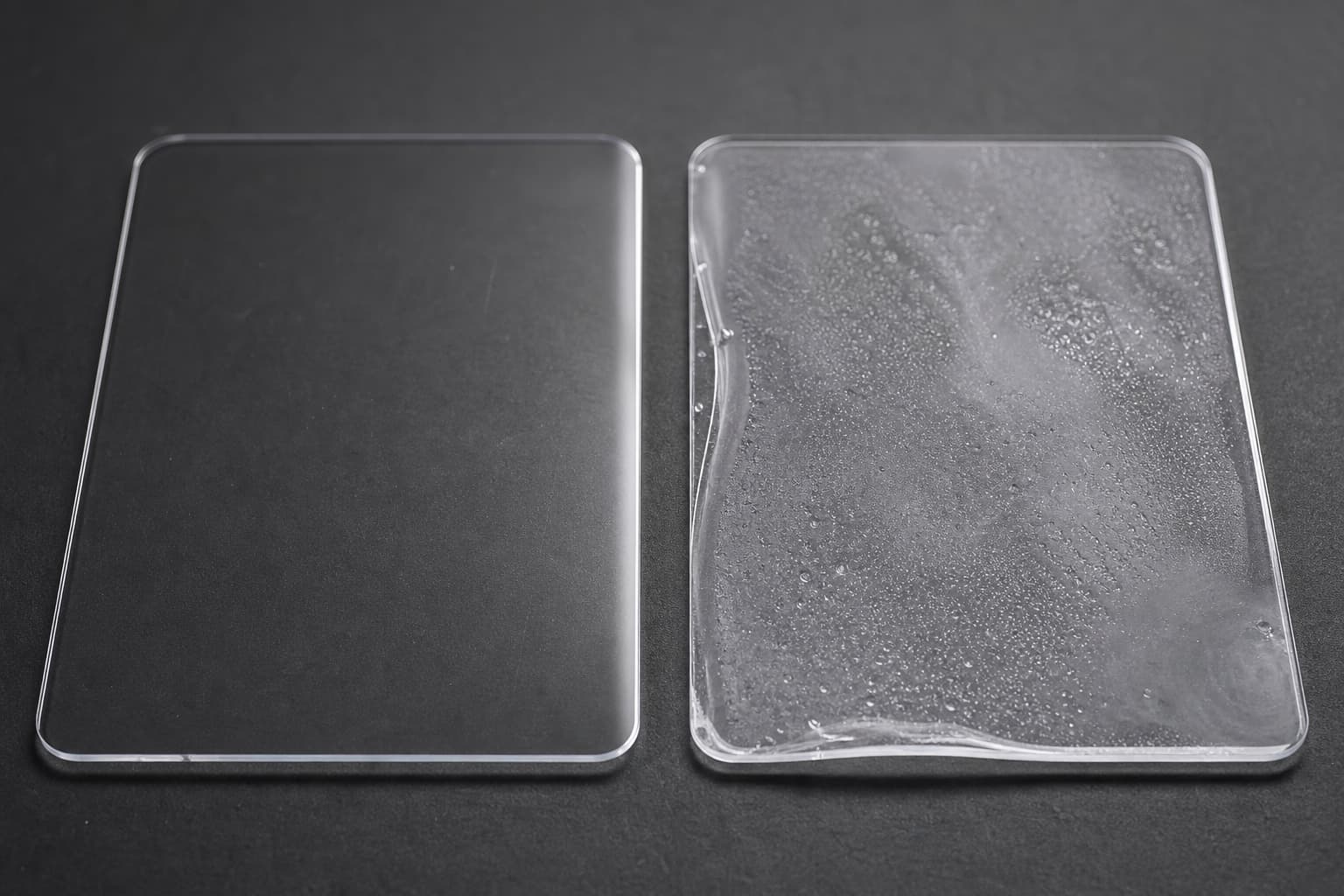
When you heat a moisture-laden plastic sheet during thermal adaptation, trapped water molecules rapidly vaporize into steam. This localized thermal expansion causes internal micro-bubbles, surface blistering, and permanent optical cloudiness. In complex multilayer thermoforming aligner materials, moisture accumulation compromises the bond between rigid outer shells and the elastomeric inner core, leading to premature delamination under occlusal loading.
Beyond aesthetic defects, absorbed moisture alters physical polymer integrity. Steam micro-voids reduce structural density and alter the material's flexural modulus. Because initial sheet geometry directly governs appliance mechanics, compromised structural density impairs clinical force delivery. Understanding how environmental exposure degrades physical properties reinforces the core principles of controlling thermoforming material thickness in orthodontics.
Key Environmental Controls for Storage
Preserving polymer chemistry and dimensional stability requires consistent environmental protocols across your stockroom and active working spaces:
- Temperature Control: Store unopened inventory strictly between 5 °C and 35 °C. Sustained high temperatures cause baseline relaxation in polymer chains, while freezing conditions induce structural embrittlement.
- Humidity Management: Maintain active storage zones below 50% relative humidity. Locate sheet inventory away from plaster-trimming stations, ultrasonic cleaners, and steam boilers where ambient water vapor spikes.
- Ultraviolet Shielding: Direct sunlight and unfiltered artificial light trigger photodegradation. Ultraviolet radiation cleaves polymer backbone bonds, causing yellowing, embrittlement, and reduced fatigue resistance. Keep sheets inside dark storage cabinets or original light-blocking foil packaging.
| Storage Parameter | Recommended Standard | Consequence of Deviation |
|---|---|---|
| Temperature | 5 °C to 35 °C | Thermal warping, baseline stress decay, cold embrittlement |
| Relative Humidity | Dry (< 50% RH) | Internal steam bubbling, optical haze, layer delamination |
| Light Exposure | Complete UV shielding | Material discoloration, chain scission, premature fracture |
Shelf Life Management and Open-Pouch Protocols
Managing thermoplastic inventory requires distinguishing between unopened shelf-life limits and active bench-handling rules.
Unopened Packaging
High-barrier aluminum foil pouches protect thermoforming sheets from moisture ingress during transit and long-term storage. When kept unopened under recommended temperature ranges, orthodontic thermoplastics maintain a three-year shelf life from their manufacturing date.
The 15-Minute Rule
Opening a protective foil pouch initiates atmospheric exposure. In standard laboratory environments, limit bench exposure to no more than 15 minutes prior to thermoforming. In high-humidity conditions, sheets absorb sufficient surface moisture within twenty minutes to form visible steam bubbles upon heating.
Resealing and Desiccant Care
When a production batch leaves remaining sheets in an opened pouch, re-establish environmental protection immediately:
- Express excess air from the original foil pouch before closure.
- Reseal the closure tightly. A properly resealed pouch preserves remaining sheets for 20 to 30 days.
- Insert a fresh silica gel desiccant pack inside the pouch before sealing to extend open-pouch usability up to 2 to 3 months.
Always enforce a strict single-use standard for all thermoforming materials. Once a plastic sheet is heated and adapted over a model, its polymer structure permanently reshapes; reheating used material causes severe dimensional distortion and unpredictable mechanical failure.
Integrating Storage Protocols into Lab Workflows
Environmental control extends from storage cabinets directly to your production bench. A dry plastic sheet still produces severe defects if adapted against a damp model substrate.
When thermoforming appliances over 3D-printed resin models, verify that models are completely dry and fully post-cured. Residual moisture, liquid resin, or uncured washing solvents off-gas during thermal adaptation, generating micro-bubbles that mimic sheet humidity damage. Maintaining rigorous model preparation standards is vital to the broader clear aligner fabrication process.
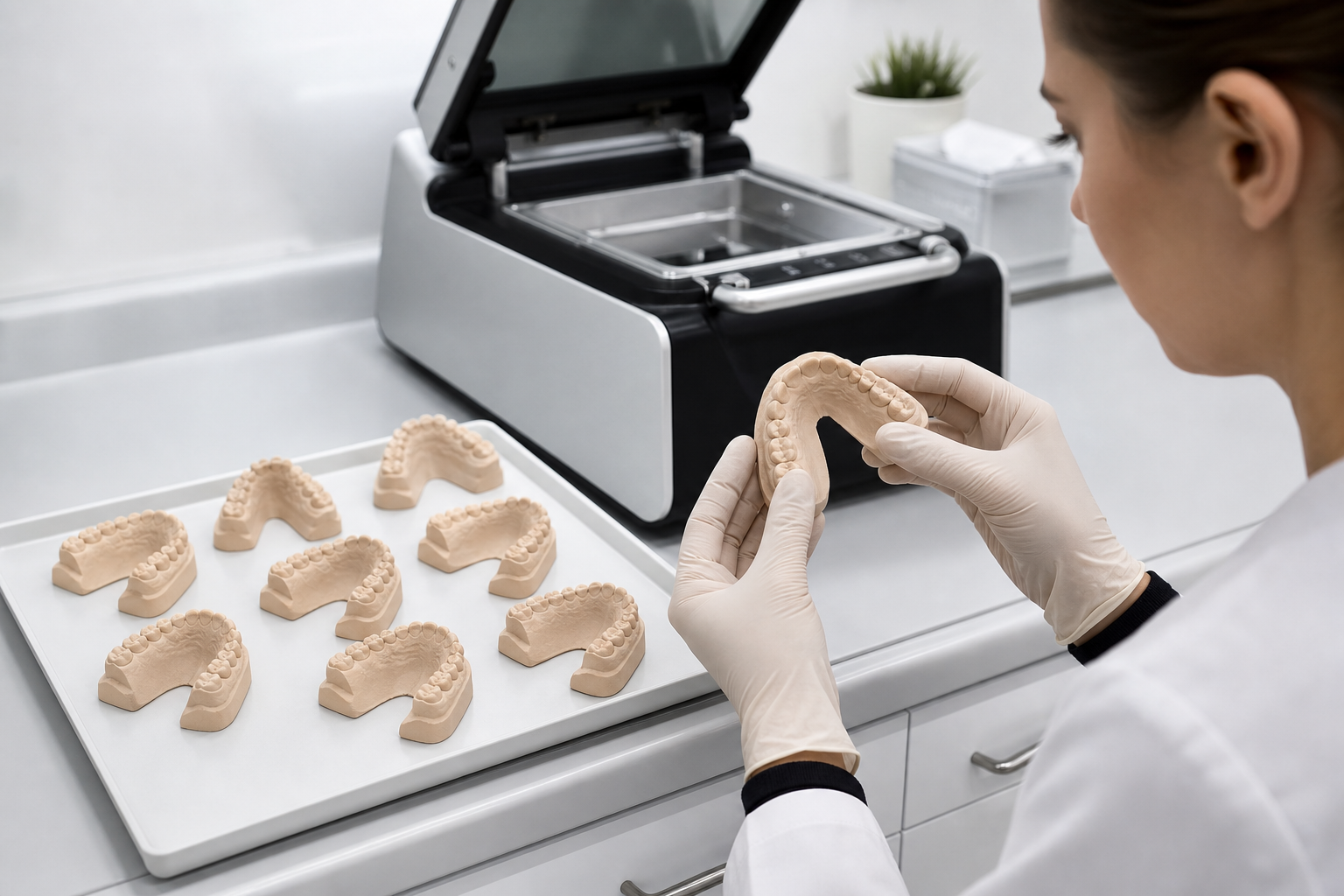
Machine hardware choices further safeguard material quality. Modern pressure-forming units equipped with infrared thermal sensors measure the actual surface temperature of the plastic sheet rather than relying on fixed timers. As detailed in our guide to dental thermoforming machine selection, precise thermal monitoring prevents overheating hygroscopic sheets, ensuring optimal performance when processing premium options like Clarity aligner thermoforming material.
Streamlining Your Appliance Production
Controlling storage temperatures, enforcing the 15-minute bench rule, and using desiccant packs eliminates material defects and maintains predictable clinical performance across all applications of thermoforming in orthodontics. Eliminating surface bubbling and structural haze preserves clinical force delivery while reducing costly remakes.
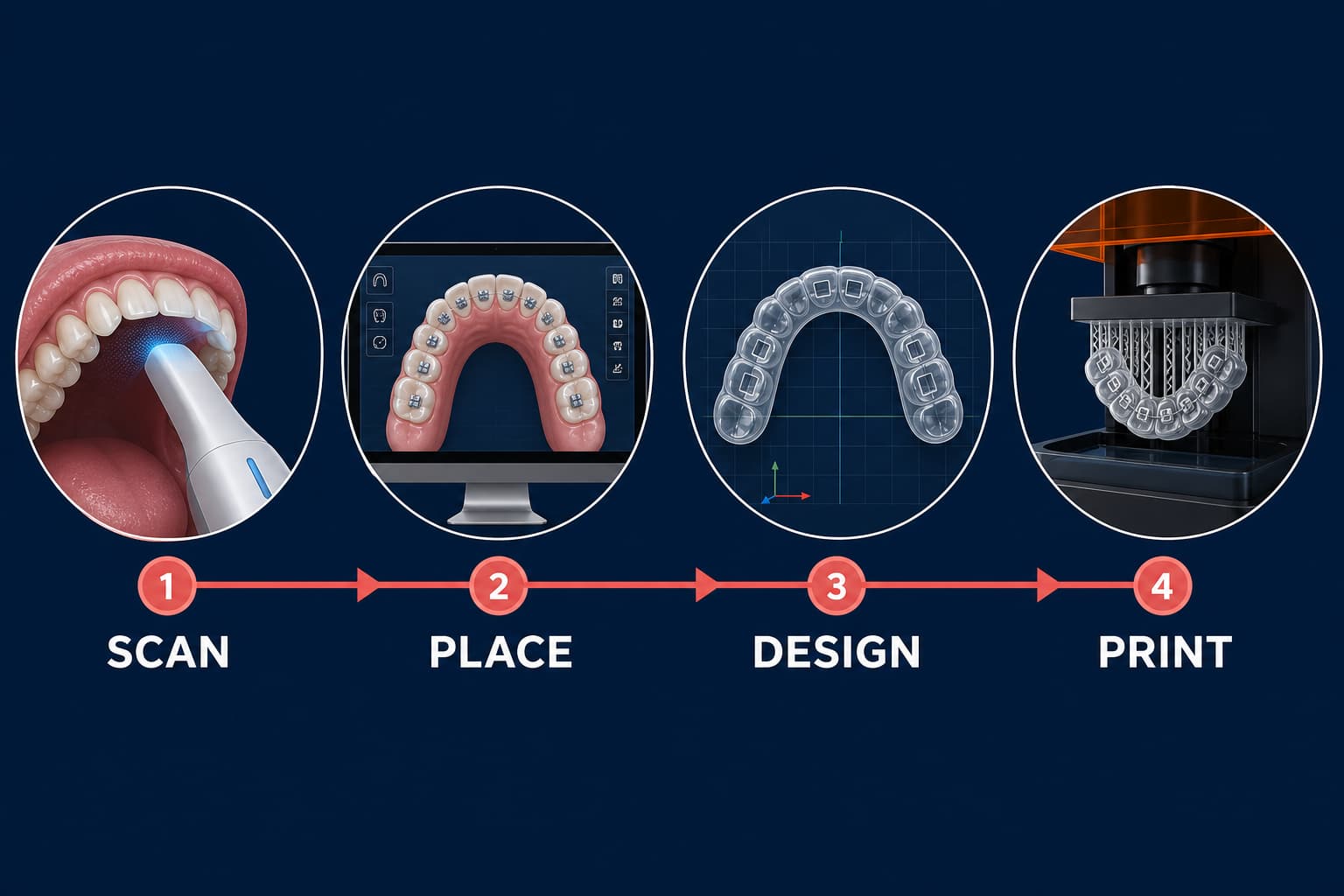
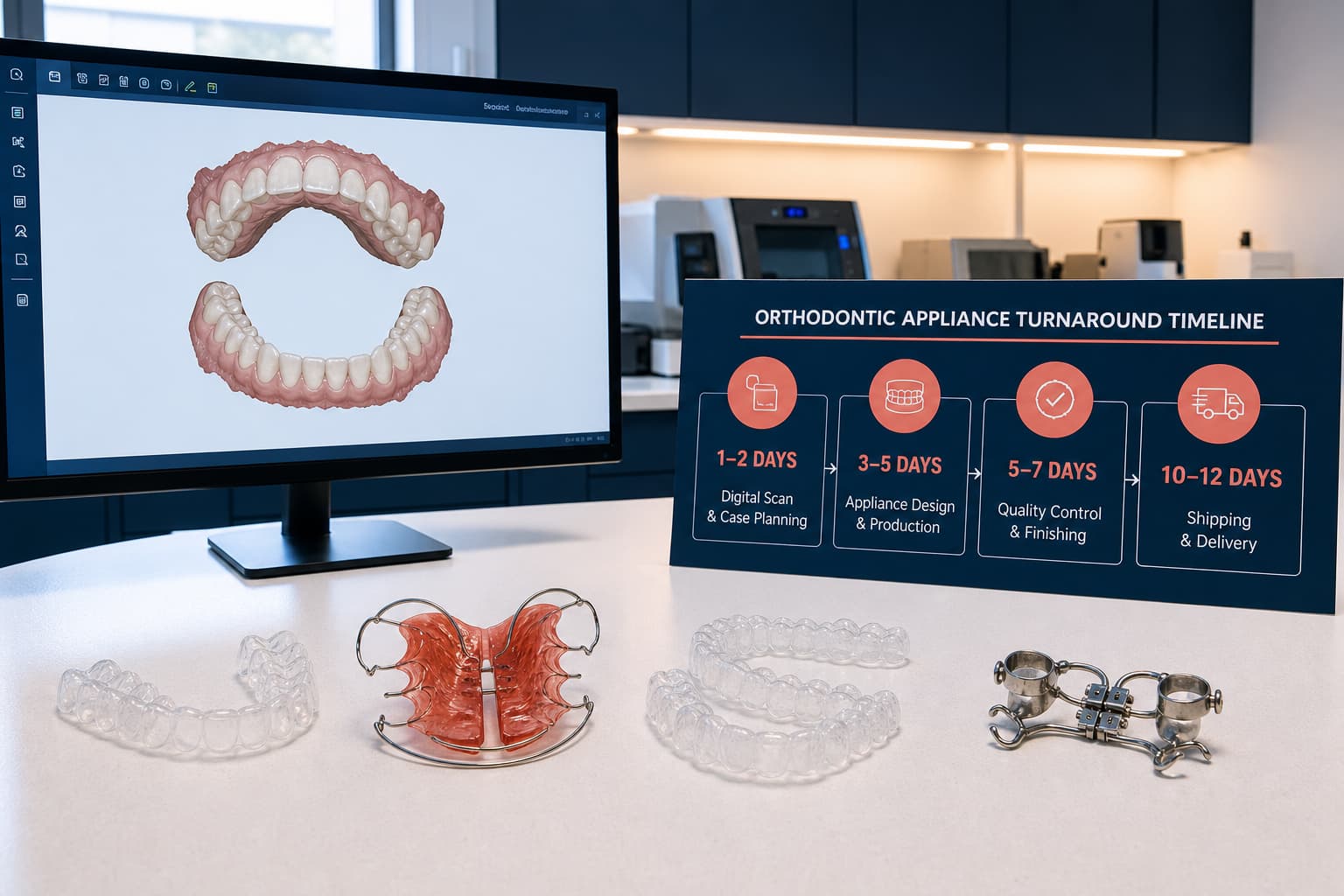
If managing environmental controls, open-pouch expiration windows, and material scrap rates burdens your laboratory workflow, digital direct-print workflows offer a reliable alternative. Nordicdens delivers high-precision orthodontic laboratory services and additive manufacturing support to clinics and laboratories across Scandinavia and the Baltics. Contact Nordicdens today to optimize your appliance production workflow or integrate direct digital manufacturing into your clinical operations.