Clarity aligner materials – specifically the Flex and Force variants – utilize a sophisticated multi-layered film construction to balance patient comfort with predictable tooth movement. Selecting the appropriate sheet depends on the specific biomechanical requirements of the treatment stage, as the thermoforming in orthodontics inherently alters the material's nominal thickness and mechanical properties. By utilizing a 5-layer copolymer architecture, these materials overcome the limitations of traditional monolayer sheets, providing sustained force delivery even as the appliance undergoes intraoral aging.
Material Architecture: Flex vs. Force Specifications
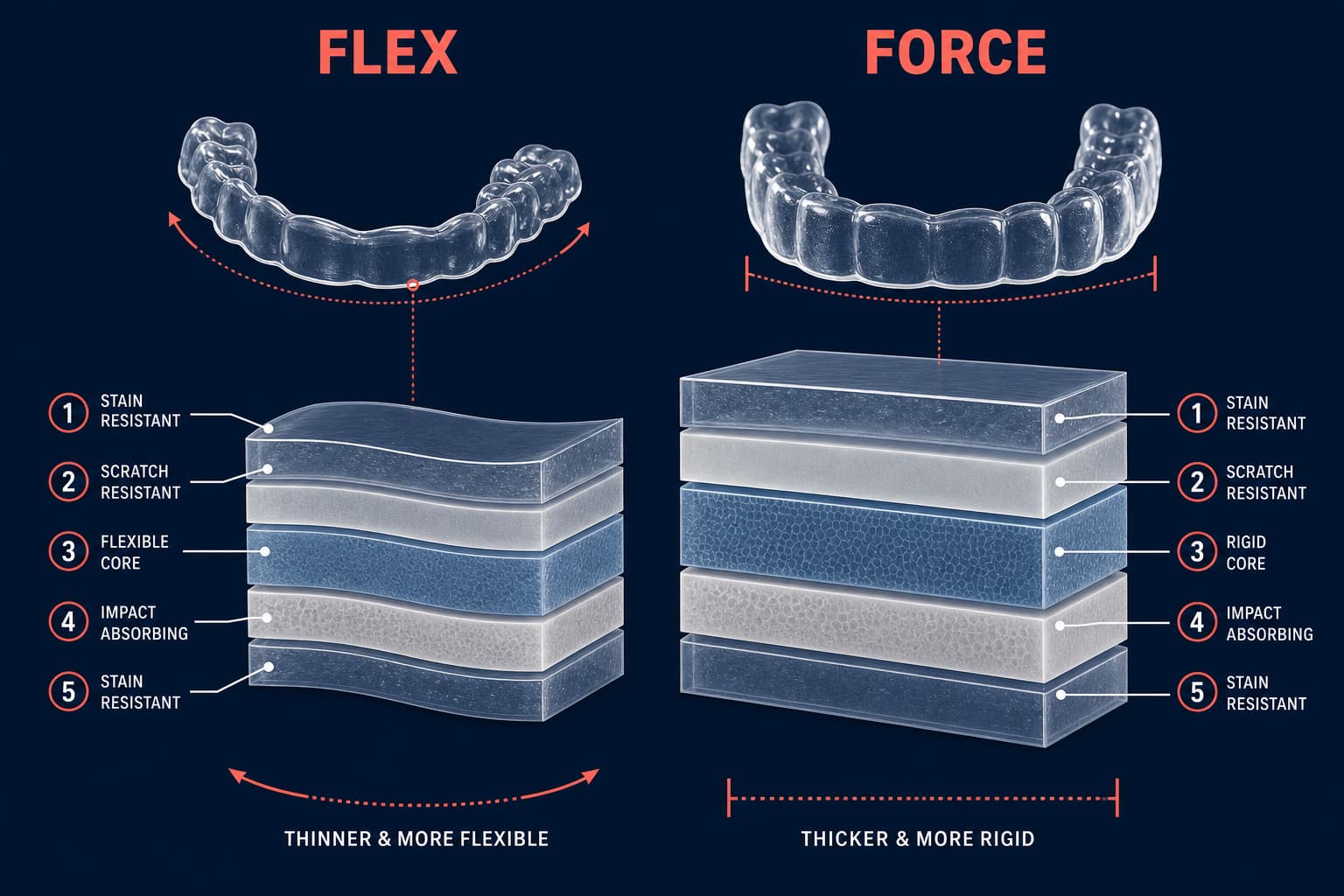
The performance of these materials is rooted in their proprietary 5-layer copolymer blend. Unlike traditional monolayer PET-G or polyurethane sheets, this multi-layer architecture is engineered to provide an outer shield against staining and scratching while maintaining a flexible internal core for resilience. This design ensures that the aligner remains aesthetically clear and functionally active throughout the wear cycle.
- Clarity Aligners Flex: This material has a nominal film thickness of 0.625 mm. It is specifically indicated for the initial stages of treatment, such as rotation and proclination, where high flexibility is required to seat the appliance over malaligned teeth without excessive patient discomfort.
- Clarity Aligners Force: With a nominal thickness of 0.75 mm, this more rigid variant is designed for complex movements requiring sustained pressure. It is the preferred choice for expansion, torque, sequential bodily movement, and segmental intrusion.
In many worldwide clinical protocols, these materials are used in a two-material sequencing approach. Clinicians often transition from Flex to Force to achieve different force levels within the same treatment stage, improving the predictability of the clear aligner fabrication process.
Thermoforming Performance and Thickness Dynamics
A critical factor for laboratory technicians is the significant reduction in thickness that occurs during fabrication. Research indicates that the thermoforming material thickness typically decreases by 15% to 40% compared to the original plastic sheet. This thinning is rarely uniform; the material must travel further to cover certain anatomical landmarks, resulting in aligners that are notably thinner at the anterior teeth and gingival centers compared to posterior occlusal surfaces.
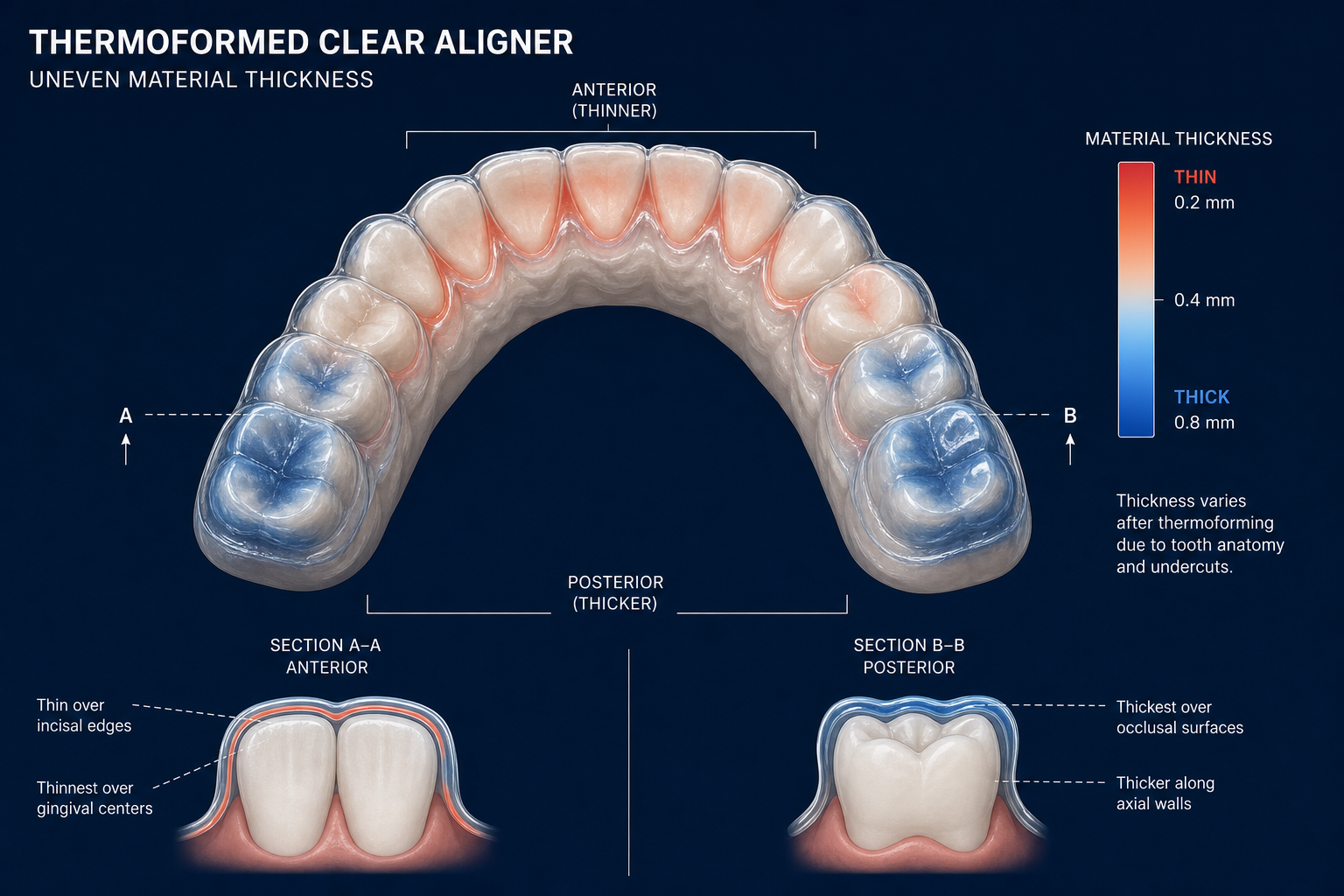
Because the force delivered by an aligner is proportional to the cube of its thickness, even minor variations during forming can impact clinical tracking. To maintain high-fidelity reproduction of the tooth anatomy, positive-pressure dental thermoforming machines are considered the professional laboratory standard. These units, typically operating between 3 and 6 bar, ensure the material adapts tightly to the model, minimizing gap widths that could lead to a loss of orthodontic control. Multi-layer materials like Clarity show superior stress-relaxation profiles compared to monolayers, maintaining more constant forces over the typical two-week wear cycle.
Workflow Integration and Model Preparation
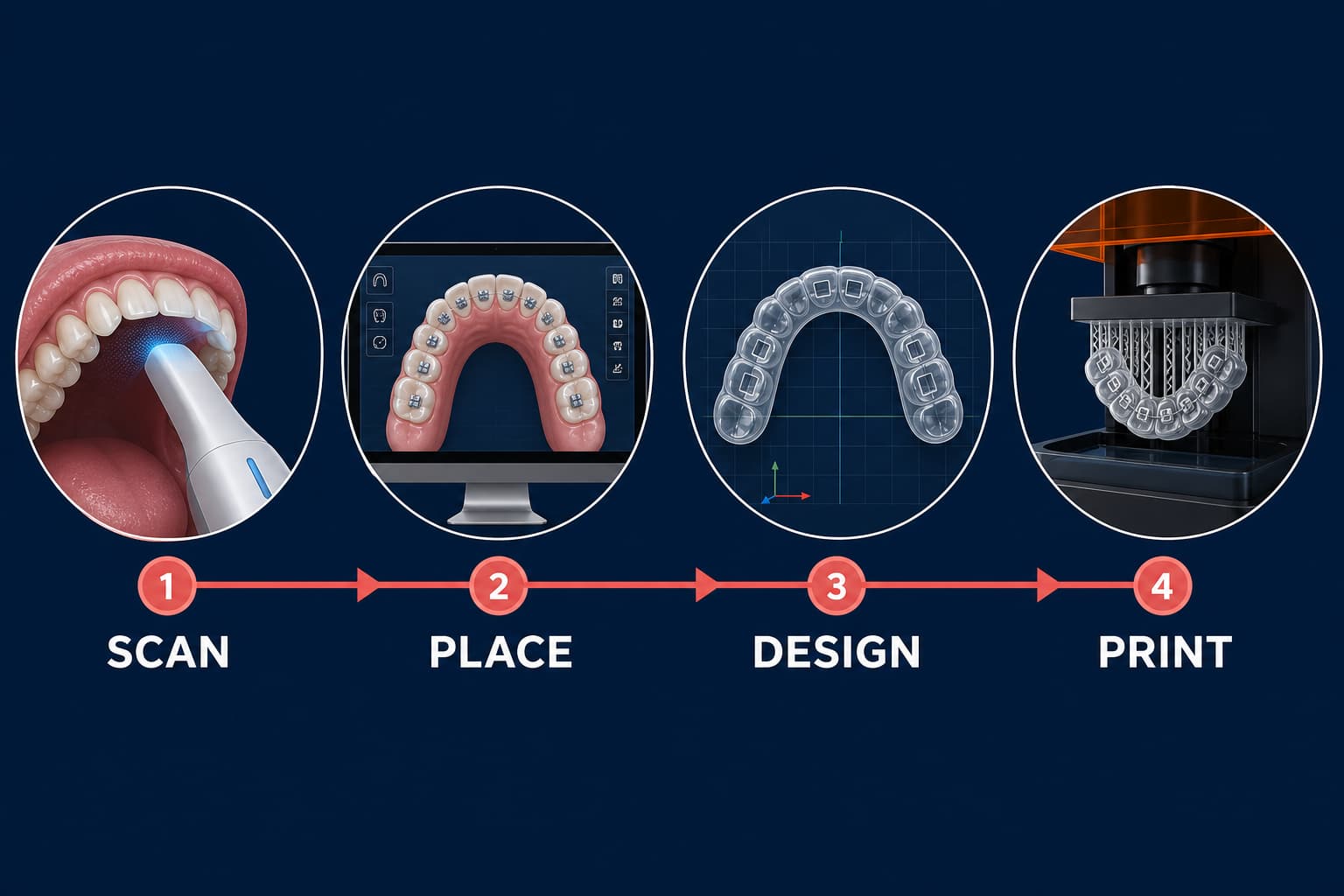
Integrating these materials into a digital laboratory requires a seamless digital workflow from scan to appliance. The Clarity Portal serves as the primary digital interface for case submission and management, supporting high-resolution STL files in orthodontics captured via intraoral scanning. Precision in the final fit depends entirely on the quality of the 3D-printed model used during the forming process.
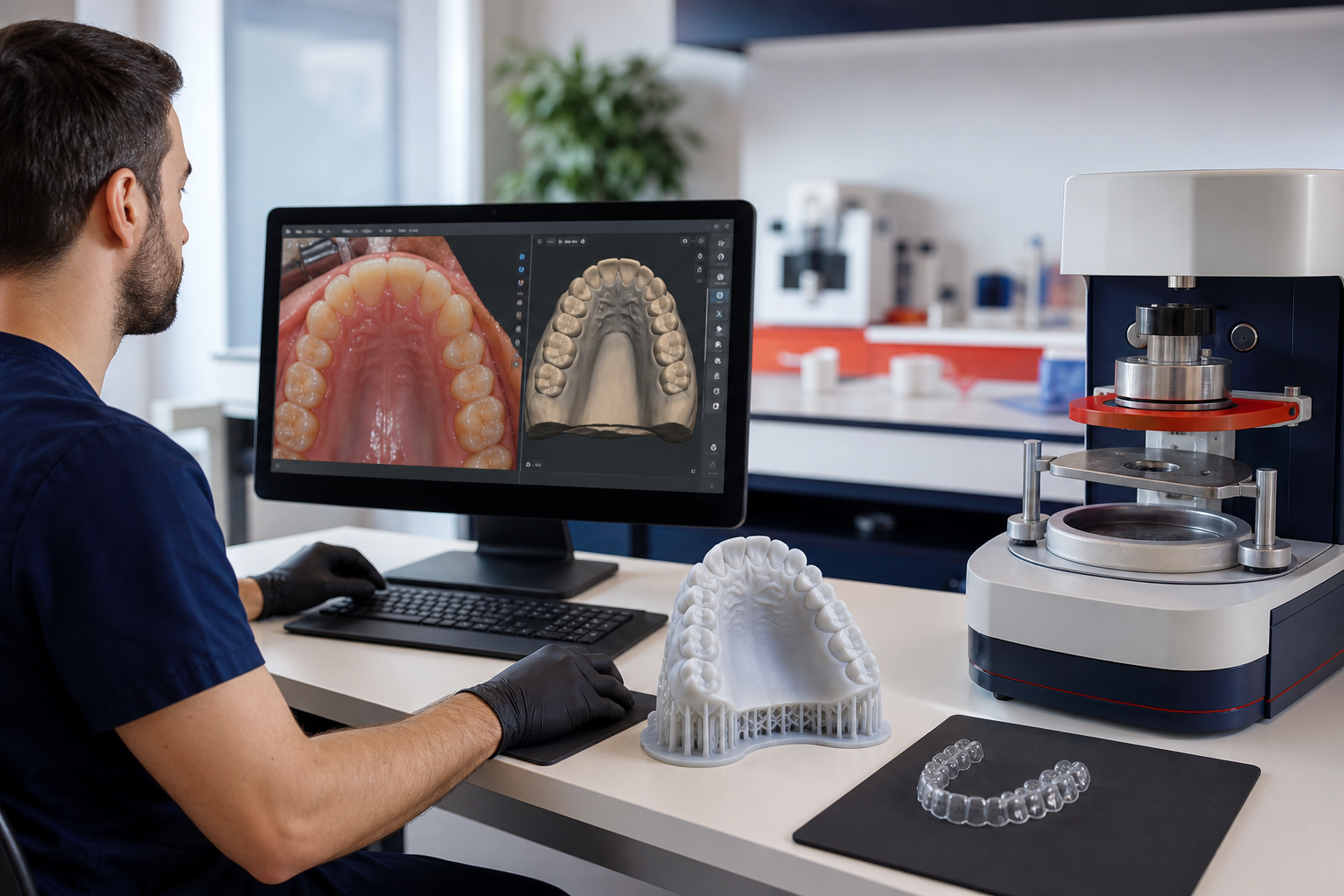
For successful fabrication, laboratories must adhere to strict processing parameters:
- Model Dryness: 3D-printed models must be completely dry and fully post-cured. Residual moisture or unreacted resin can off-gas during the heating cycle, leading to bubbles or poor optical clarity in the final aligner.
- Thermal Monitoring: Advanced thermoforming units with infrared sensors are recommended to monitor the actual temperature of the Clarity sheet rather than relying on a timer. This ensures the polymer reaches its optimal glass transition state without overheating or degrading.
- Edge Finishing: After forming, the aligner must be trimmed and polished to ensure edge smoothness. This prevents localized stress concentrations that could lead to material fatigue or patient discomfort.
Clinical Application and Force Persistence
The transition from traditional materials to novel multi-layer blends represents a significant evolution of clear aligners. Patients should be instructed to wear the appliances for at least 22 hours per day to ensure the biological response to the force is maintained. They should avoid biting the aligners into place, as this mechanical stress can cause geometric distortion or micro-fractures in the multi-layer structure.
While thermoformed aligners remain the industry workhorse due to their cost-efficiency and established efficacy, the industry is increasingly exploring direct 3D-printed orthodontic appliances to achieve truly uniform wall thickness. However, for most clinics and labs, mastering the technical specifications of multi-layer thermoforming sheets currently remains the most reliable path to predictable clinical results.
To optimize your clinic's aligner production or to request precision-fabricated appliances using advanced multi-layer materials, contact Nordicdens today to discuss our laboratory services and digital workflow integration.