Choosing between an open or closed digital ecosystem is the most consequential decision you will make when modernizing your orthodontic practice. Closed systems offer a "turnkey" experience with guaranteed internal compatibility, while open systems provide technical sovereignty, allowing you to choose the hardware, software, and laboratory partners that best fit your clinical requirements. This choice dictates your initial capital expenditure, your long-term operational agility, and the ultimate precision of your CAD/CAM orthodontics workflows.
The Technical Divide: Interoperability vs. Proprietary Silos
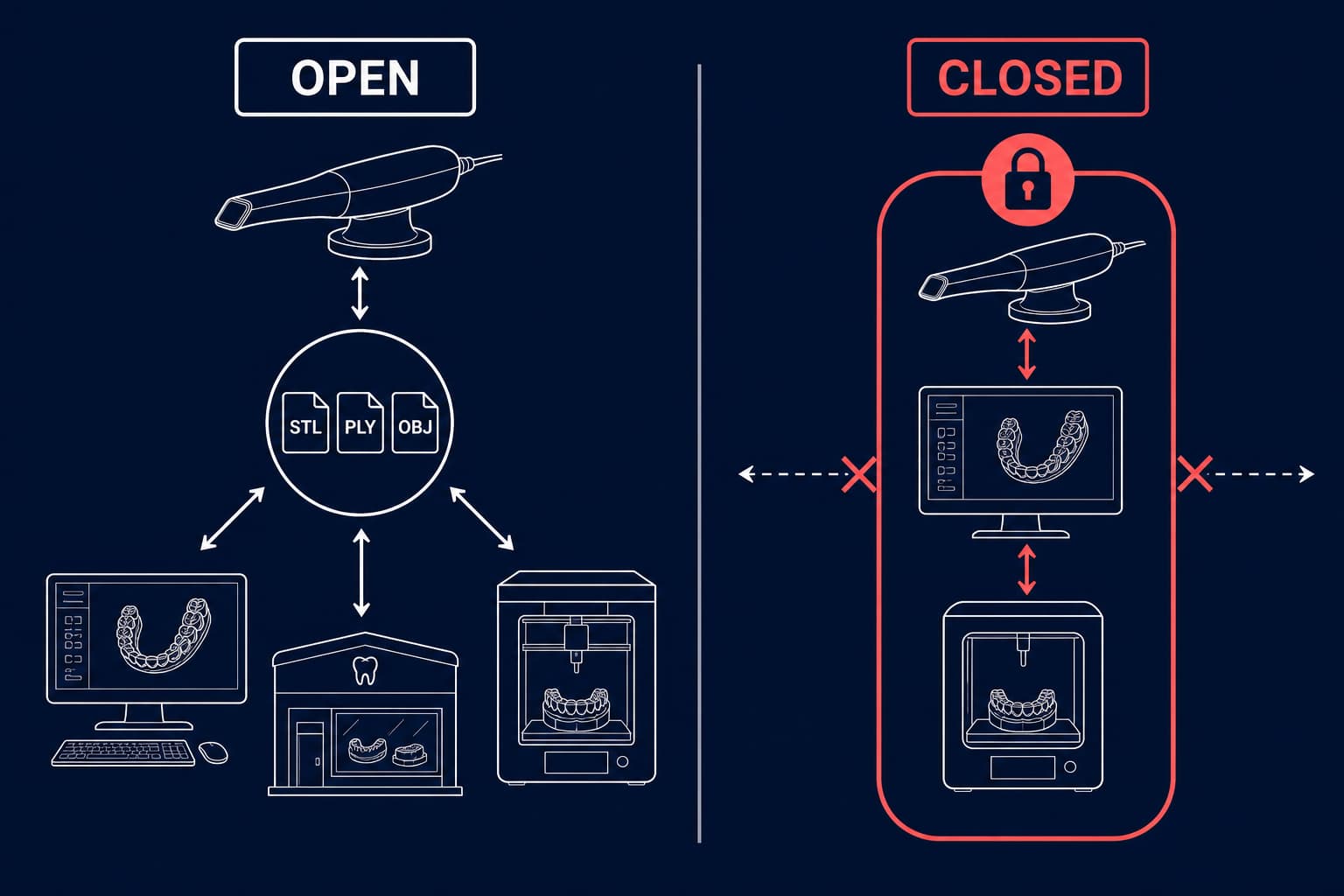
The core difference between these architectures lies in how data moves through the digital thread. In an open system, you maintain ownership of your data. You can export scans in universal formats like STL files, PLY, or OBJ. This interoperability ensures that your intraoral scanner can communicate with any design software or 3D printer, regardless of the manufacturer, providing a worldwide standard for data exchange.
Conversely, closed systems operate within a proprietary silo. The scanner, design software, and fabrication unit are engineered by a single vendor to work exclusively with one another. While this eliminates the need for manual file validation, it effectively locks your clinical data within a specific ecosystem. This vendor dependence often prevents you from sending cases to independent laboratories that do not subscribe to the same proprietary interface, limiting your referral and manufacturing options.
Cost Implications: Upfront Capital and Recurring Fees
The financial architecture of these systems differs significantly over the life of the equipment.
- Closed Systems: These platforms often feature a lower barrier to entry regarding initial setup and staff training. However, they frequently involve recurring "click fees," mandatory software subscription updates, and premium pricing for proprietary materials. If the manufacturer raises their fees, you have little recourse, as your hardware is functionally incompatible with third-party alternatives.
- Open Systems: While the initial orthodontic 3D printing cost and hardware integration might require more meticulous planning, the long-term operational costs are typically lower. You can negotiate material costs from various vendors and select software based on performance rather than brand loyalty.
For many clinics, transitioning from fixed overhead to the variable costs of orthodontic lab–clinic collaboration provides a more predictable path to profitability. Using open-format scanners allows you to shop for the best lab rates and specialized expertise without being tethered to a single provider's price list.
Workflow Flexibility and Innovation Cycles
Adopting an open system allows you to build a best-of-breed workflow tailored to your specific clinical needs. If a novel orthodontic CAD software launches with superior AI capabilities for aligner staging or force visualization, an open system allows you to integrate it into your practice immediately.
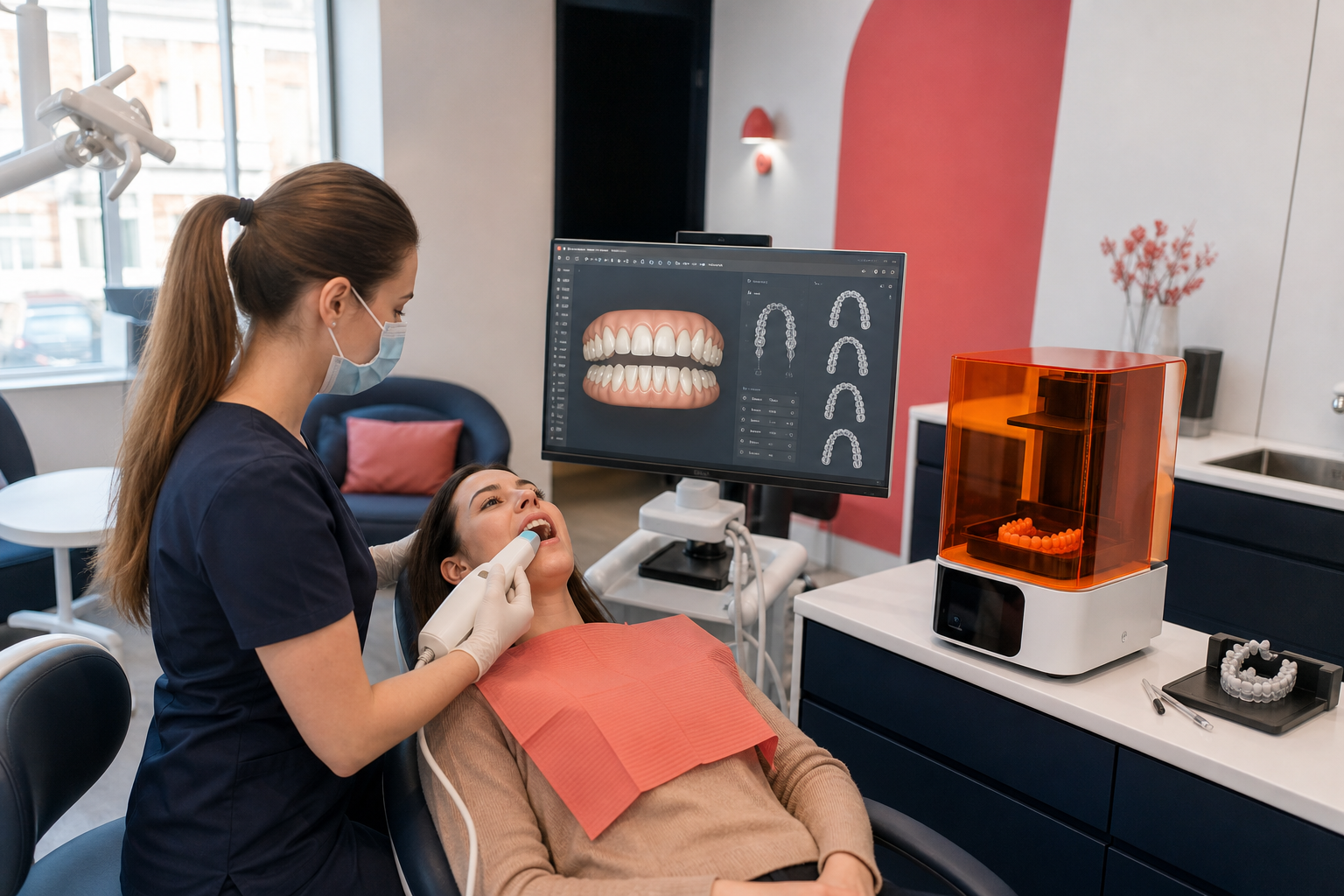
In a closed workflow, you are tethered to the manufacturer’s specific innovation cycle. If they are slow to adopt emerging technologies, such as direct 3D-printed orthodontic appliances, your practice remains stagnant while competitors advance. However, it is essential to recognize that this freedom of choice requires a higher level of digital literacy. You must manage the digital workflow from intraoral scan to appliance and ensure that your file exports are watertight and calibrated to the same micron-level tolerances across different hardware components.
Addressing the Closed System Advantage
The strongest argument for closed systems is the minimization of technical friction. For a clinician who prefers to focus entirely on patient care without managing IT integrations, a closed system provides a single point of contact for technical support. This architecture avoids the "vendor finger-pointing" that can occur when a third-party software update causes a conflict with your scanning hardware.
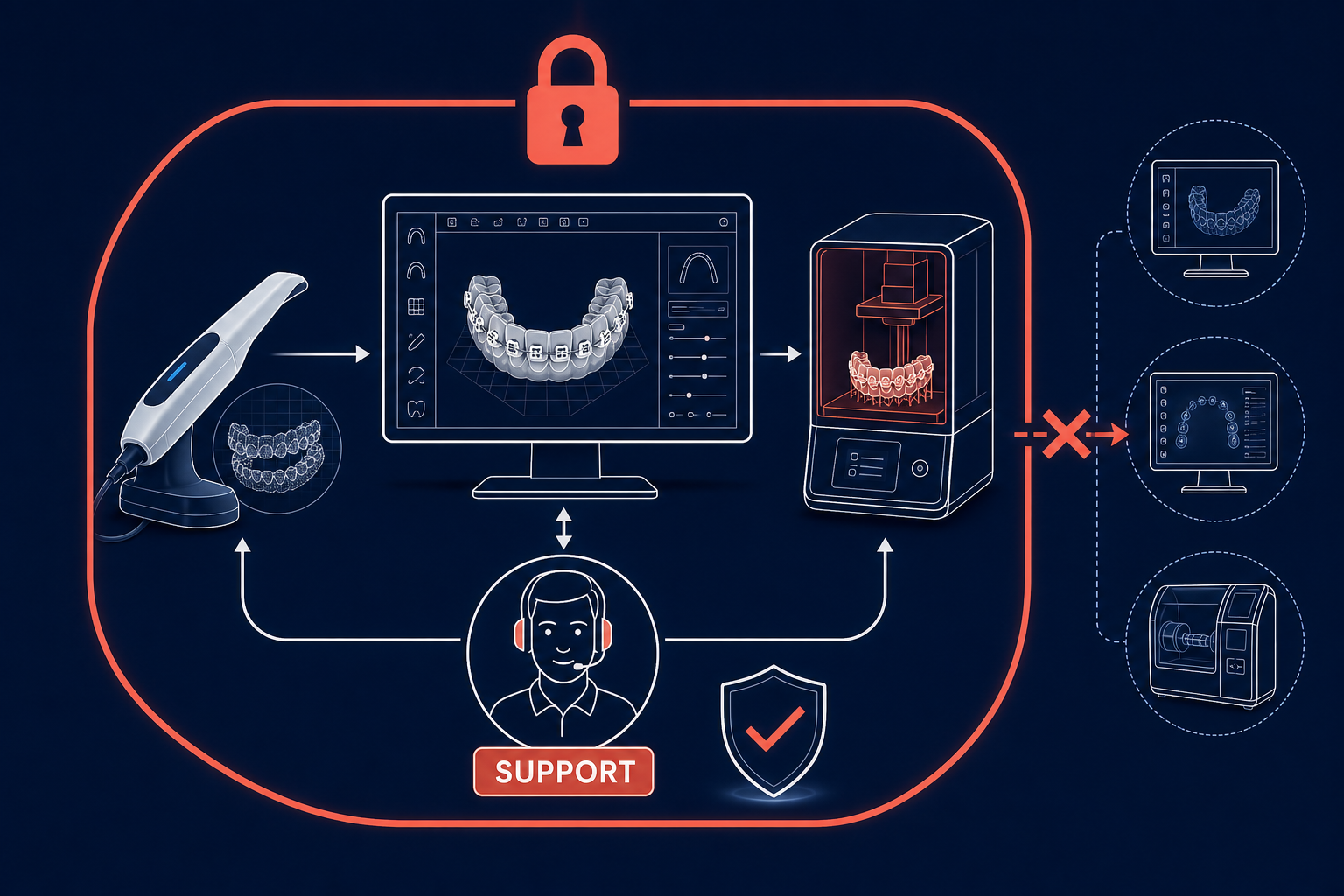
Furthermore, the clear aligner fabrication process in some closed systems is highly automated, which may reduce the need for specialized in-house technicians. Yet, you must weigh this convenience against the long-term cost of clinical and financial independence. Many practitioners find that the perceived ease of a closed system eventually becomes a bottleneck as their clinical needs evolve beyond the vendor's original roadmap.
Leveraging Open Standards for Precision Results
Precision in modern orthodontics is an open pursuit. Our laboratory is optimized to receive digital submissions from any open-format intraoral scanner. Whether you are sending STL files for diagnostic models or complex PLY data for direct-printed aligners, our workflows are built to support your choice of technology rather than dictating it.
By choosing an open architecture, you gain a partner capable of scaling with your practice. We utilize advanced 3D printing and multi-stage quality control to ensure that the digital impressions you capture in your clinic translate into high-fidelity appliances with micron-level accuracy. Decoupling your practice from restrictive vendor ecosystems is the first step toward improving production efficiency and maintaining clinical control. Contact Nordicdens today to integrate our digital lab expertise into your open workflow and secure your practice's technical sovereignty.