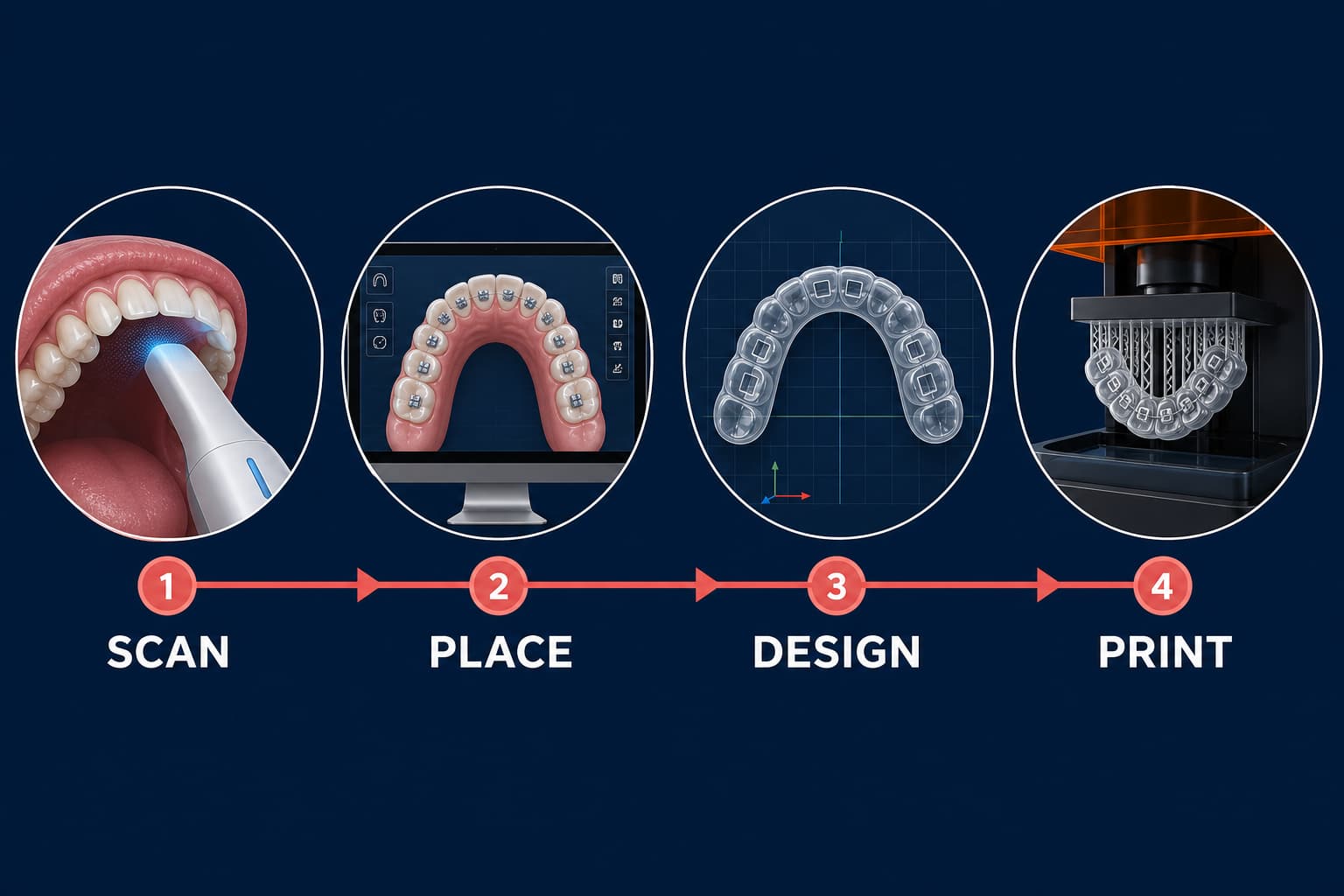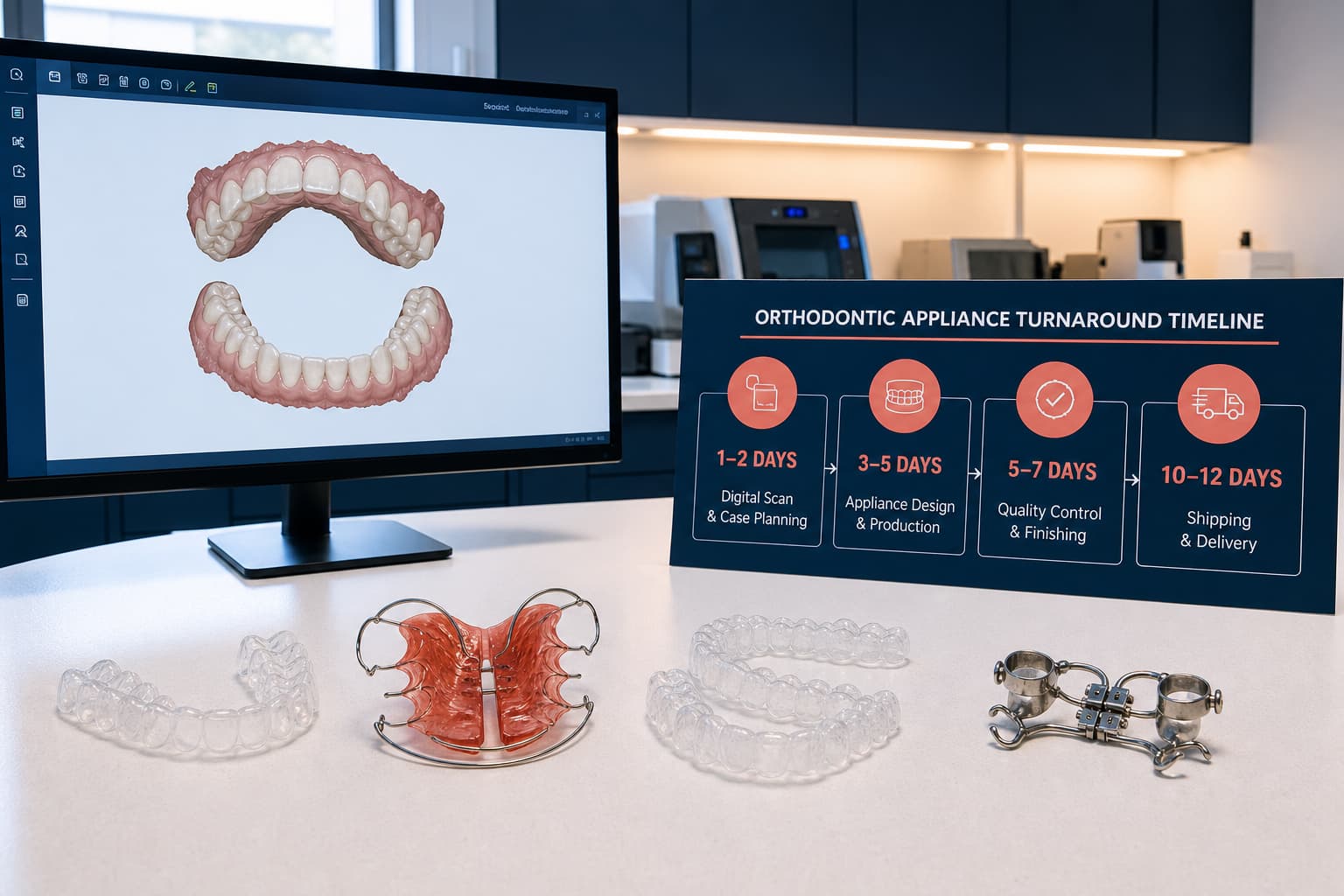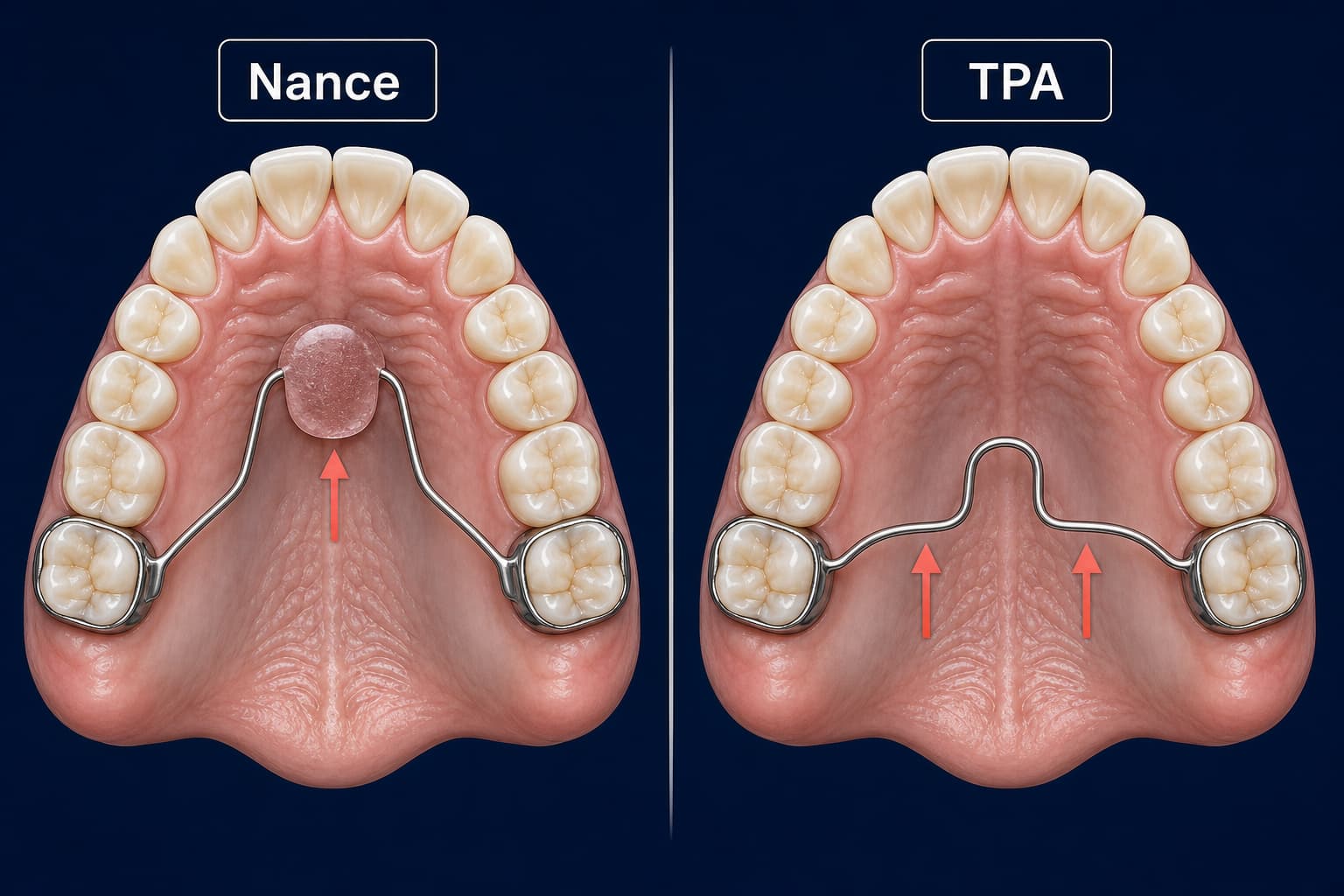
The most efficient orthodontic lab pricing model is rarely the one featuring the lowest base fee. While many clinics fixate on the unit price of a single retainer or expander, true profitability depends on your total system cost. This comprehensive metric accounts for remakes, administrative overhead, and shipping logistics. Most professional laboratories operate on either a granular per-item fee structure or a predictable bundled model. Choosing the right path requires a thorough audit of your clinic’s volume and your existing digital workflow from scan to appliance.
The Granular Model: Per-Item Transparency
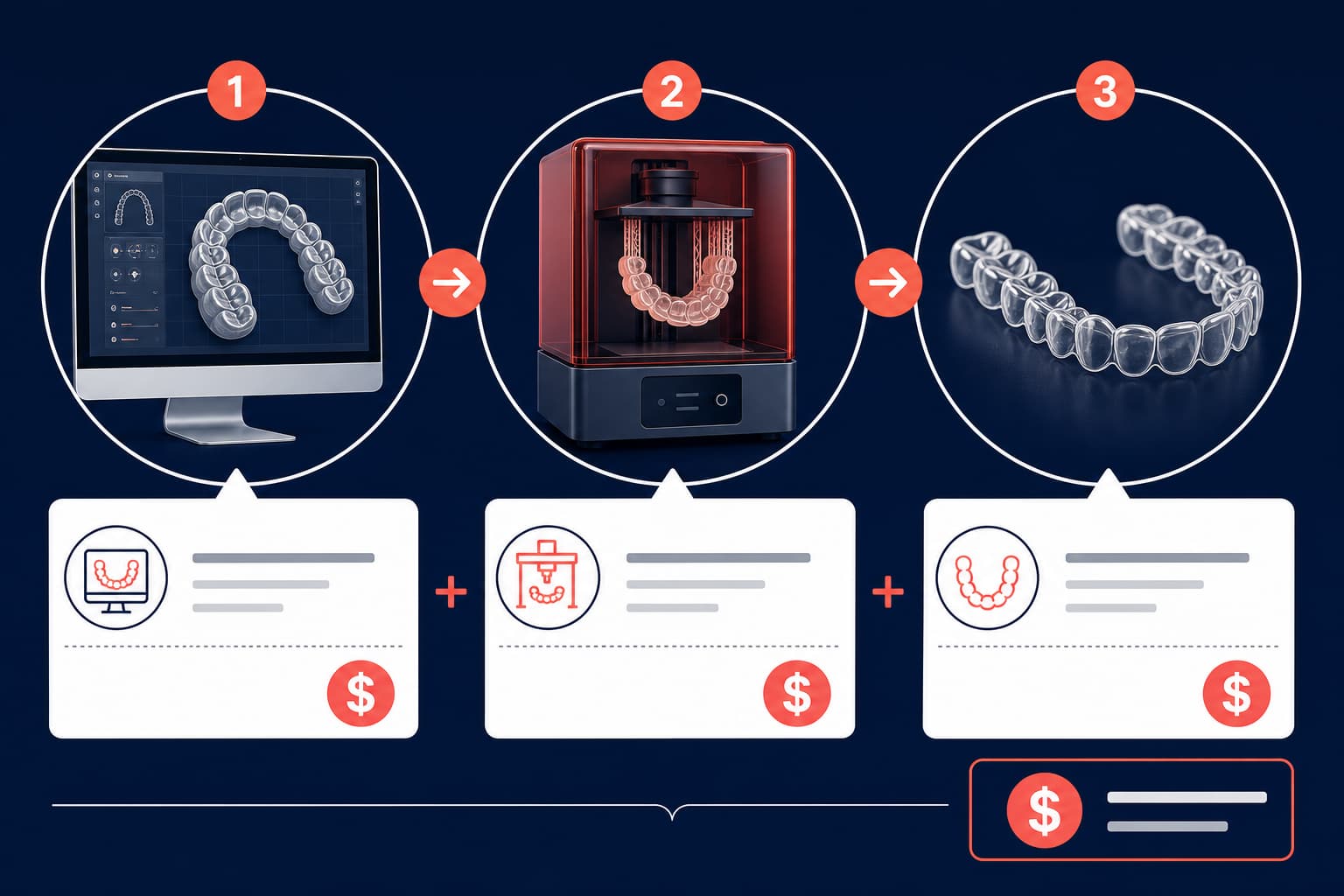
In a per-item or per-case pricing structure, the laboratory invoices for every individual component of production. This typically includes separate line items for digital design, the 3D printing of the model, and the final fabrication of the appliance. This model offers several distinct advantages for specific practice types:
- Precision in billing ensures you only pay for the specific services rendered during that case.
- Low-volume flexibility makes it ideal for clinics with highly variable needs or those who perform some orthodontic 3D printing in-house while outsourcing complex metal-based appliances.
- Transparency allows you to see the exact cost of materials versus labor for every patient.
The primary drawback of this model is line-item fatigue. It becomes difficult to predict monthly overhead when shipping, rush fees, and material surcharges fluctuate with every invoice. For clinics attempting to scale modern clear aligner fabrication, per-tray pricing can quickly become more expensive and administratively taxing than tiered alternatives.
The Bundled Model: Predictable Scaling
Bundled pricing has become a novel standard for high-technology appliances like aligners and indirect bonding trays. In this model, a single flat fee covers the entire lifecycle of the case, from initial digital setup and staging to final delivery and sometimes even a set of retainers.
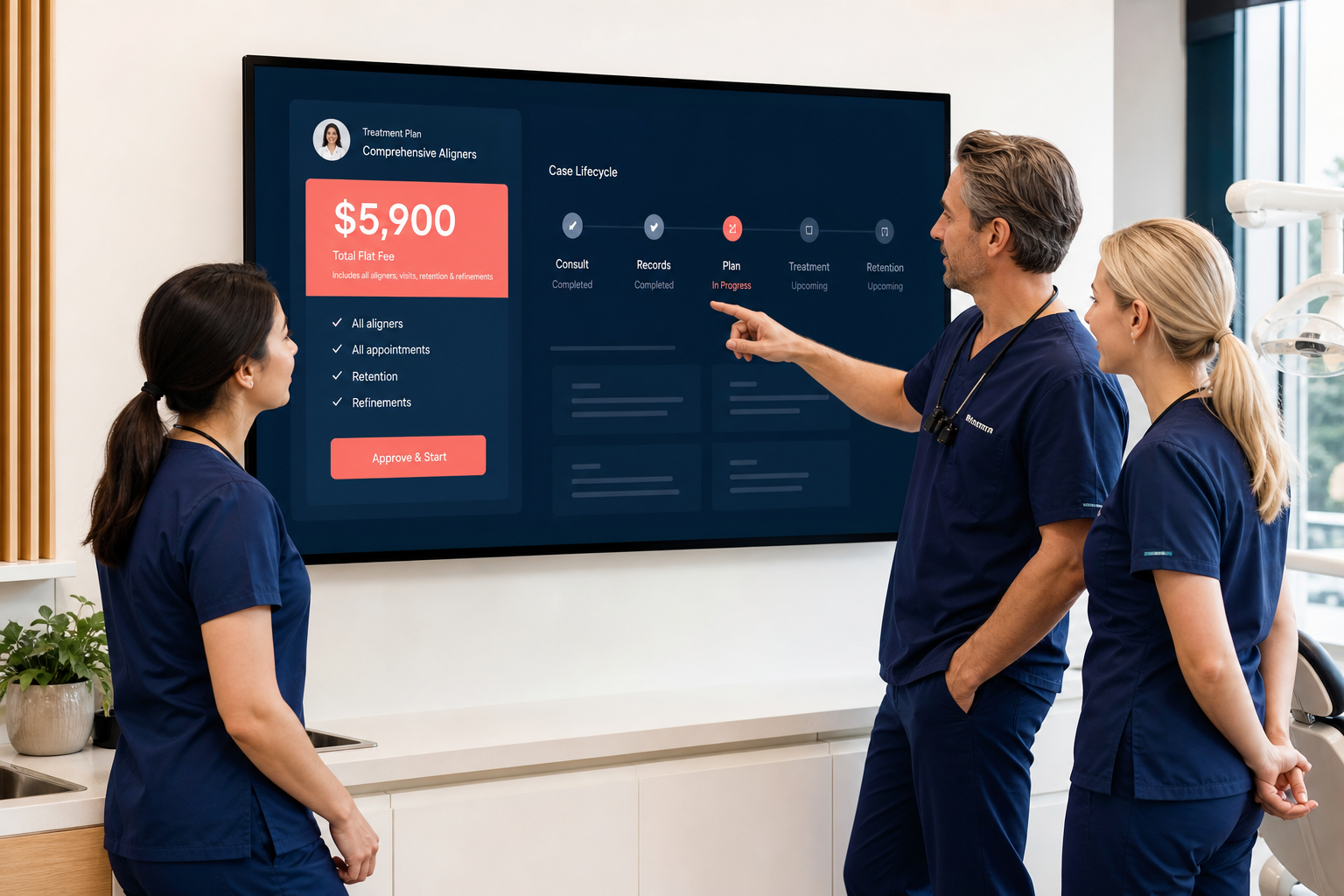
- Financial predictability allows you to know exactly what the lab cost will be at the moment of case acceptance, simplifying the process of setting patient fees.
- Reduced administrative burden saves your billing staff significant time, as single-invoice cases are much faster to reconcile.
- Simplified planning lets you focus on clinical outcomes rather than calculating the cost of individual trays.
Critics often argue that bundled pricing hides the "true" cost of individual steps, potentially causing you to overpay for simple cases. However, the value of a bundle lies in risk mitigation. A flat fee often includes refinements or remakes, which protects your margins against unpredictable biological movements or minor communication failures that might otherwise result in additional fees.
Identifying Hidden Cost Traps
A low headline price often masks operational inefficiencies that drain clinic revenue. When evaluating a new lab partner in the Baltics or Scandinavia, you must look beyond the base appliance cost to identify three specific areas of financial leakage.
First, evaluate remake policies. You should clarify whether the lab charges for a redo if the fit is slightly off. High-quality labs often offer a shared-risk policy, especially if the error stems from a marginal intraoral scan. Second, scrutinize digital submission fees. Some labs charge a "portal fee" or a file-handling fee for every STL uploaded. In a fully digital orthodontic lab, these tasks should be automated and reflected in the base price, not added as a surcharge.
Finally, consider the weight of regulatory compliance. Under the EU Medical Device Regulation (MDR), laboratories must maintain extensive technical documentation. Some labs pass these costs to the clinic as a separate "documentation fee." Partnering with a lab that integrates these obligations into a professional quality control framework ensures your practice remains compliant without unexpected invoices.
The Impact of Digital Maturity on Pricing
The transition from traditional plaster models to 3D-printed resins has fundamentally altered laboratory economics worldwide. In the past, labor-intensive manual pouring was the primary cost driver. Today, expenses are driven by hardware depreciation and sophisticated software licensing.
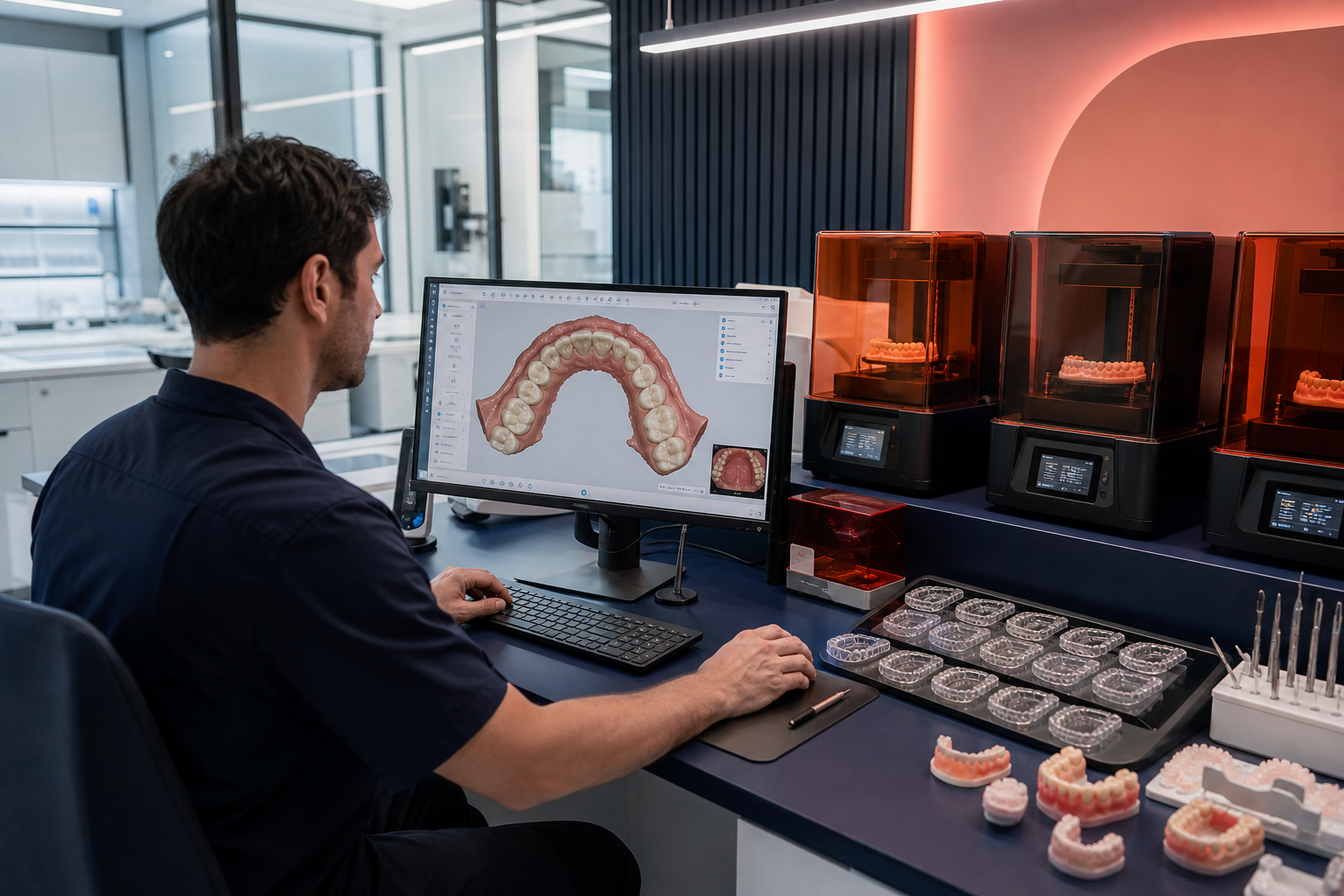
Clinics that embrace a digital-first approach often negotiate better pricing because they reduce the lab's manual labor. When you provide a clean, high-resolution intraoral scan, the lab saves significant time on model preparation. This efficiency allows modern facilities to offer more competitive rates for direct 3D-printed appliances compared to traditional labs still burdened by manual stone-pouring workflows.
To determine which model suits your practice, calculate your effective lab cost over the last six months. Divide your total lab spend, including shipping and remakes, by the number of successfully delivered cases. If your effective cost is significantly higher than the quoted per-case fee, you are likely losing money to hidden administrative traps. Transitioning to a lab that offers transparent, technology-driven pricing is a strategic move to convert fixed overhead into a variable cost that scales with your patient volume.
Optimize your production costs by requesting a detailed price comparison for our digital-first appliances.